


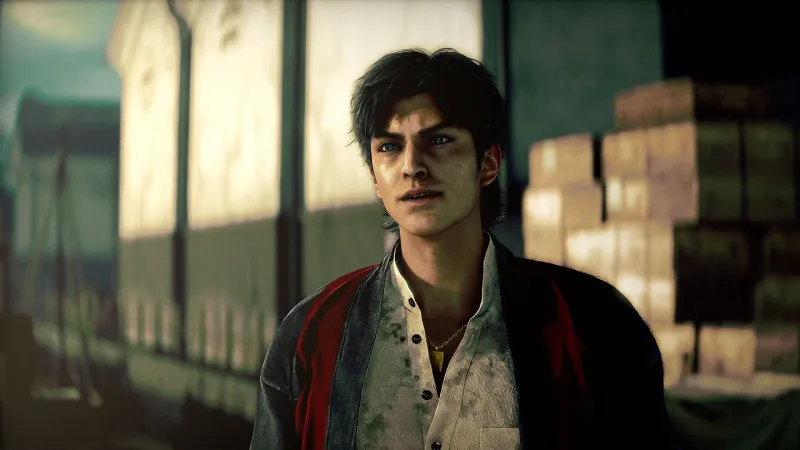
Stranger Than Heaven is one of the early 2027 releases we’re most looking forward to, thanks in large part to it being an ambitious title that tells a prequel story following the same man over the course of 50 years. Players control Makoto Daito, a half-American half-Japanese man stuck between two cultures, struggling to fully fit in with either. In 1915, he stows away on a San Francisco ship bound for Japan in an attempt to escape the prejudice he experienced in the United States as an Asian man. However, once he arrives in Japan, he doesn’t quite find the culture of acceptance he expected. As he wanders the streets, pulling off jobs for Orpheus (portrayed by rapper Snoop Dogg), I hear the folks Kokura, where Makoto landed in Japan, jeering him behind his back.
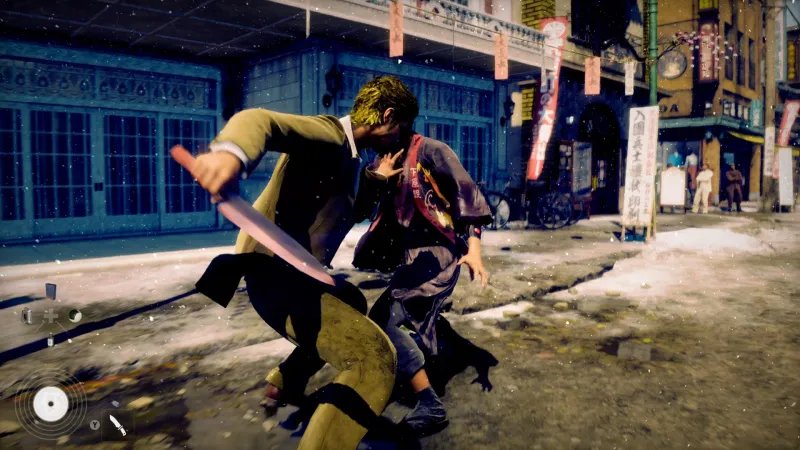
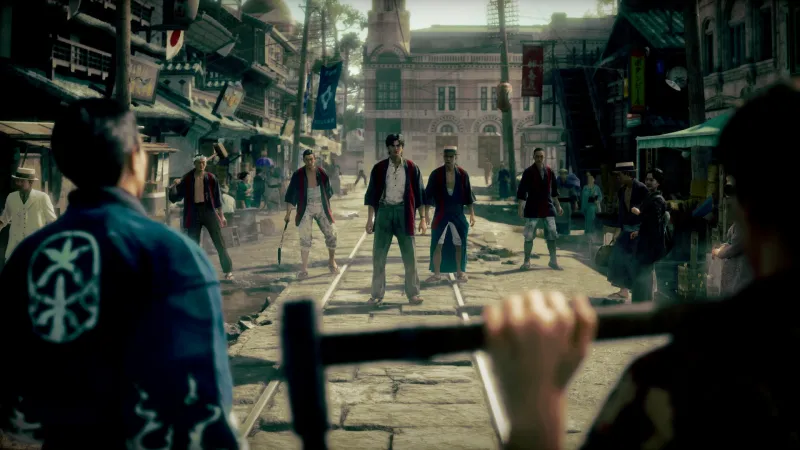
It’s only one local, Tae Matsumoto, who seems to see Makoto for who he is. Makoto goes to the bar where Tae works, in an attempt to undermine a rival gang, but once he spends an evening with her, he confesses the entire thing before asking Tae out on a real date. Unfortunately for Makoto, Tae is the mistress of the Oki Clan, and when Oki finds out that Makoto is spending time with his mistress, he puts a hit on Makoto and steals Tae away. Makoto leads a siege against the ironworks mill where Oki has stolen Tae, resulting in the most climactic clash of my three hours with Stranger Than Heaven: a battle against the hulking Shimura. There, I really put my mastery of the unique combat system, which corresponds the shoulder buttons to your arms and the triggers to your legs for a more direct control of the combos you throw. Since Shimura uses a huge melee weapon in his second phase, I also used my weapon of choice: a knife. Using the nimbleness afforded by a lightweight weapon, I dodged his advances and finished him off to save Tae.
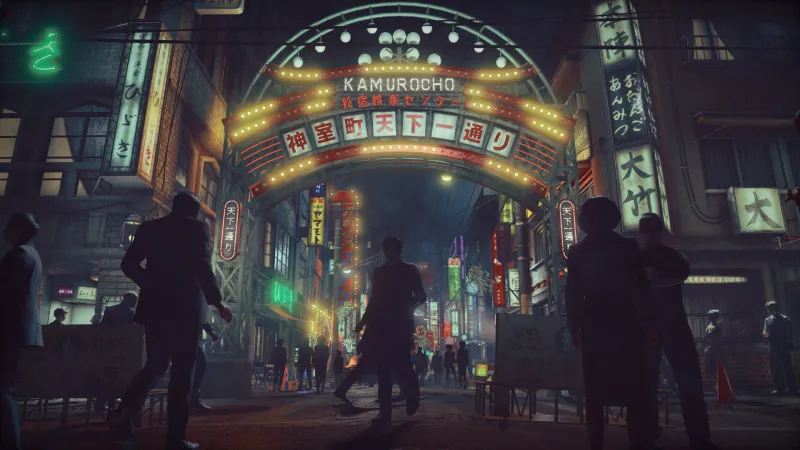
But Kokura in 1915 is hardly the only setting of the game, as players will follow Makoto’s exploits across five decades, visiting Kure in 1919, Osaka in 1943, Atami in 1951, and, finally, Shinjuku in 1965. I had a chance to free-roam explore both Kure and Osaka. I experienced the fighting arena of Kure, where you challenge increasingly difficult opponents (and can re-challenge defeated foes with special win conditions), and stumbled upon a masked serial killer who gave me the toughest fight of my life. I also found a composer, who can help craft songs based on sounds from which Makoto pulls inspiration; during my playthrough, Makoto found inspiration in everything from a crying baby in a house he walked by to the clang of his metallic melee weapon cracking against a thug’s skull.
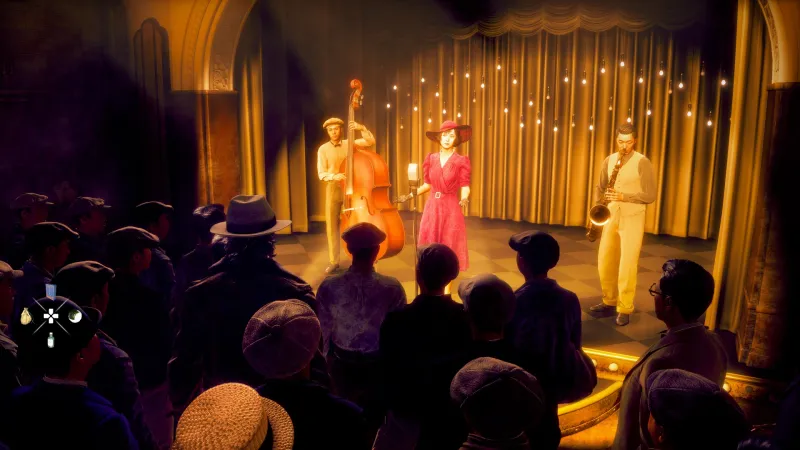
In the Osaka sequence, the attitude toward Makoto has shifted dramatically; men and women alike run up to and greet him with bright smiles due to his work in organized crime and music showbiz. To that end, I use this gameplay section to live in that world. After negotiating with local business owners to buy ad space on their billboards, I have Makoto put on a show at a local theater. Here, I can choose the program, performers, and then take part in an interactive performance.
I left my hands-on session extremely impressed by the many layers present in Stranger Than Heaven. Following my play sessions, I sat down with Stranger Than Heaven director Mikinobu Abe and lead actor Yu Shirota to discuss the themes and inspiration behind RGG Studio’s new entry in the Yakuza/Like a Dragon universe.
When you’re getting to the point where you’re conceptualizing your next game, what are the conversations like that led you to creating a prequel title to the Yakuza/Like a Dragon series with a unique premise like we see in Stranger Than Heaven?
Mikinobu Abe, Director: In the beginning, there wasn’t about, “Okay, let’s make this game as something that’s gonna connect to the Yakuza or Like a Dragon franchise.” It was something more of we always wondered while making Yakuza and Like a Dragon games how would someone create such an organization, like a yakuza organization, and that could be an interesting narrative to focus on. In the Yakuza franchise, we have the Tojo Clan or the Omi Alliance, but we never actually told why or who would create such a thing. So, the starting point was from there, and then, as we were developing the narrative, we added all sorts of elements.
One of the greatest ideas for the game is making the main character of mixed heritage of Japanese and American. I think that decision really opened up a whole new narrative to tell for the studio. So, from there, we did want to tell the beginning of such an organization, but it wasn’t like we wanted to tell a prologue of the Yakuza or Like a Dragon series. We already had the mind of, like, “Okay, we want to make this as something brand new and like nothing that we have made before.”

And with the theme of biculturalism relating to Makoto Daito, why was telling the story of existing in that “in between” space where maybe you don’t feel like you belong in either culture such an important story to tell with this game?
MA: At the beginning, it wasn’t a story about mixed heritage; it was just one Japanese guy who’s trying to create an organization. But we wanted to make sure that the character has a strong motivation for creating such an organization, and we felt like it would be a great narrative to tell if we made the main character as a mixed heritage of both Japanese and American. That really gave us the creative freedom to add an American character and do a multilingual setting where American characters speak in English and Japanese characters speak in Japanese, which is such an interesting thing. And I don’t think I’ve ever seen that in a video game, so it really opened up a lot of creative ideas from there. We felt doing that theme really strong makes the narrative stronger in the way that we wanted to depict this whole story and gameplay experience.
Yu Shirota, Actor Portraying Makoto Daito: For Makoto Daito and myself, there are struggles that come from being in between two cultures or two countries, and the story does see how he grows through those struggles. Just as a disclaimer: These are my personal thoughts, and not necessarily Sega’s thoughts or [Abe]’s thoughts. But, in the current world, not just with race, but many people struggle with finding their identity and who they are. For Daito, the main struggle is, again, two countries, and it’s a story of finding himself through that. But the people who may play this game, when you go around, you might get labeled, you might get told things, and for those people that are really struggling with that, Makoto Daito’s story is something that can give them the courage to find their true selves. I think that Makoto Daito’s identity of the two countries plays an important role in doing that.
In the early stages of the game, we see Makoto leave the United States for Japan, hoping he’ll be more accepted, but then, when he arrives, he faces more prejudice. Can you talk about what Makoto is going through at that point, and how his attitude towards his new home, Japan, evolves over the course of those early years?
YS: I have definitely gone through the same thing he does at first. When I was younger, I felt like an outsider in Spain, and then I came to Japan, thinking I’m coming back home, but I faced sort of the same thing as I was facing in Spain. This is exactly the same as what Daito goes through when he comes from America to Japan, so it was very easy to put myself in his shoes. It didn’t really take a lot to imagine how he’s feeling, but in terms of being in between, I do think these struggles are something that only people like us can truly understand.
In the beginning of the story, after Daito comes to Japan, he gets called “ketō,” which is sort of a slur for Westerners in that age in Japan, and he doesn’t know what that word means. So, he’s like, “What are they calling me?” He starts off talking to people around town, but his Japanese is not proficient yet, and so they just brush him off as a foreigner. And, of course, seeing this myself, it feels sad, but also, it feels very nostalgic, too, because I know exactly how that feels.
MA: When it comes to gameplay, when we were doing motion capture and the voice acting in general – not just Makoto, but other characters who join the journey throughout the eras – one of the things we really focused on was how Japanese Daito is at the time. When you start the game, Daito’s body language and his first language is in more English. The way the character has this personal space between the person and the way he moves and everything is more Westernized. Once you progress the game, you start to notice that Daito is becoming a little bit more Japanese in a way that he knows how to communicate like a Japanese person, or even someone who’s really higher up.
We pay close attention on how the transition from Makoto living in Japan and the way he would act in both motion acting and facial animation, as well. Like, how fluent he is in Japanese would really affect the lip animations, so we really put a focus on those and crafted this character. This experience might feel like it’s really just for Makoto, but I truly believe that we all have something close in our life that we can resonate with Makoto, like going to a new school or working in a new workplace. You’re always going to start as a stranger. It might not be as harsh as Makoto[‘s experience], but I really believe that this story and that attention to detail would resonate with people across the globe.
So, as we play through the eras, we’ll be able to notice Makoto’s improved Japanese as he lives in the country for longer?
MA: I have to give huge credit to [Shirota]. He did an amazing job! Getting those small, small details! The bigger ones, for example, with the battle voices, when you beat someone up, initially, like a “Take this!” or “You bastard!” Then, once time progresses, it slowly becomes Japanese.
YS: It was really difficult, especially the age and the thoughts. When he came to Japan, he was thinking in English, so the thoughts or things he said to himself were in English. But in 5 or 10 years, it changed to Japanese, and that was easier for me, of course, because English is my third language, so the balance was really interesting for me, and of course I had the same thing in my life: Spanish to Japanese. That was really fun for me, and then of course [progressing Makoto’s] age. That was really interesting! The teenager Makoto and ’60s Makoto are totally different. You can tell with the voice.
MA: It’s also worth mentioning that within Japan, we do have a lot of accents, and because we go to Hiroshima and Osaka, that alone has a different Japanese accent, and it’s a huge difference. And he nailed all the Japanese accents as well. I can’t wait for people to see this amazing work.
YS: It was a hard job!
But it does seem like one you were particularly well-suited for, given your personal experience.
YS: Yes, I think my experience that I’ve had in my life – every single experience – I could put that into Makoto Daito, and that was really helpful to create this character. I’m really happy to play this role.
When we see Daito first arrive in Kokura in 1915, it seemed like he’s really not trying to stick out. He’s just trying to fit in as best he can, and he’s really worried about being a foreigner. Then, in the next era, he has bleached hair, and he seems like maybe he’s not so concerned about sticking out, and maybe leaning into the fact that he is different.
MA: I would say that’s a great read, but however, I’m trying not to spoil anything, but the blonde Daito… there is a cutscene that we revealed during Tokyo Game Show where Daito and a character called Hama is speaking, and a few hints might be in that cutscene. I can’t tell you any further than this, so let me expand the question just a little bit. Daito is going to start finding his own identity throughout life and throughout the eras, and the character visualization alone really represents what Daito is going through within each city in those eras. We have a lot of small hints here and there, so some of them might be too small that even the game releases and no one notices! [laughs]
But, we really tried our best to keep those details in the game. I truly hope that people pick up on those small details about how much he fits into this Japanese country. There might be situations where he chooses not to fit in, as well, so I hope people will pick up on those small details.
One of the big selling points for Stranger Than Heaven is that we get to know Makoto Daito over a 50-year span of his life. What challenges did that bring with getting that level of familiarity with a character?
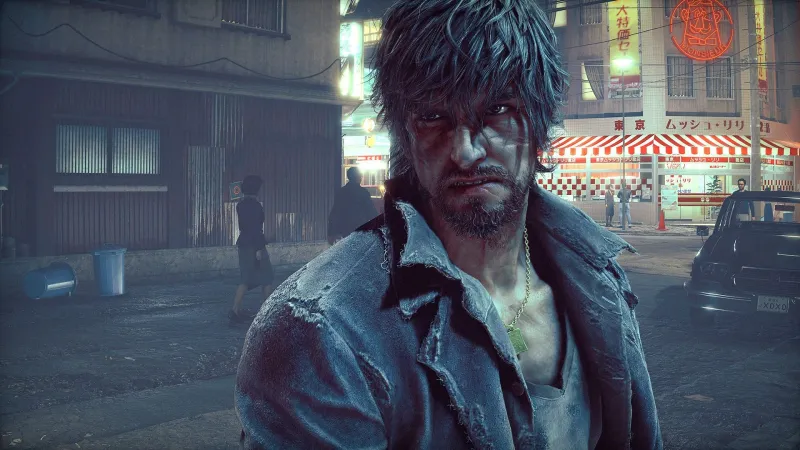
MA: You’re going to get to know everything about him! [laughs] You’re gonna witness his whole life! It was a really hard challenge depicting a man’s life, because there are certain characters – and not just Makoto, but his friend Yu Shinjo, who’s played by Dean Fujioka. It was really hard because there are certain characters that we don’t even know how they’re gonna age as an actual actor, because Dean-san’s in his 40s, and when we were doing the character modeling, we had to make, like, an older version of him, and we have no idea how he will look, so those are some things that were really hard about developing the game.
For a character like Bunta Sugawara’s Iwaki, we have all the reference pictures throughout his ages, so I wouldn’t say it was easy – the character team will kill me if I say it was easy! [laughs] – but we had the references. Aging a character was a huge challenge for us tackling this project. For me personally, I’m still in my 20s; I’m 29! So, from Makoto Daito’s life, there’s this certain point where I have no idea how he would feel at that age and time.
YS: I personally only have 40 years on this Earth so far, so the experiences and challenges that someone might face within those 40 years, I could imagine more easily because I have the experience with that. But the last era in Shinjuku, Daito goes over this age, so I can only try to imagine what it would be like. That was a really fun experience, and I can’t really talk about it right now due to spoilers, but the challenges that shape Daito over the course of the 50 years to make him the Shinjuku Daito that he ends up as, thinking about that was very interesting.
I noticed over the course of different eras, people react differently to Makoto. They go from calling him names and telling him to get out of Kokura to running up to you while you’re walking around Osaka and complimenting you. It seems like a complete 180 from when he arrived in 1915. How does that reaction evolve and how does that impact him as he carries himself through the ages?
MA: He will go through a lot of identities throughout his life. When he gets to Japan, he’s a no one. Then, he’s going to join the Yashima Trading Company, which is led by Yashima, and from there, he’s treated as a member of the Yashima Company. Then, once he’s in Kure, he’s gonna join the Iwaki Clan, which is a big part of the narrative, as well. And in Osaka, he’s going to start a promoting company with Yu Shinjo. I feel like those changes of identity really affects how people react to his title, and we carefully created how that affects Makoto as gameplay.
But not just gameplay, but with all the cutscenes, we try to make sure the player has the sense of how the people are looking at Makoto. So, when we have all the people walking by, you can tell Makoto is seen as someone who’s unwanted there, or maybe in another scene, you can see that no one’s really given too much care to him, so all the background acting for the cutscenes was really crafted based on how Makoto’s identities are at the time. I really feel like the player can experience the environment of Makoto through both the gameplay and the narrative.
YS: Again, I see that it overlaps with my personal experiences. Daito, at first, he’s very young. He’s scared. He doesn’t know what to do exactly, but he’s sort of forced to assimilate. Then, as time goes on, he finds his worth and grows as a person, and with that, how people look at him starts changing, too. He starts off softer, more easily affected, but as he grows older, he grows a harder shell. He goes into the world of the yakuza. He becomes a member of a clan, and the process of him becoming this harder-shell person is depicted very well throughout the narrative. And the final product, after all of that process of him being called “Boss” by everyone, I also have some similar experiences, because I’m an actor and sort of a celebrity. People come around me and say good things about me, so imagining how it feels as Daito to be in that position was something that I was really able to do without a lot of issues.
As you progress through the story, each era takes place in a different Japanese city. Why were these specific eras tied to these particular cities?
MA: Those cities were chosen based purely on the narrative that we wanted to depict. Again, the beginning was that we want to depict why someone would create such an organization, and from there, we started to realize that we’ll need a lot of time to tell this narrative. In our previous games, like Yakuza or Like a Dragon, the narrative only revolves around a week, maybe, or somewhere around there. But you wouldn’t be able to tell a narrative of someone creating such a huge organization within a week or a day. Then, we settled with, “Okay, it would be cool if we could depict a man’s life journey on creating this place that he wants to call home.” That was the starting point of how we decided we want to depict a man’s life, and we already had in mind that we could start the narrative from 1915 Kokura, because back in the day, Kokura was a huge industrial city, and it was really natural for someone to end up in Kokura [after] smuggling onto a ship.
The starting point of the narrative was already fixed and, for spoiler reasons, I can’t talk too much, but the ending point was 1965 Shinjuku from the very beginning. From there, we had two dots, and now we selected the era and the city based off of how interesting it would be to put Makoto in a situation that those eras and cities could offer. For example, 1929 Kure; Kure is a famous city within Japan for being the city that was used in the famous yakuza movie called Battle Without Honor and Humanity, and it was a great fit for if we wanted to tell a story about the yakuza. We thought it would be really interesting if we could put Makoto in that situation in Kure because, again, he has this identity crisis of whether he wants to be Japanese or American. Yakuza is such a Japanese organization, so we thought it would be really interesting to put Makoto in that city. Also, because it’s 1929 Kure, back in the day, there were a lot of foreign people within the city because it was such a big military port. That already makes it have this build up of telling a great narrative of someone who thinks they’re Japanese and they’re in the yakuza organization, and yet he still has this foreigner side of himself, and he has a lot of foreigners within the city to connect with.
How much work did it add to the team’s plates to depict not only different cities, but different eras?
MA: You can’t imagine how hard it was! [laughs] It was hard! We did five cities in the past with Yakuza 5, but this time, because we weren’t able to reuse any assets between the cities, and also because no one knows what it was like back in 1915… We had to do a lot of research, and there was some stuff that I, as a Japanese, didn’t even know existed! There were times when we were just running around old bookshops and looking for a magazine that was popular in those days. We did a lot of research based off of those, but the goal was never to recreate Japanese history, so we didn’t have this historical accuracy concept from the very beginning. So, we took a lot of inspiration from what we have researched, and we wanted to convert that into what we wanted to depict as a game and [gamify] it, so it’s in this range of entertaining people. That research took a lot of time, and we did go to all the cities and looked up really old photos and took that research, and had this creative freedom on changing it into something that we wanted to depict in the game.
As you go through these eras between 1915 and 1965, you’re landing in some eras that were not only quite dramatically different from one another, but some were also quite tumultuous for Japan. How do you go about addressing those global and national events within the story?
MA: So, we do touch some of those historical events that are happened. For example, 1943 Osaka. The setting itself is during wartimes. However, the narrative really leans toward Makoto Daito’s life, and so there’s not this crucial depiction of those historical events, and that gave us a lot of creative freedom to focus on Daito’s life. The events are happening, right? We can’t ignore that. But the big events – for example, having a war – it does affect the live of who is living in that city, but they have their own lives, and I think it’s worth telling that life more than what history was actually like. And so, the main goal was the really focus on Makoto Daito’s life in that situation.
Music plays a huge role in Stranger Than Heaven, but what other pieces of art inspired you and your team that pushed the direction of the game?
MA: I studied a lot of film, and I had a lot of interest in movies. Growing up, I always wanted to make movies, and I even went to film school. The knowledge I acquired there was, I did watch a lot of classic movies, and I also studied a lot of film media and camera lenses. And because I had this background, I took a lot of inspiration from how it was created back then. We did a lot of research on these vintage lenses that were used back then, or this film media that was used back then. It wasn’t particularly this movie, but it was more the technique they used back then, for something that was really hard. Let’s say for example, putting text on a video; these days, where you just put it in the editing software, but back in the day, they had this, like, glass, and then you wrote on it, and then you had to print it on a film. That alone – that analog technique – really was something that we could make a use of and create this vibe that we’ve never seen in a computer-generated graphic image.
Our amazing art director, [Daishi] Kanaya-san, has a strong background in oil painting, as well. He did a lot of research on Japanese painting from those eras, and we noticed how the use of lighting was really different from the drawings that would be drawn these days. This aspect of painting from Kanaya-san and the aspect of film from me connected and we created something I personally have never seen before, and Kanaya-san has never seen before. I hope the player finds it intriguing!
That said, I personally love classic Hollywood and gangster movies. I took a lot of inspiration from them, as well as ninkyo movies, which is a Japanese term for a yakuza-themed entertainment, and of course, Bunta Sugawara, who is in our game, is a legendary actor from back in those eras, so we took some inspiration from there, as well.
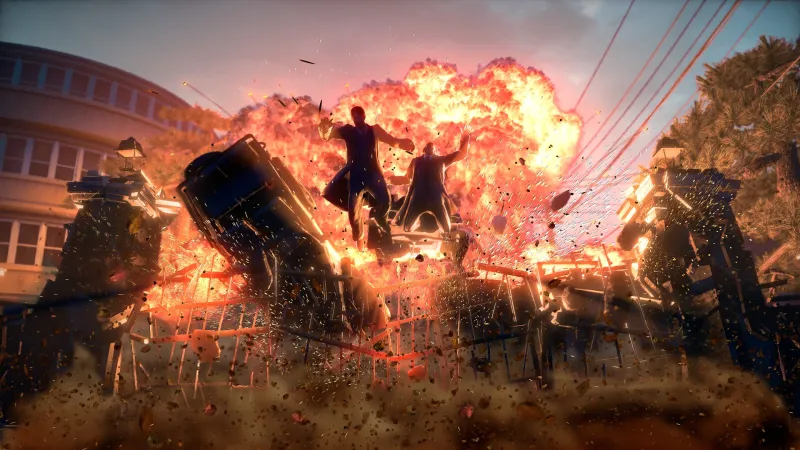
Did your expertise in film influence how you implemented a camera where you need to wind it before you snap, then take it to the pawn shop to get it developed?
MA: Yeah, I really wanted that film camera in there! [laughs] It really is hard, isn’t it? I think those small details of using a gadget, especially with my generation in general, we never got to use those analog cameras. I already had a smartphone when I was in junior high school, so I had this dream of, “Oh I wish I could use those analog gadgets back in the days.” So, we wanted to make sure that the game has that analog feeling to it.
Also, speaking of the camera, a little bit of a different angle is that I directed most of the cutscenes in the game, and when we were doing the motion capture as well as the camera-angle structuring, we wanted to make the audience feel like they are watching something that would have been recreate-able back in those days, and yet new. The art term was “vintage,” so it’s not old. It does feel old, but it doesn’t feel old in a way that’s not cool, in a sense, these days. We really wanted to make sure we nail that sense of vintage, so we carefully crafted, like, “Okay, we don’t want to make the camera movement too flashy. Let’s stick to how it would have been in the past. Make the lighting really modern, just so it doesn’t feel old, but something that does feel vintage.” We did a lot of experimenting on that, as well, and I hope the players have this sense of they’re watching something vintage, but not something they have seen in a video game before.
Speaking of vintage and retro things, the Yakuza and Like a Dragon franchise have been around for a long time now, but still going strong. How do you pull from that series and its long lineage in a way that still lets Stranger Than Heaven feel like something new while still making sure it feels like a part of the broader universe and story?
MA: Stranger Than Heaven’s dev team is led by a lot of the younger generation that the studio has, including myself. There was never a conversation of, “Hey, Yakuza looked like this, so let’s make this like this.” Instead, we were just so focused on creating a game called Stranger Than Heaven. Period. It wasn’t like it never came across our mind – this is an RGG game that we created. In a sense, we never actually thought of the Yakuza series while developing this game in a good way, and I think that already makes it so a game can feel new.
Especially with the combat, every single game mechanic that we have in the game usually revolves around the narrative that we want to tell. For example, Kazuma Kiryu, he’s a legendary fighter, so we want to make sure the player feels they’re strong. That’s why we chose that brawling action type of game. And for Ichiban, because his character and narrative revolves around friendship, that’s why we chose the turn-based game genre. So, when we were depicting a new character, Makoto Daito, the narrative is going to change.
We knew that we have to create something new for this character, and one of the biggest things is that Makoto starts off not knowing how to hit people. We wanted to make sure that is represented in the control scheme, as well as the experience as a whole. One of the biggest things was that we wanted to create the experience to be really intuitive and have this synchronization-ness between the player and Makoto. We wanted to make sure that they can immerse themselves in Makoto’s life, and I think combat immersion is something really special that would represent this gameplay as Makoto. Progressing through the eras, of course, Makoto is going to change, and I hope the player’s skills change in a way. Of course, you’re gonna get better at the game, and that immersion and synchronization alone, I think, is something really special with this game.
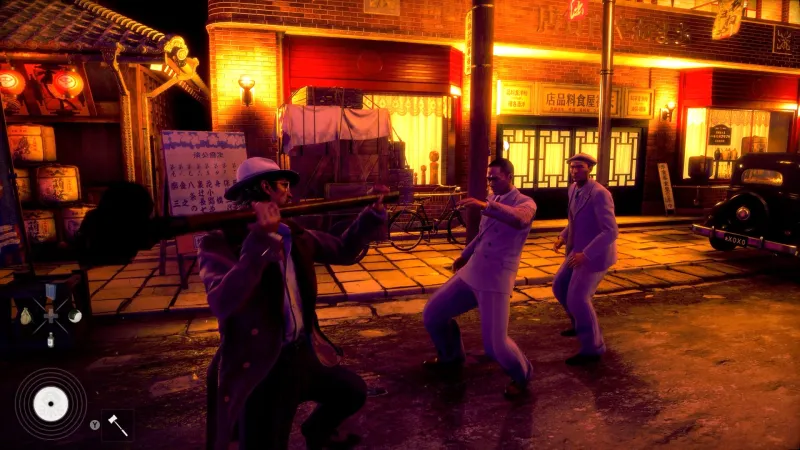
The combat is unique, because it takes you a moment to wrap your brain around it, but once you do, a lightbulb kind of goes off in your head and it becomes pretty intuitive. How did the team land on this combat system?
MA: The basic idea was we wanted to make combat intuitive, and we had this one theme of actually going back to the roots of what made yakuza-themed content special in those ninkyo movies. We were looking at a lot of them, and one thing we noticed is how raw the action is. No one’s a master at anything, and they’re just pulling clothes to fight, and it’s not just punching and kicking people; we noticed that if you’re not exactly familiar with fighting, punching doesn’t happen too much. That rawness alone, we felt that was something really special, something that lies in the ninkyo movies. We took a lot of inspiration from that, and we wanted to make sure Makoto feels like a raw person who’s not exactly good at fighting, and we wanted to make sure the player feels that. Going back to the roots of ninkyo movies, the huge concept is that it’s either kill or get killed, and we wanted to make sure that the player feels that tension while in a fight. Again, that synchronization that we needed to tell the player that, ‘Hey you’re in a situation of it’s either you kill or your die situation,” and that immersion was the core concept of how we wanted to land the combat.
Something else I noticed while exploring was the abundance of minigames. How did you go about making sure that you were not only including era-appropriate games, but also ones that translated well to a video game?
MA: Usually within an RGG Studio title, we choose those minigames purely on how we want to depict the city. So, in the Yakuza franchise, it’s mostly modern cities, and we have a lot of variations on minigames, such as karaoke or pachinko. They’re there to depict the city’s vibe as gameplay, and it was no different for us. The minigames within this game represent the cities’ and eras’ vibes and people’s lives back then. Again, we did a lot of research on what was popular back then, and we chose minigames to represent the city’s atmosphere. Also, because the eras progress, the minigames will also change. Some of them will be playable the entire game, and some of them are going to only be in one city and one era. And as technology evolves, of course, a lot of other games are going to come in. A lot of them we haven’t announced yet, so I hope people enjoy the minigames and get a sense of the atmosphere that the city has to offer.
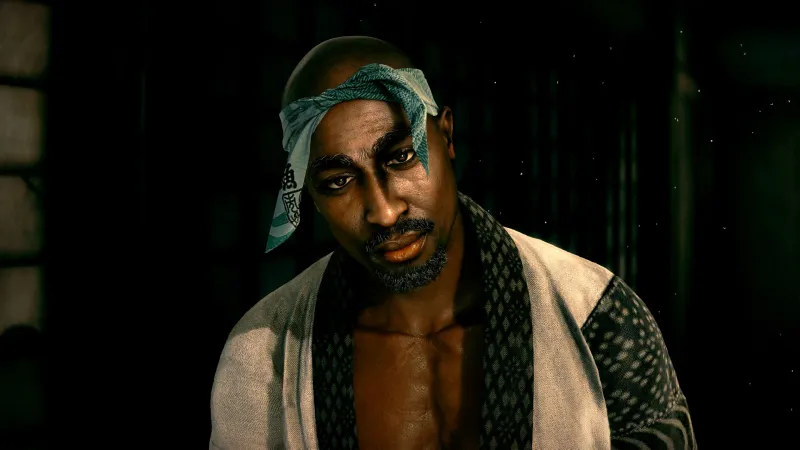
And we’ve talked a lot about Daito, but some other characters garnered a lot of attention back during Summer Game Fest’s reveal. Why was Snoop Dogg the right choice for the role of Orpheus, and did his casting lead to the casting of Tupac?
MA: Every single casting that we made, it was always narrative first for us. When we started writing the narrative, we had this character called Orpheus, who is going to be someone who teaches the ropes to Daito on basically everything. Orpheus is going to teach him how to survive in Japan and how to make money off of music and show business, but Orpheus needs to be a smuggler, who’s going to carry [Daito] from America to Japan. He basically needed to be a badass, and also, he has to act because he has a lot of emotional scenes during the game. That already makes it a really hard character to play, and we always had this casting idea of, “It would be so cool if Snoop Dogg would play this role,” and we kind of heard that Snoop Dogg and his son had played the previous Yakuza games before, so we reached out and we explained every single story and the character that we wanted to depict using Snoop’s likeness, and we created the character together, building up how he should look or how he should talk. It was a great experience creating Orpheus, and that goes for other characters as well.
It’s basically the same with not just Tupac, but Bunta Sugawara, who’s already passed away. We talked with every single individual who was important to their lives – the estate, the families as well – and we explained everything about the story and why we want them to be in the game. They loved the idea of having them in the game, and we crafted those characters as carefully as possible with the highest respect of not breaking how they would have played if they were alive, in a sense.
For more on the inclusion of Snoop Dogg and Tupac in the cast, read our interview with RGG Studio head Masayoshi Yokoyama here. Stranger Than Heaven arrives on PlayStation 5, Xbox Series X/S, and PC on January 15.