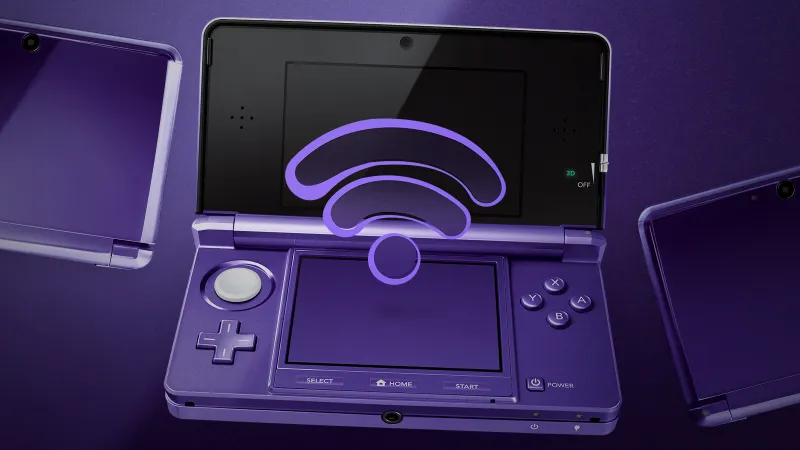

By the time Nintendo ceased production of the 3DS in September 2020, the company’s last dedicated line of exclusively handheld video game devices had completed one of gaming’s most incredible comebacks. But to come back, you must first fall, and fall the 3DS did soon after it first launched in February 2011: its first month-and-a-half sales numbers came in nearly 400,000 units short of Nintendo’s initial projections of 4 million units sold. Over the next three months, Nintendo sold just an additional 710,000 3DS units worldwide, with only 110,000 purchased in the United States. In response, Nintendo took drastic measures, slashing the 3DS price in America from $250 to $170 just a half-year after the handheld launched.
The move worked: In its first month at its new price, 3DS sales in America rose 260 percent. According to metrics released by Nintendo last year, the 3DS family of devices ended its run at a stunning 76 million units sold, still half of the original DS’s total but far more than other Nintendo platforms like the GameCube (21.7 million), Nintendo 64 (32.9 million), SNES (49.1 million), and even the original NES (61.9 million). The little system that couldn’t eventually proved it could.
Don’t Call it a Comeback
One obvious issue with the launch was the games – or lack thereof. Included in the modest North American 3DS launch lineup were just three Nintendo first-party titles: Nintendogs + Cats, Pilotwings Resort, and Steel Diver. Though a Zelda remake, a new Mario platformer, and a new Mario Kart would arrive by year’s end, traditional system-selling franchises were initially nowhere to be found. By the time the bigger games arrived, Nintendo’s three first-party launch titles were placed in the dustbin of history, something Game Informer predicted in its review of Steel Diver, which labeled the game as “destined to become a strange and forgotten footnote in the publisher’s history.”
Every first-party launch title communicates, both intentionally and unintentionally, something about the system upon which it’s launching and the company that created it. Last year, for instance, Mario Kart World evidenced that seamless open-world design and an interest in making buckets of money would remain hallmarks of Nintendo’s Switch 2 era. So, what can these three largely forgotten launch games tell us about the 3DS and Nintendo more broadly?
Re-examining the Launch Lineup
Initial hardware reviews of the 3DS contained two recurring thoughts: The glasses-free 3D effect was impressive when it worked – but it didn’t always work. Engadget’s review further hypothesized that “a lot of people are going to buy a 3DS and find they don’t really care for the 3D effect.” By the time Super Mario 3D Land released nine months after launch, Game Informer’s Bryan Vore was startled to find he was using the system’s primary feature at all, writing, “What surprises me most about 3D Land is how well the 3D effect is handled. I kept the 3D slider up most of the game”.
Super Mario 3D Land
Indeed, in Nintendo’s 2011 fiscal year report, president Satoru Iwata theorized that initial 3DS sales were underwhelming because the company had not done a convincing enough job of explaining the system’s signature innovation to potential customers: “The value of 3D images without the need for special glasses is hard to be understood through the existing media. However, we have found that people cannot feel it just by trying out a device, rather, some might even misestimate it when experiencing the images in an improper fashion.” Just two and a half years after the system’s launch, Nintendo began selling a fully flattened version of the handheld, appropriately named the 2DS.
Part of the issue with the underwhelming launch was that the 3DS lineup lacked an obvious killer app: There was neither a clear game that made purchasing the handheld an easy decision, nor was there a game that immediately proved that the 3D effect was anything more than an optional gimmick. In fact, among the three first-party titles was a game that had been designed nearly to completion before the team even learned of the existence of the 3DS.
Lonely Diver
When Nintendo first began showing the original DS to journalists at E3 in 2004, included among upcoming releases, like Metroid Prime Hunters and WarioWare Touched!, was a humble submarine simulation tech demo. IGN’s hands-on preview called the sub demo “simple in concept, but surprisingly complex in its controls and gameplay,” noting that it was “one of those ‘fun, but not quite a full game’ games at Nintendo’s booth, so it’s hard to say if development teams will expand on Submarine’s design to make it a more complete package.” At first, the team that made the demo, comprising veterans from Star Fox and F-Zero, was also unsure if they would expand it into a full game, as many of its members began work on other projects like Wii Fit.
Much later, producer Tadashi Sugiyama said in an Iwata Asks interview posted on Nintendo’s website that Nintendo of America asked the team to reconvene and release the submarine demo as downloadable software for the Nintendo DSi. But as the game – soon to be titled Steel Diver – expanded from just one mode (the side-scrolling submarine exploration and combat that would form the bulk of the game’s missions) to three modes (including Periscope Strike, a first-person torpedo shooter from the perspective of a periscope, and Steel Commander, a top-down strategy game partially inspired by the Japanese-exclusive 1990 Game Boy game Kaisen Game: Radar Mission), the Steel Diver team – now composed of both Nintendo designers and the 11 members of Giles Goddard’s company Vitei – decided to expand their demo into a full retail release. This initially led to an identity crisis for director Takaya Imamura, who revealed to Iwata that he briefly, “thought it would be fine to set the game in a flashy, glittery world like – and I’m not kidding – a submarine version of Mario Kart.” Sugiyama quickly shut that idea down, and the game proceeded with more traditional aquatic environments.
Steel Diver
Highly invested in the project was the legendary Shigeru Miyamoto, who held a key piece of information from the team: Though Steel Diver was developed for the DS, he thought that it would make an even better showcase for the company’s yet-to-be-revealed 3DS. But it wasn’t until very late into the development process that the Steel Diver team even learned of the existence of the new console, a decision Miyamoto explained in Iwata Asks: “I knew the game was perfect for the Nintendo 3DS system, but I was afraid that if we switched from the Nintendo DS system to the Nintendo 3DS system in the middle of development, the contents wouldn’t be thoroughly fine-tuned. So after the Nintendo DS version was about done, I said, ‘Let’s shift this over to the Nintendo 3DS system.’” According to Imamura, “[w]hen we heard that, we already had plans for debugging. Development was all but over.”
The process of adding an extra dimension to the game proved difficult at first, with Imamura telling Iwata, “We thought we could just switch it over and it would look stereoscopic, but when we did, we couldn’t see it. […] We were among the first to develop software for the Nintendo 3DS system, so a sufficient development kit didn’t exist at the time.” But then, “one day it suddenly started popping out,” Goddard said in that same Iwata Asks article. And it came at just the right time, Goddard added: “It started looking 3D about the day before our presentation. If it hadn’t, the whole thing might have ended.” Ultimately, Imamura felt that the game had found its correct home on the 3DS, even if the process could have been improved: “I’m really glad we changed it over to the Nintendo 3DS system. But I think it would have turned out even better if Miyamoto-san had told us sooner that he wanted to make it for the Nintendo 3DS system [laughs]!”
You and Mii
When the Wii launched in 2006, it came bundled with a number of pre-installed “channels” – or what we would likely just call apps today. Among those was the Mii Channel, an avatar-maker co-directed by Animal Crossing and Splatoon creator Hisashi Nogami. In an Iwata Asks interview, Nogami said that something like the Miis was an idea Miyamoto “had wanted to realize for some time.” Nogami revealed that originally the “plan was to develop three games in which the same characters designed by the player would appear.” But as development on the Wii advanced, the concept had “broadened to encompass the entire Wii.” Miis were integral features of the Wii’s user-interface, appearing in a large number of games including, most importantly, the Wii’s landmark pack-in, Wii Sports, and becoming a defining aspect of Nintendo’s cultural identity. In a 2008 fiscal report Q&A, Iwata made clear just how seriously the company viewed Miis as part of its brand, stating that, to “Nintendo, licensing Mii is identical to licensing Mario.” The Mii was now Nintendo, and it should be treated like its other icons.
However, it was not immediately clear to the general public whether the Mii was tied specifically to the Wii – with which it shared all but one letter – or if it would become Nintendo’s default avatar-creation system for the next two decades-plus, as we now know it has. Having launched in 2004, the DS did not include native Mii creation software, but it showed the first small signs that the Mii would become a core part of the larger Nintendo ecosystem.

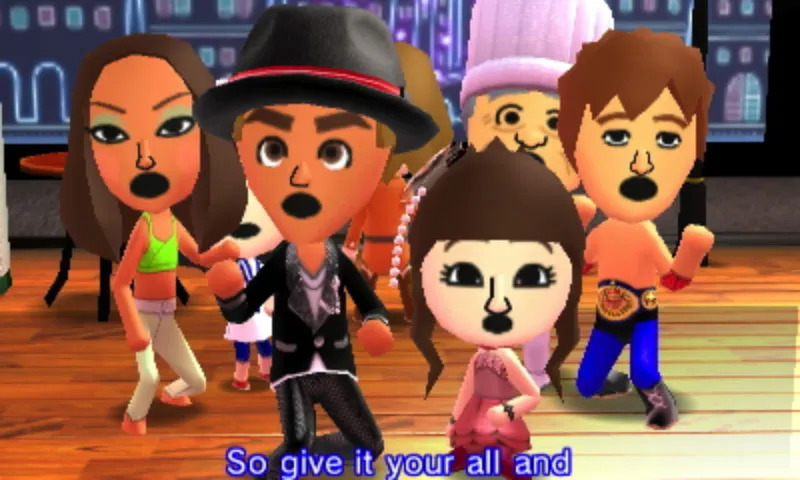
Tomodachi Life
First, the thrillingly titled DS exercise game Personal Trainer: Walking – released in 2008 in Japan and 2009 in America – tied players’ pedometer-tracked steps to Mii avatars, which could be imported over from the Wii’s Mii Channel. However, players who did not own a Wii could only choose Miis from a series of random presets; there was no way to create a custom Mii within the game itself. The first DS game to feature a full Mii creation suite was 2009’s Tomodachi Collection, a Japan-exclusive social simulation game that would receive a more widely released sequel on the 3DS in 2013/2014 (a third game will arrive later this year.) But only three other DS games featured Miis at all: Ide Yousuke’s Healthy Mahjong DSi, a Japan-exclusive downloadable mahjong game; Kuruma de DS, also exclusive to Japan, a GPS-connected title made in collaboration with Toyota and Honda that could only be used in select cars; and Final Fantasy Crystal Chronicles: Echoes of Time, which could feature a Mii-emblazoned item only if the player was connected to someone playing on a Wii.
It wasn’t until the 3DS that it became clear that Miis would truly migrate away from their home system. The 3DS was pre-installed with an avatar creation application called Mii Maker. One of the system’s novel features was “StreetPass,” a communication system that allowed players to exchange data with other nearby players. Its showcase app was StreetPass Mii Plaza, in which up to 10 Miis could congregate and compete in minigames. By the end of 2013, the 3DS even had its own version of Miiverse, the Mii-based social network that first appeared on the Wii U.
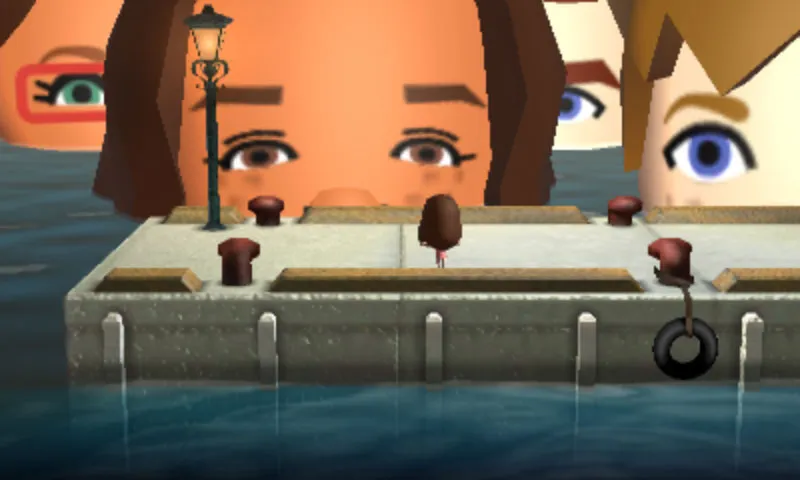
Tomodachi Life
Vacation on Wuhu Island
The surest sign that Miis were here for good was Pilotwings Resort. The 3DS launch title was the third – and final, for now – entry in the Miyamoto-created Pilotwings franchise of flight-simulation games. Each of the previous games had also served as North American launch titles for their respective systems, with each game functioning as a technical showcase for its system’s upgraded graphical capabilities. 1991’s Pilotwings utilized the Super Nintendo’s Mode 7 graphics to deliver groundbreaking “3D” visuals, while 1996’s Pilotwings 64 gave players the chance to explore the Nintendo 64’s more authentically three-dimensional spaces. Pilotwings Resort continued this trend, affording early 3DS adopters a massive playground to experiment with the system’s stereoscopic 3D visuals.
The earlier Pilotwings were not full of classic Nintendo iconography, but Pilotwings Resort represented a major aesthetic break: Every character in the game was a Mii. This aligned the game more closely with a different recent – and more recognizable – Nintendo series: Wii Sports. The action of Pilotwings Resort even takes place on Wuhu Island, the fictional tropical location where 2007’s Wii Fit and 2009’s Wii Sports Resort were also set.
Pilotwings Resort
The origins of the island, however, trace back even further. When Nintendo showcased the Wii to journalists in May 2006, Wii Sports contained an additional game that was cut from the final release: a flight simulator called Airplane, in which players soared above an unnamed island that bore a number of striking similarities to Wuhu. Interestingly, as detailed in a 2006 Eurogamer article, Nintendo reps were quick to downplay any connection between Wii Sports Airplane and the Pilotwings franchise, with Matthew Kumar writing, “It’s not a Pilotwings, they say, despite featuring a lovely, relaxing island which features small towns to buzz over, and tunnels to barnstorm. And, oh, you know, rings to fly through to get points.” Additionally, Kumar wrote, “It’s not entirely clear how this would fit into the Wii Sports range (or pack) or, despite what they say, if it is even intended to. But as a tech demo for that Pilotwings game they’re going to unveil at TGS or something, it’s brilliant and I’m gasping for more.” By the time Pilotwings Resort finally saw the light of day a half-decade later, the Wii Sports franchise – and its iconic Miis – had climbed so high up the hierarchy of Nintendo’s first-party franchises that IGN’s review of the game opened with, “Wii Sports Resort is back. Did you miss it?”
Miis appeared throughout the 3DS’s lifetime. They served as player icons for games like Super Mario 3D Land and Kid Icarus: Uprising, even starring in their own idiosyncratic games like Tomodachi Life and Miitopia. Miis would also be baked into future systems like the Wii U, the Switch, and the Switch 2. But it was Pilotwings Resort – along with Mii Plaza – that showed Nintendo had bigger and more serious aspirations for the Mii outside of the Wii.
Miitopia
Like Ships in the Night
When the original Game Boy launched in 1989, arriving in tow was an accessory called the Game Link Cable. It allowed players to connect directly to other Game Boy systems, enabling competitive multiplayer sessions in early hits like Tetris. Seven years later, with the release of the first Pokémon games, the Game Link Cable found a new calling, allowing players to not just compete, but also to swap their pocket monsters with other players in their communities. In her book Super Nintendo: How One Japanese Company Helped the World Have Fun, Keza MacDonald argues that this marked a turning point for Nintendo: “Pokémon Red and Pokémon Blue’s emphasis on trading and sharing represented an inspired reinvention of the Game Boy Link Cable: Game Freak took a piece of technology that had been used exclusively for competition and made it about communication, as well.”
That design principle – that games were about sharing and communication, too – reached its apotheosis with the 3DS’s StreetPass feature, which allowed the system to actively and, more interestingly, passively communicate with other nearby 3DSs via locally established, internet-free connections, even when the console was set to sleep mode. At launch, StreetPass was most prominently featured in the preinstalled Mii StreetPass Plaza app, which included the game Find Mii, an RPG in which players’ parties were filled with Miis taken from other 3DSs they had passed by. As producer Kouichi Kawamoto told Kotaku’s Stephen Totilo, Find Mii emerged “from our drive to make players feel like they accomplish something by using StreetPass”. It was an idle game powered by physical activity. In doing so, StreetPass’s communication had taken the sharing principles of the Game Link Cable in an entirely novel direction.
Walking the Dog (+Cat)
StreetPass was also implemented into Nintendogs + Cats, the best-selling of the 3DS’s first-party launch titles. While Pokémon players of yore had to establish a physical connection to see other players’ collections, StreetPass enabled Nintendogs players to passively interact with other owners and their pets. You could take your 3DS on a walk to an actual dog park, for example, and if there were any other 3DS owners in range, you would head home with a series of journal entries featuring their Miis, their pets, any messages they’d sent, and perhaps even a gift. These Miis and their pets would also soon begin to populate the game in other ways: You might run into them on a walk or even compete against them in dog shows. Nintendogs on DS featured a similar feature – Bark Mode – but it required more active participation from players; with StreetPass, community-building was now a low-effort exercise (often involving actual exercise).
Nintendogs + Cats
StreetPass was central to Nintendo’s conception of the 3DS. In an Iwata Asks article, the eponymous Iwata said that the concept of the 3DS was, “Carry Around, Affect Each Other and Something New Every Day.” Nintendogs + Cats producer Hideki Konno further stated, “[W]hile it’s definitely okay to enjoy the game at home, I hope players will go out walking around with their Nintendo 3DS system as often as possible. There’s a lot for that purpose not just in Nintendogs + Cats, but built into the system itself”. StreetPass was exactly the kind of kooky invention upon which Nintendo made its name, and its legacy of encouraging players to explore the world lives on in mobile games like Pokémon Go.
Path to Greatness
The 3DS would soon find better games – and better sales – but its modest launch lineup contained plenty of insight. Steel Diver’s winding path towards release evidenced Nintendo’s unwavering commitment to its internal ideas – and its most legendary designer’s unconventional style of communication. Pilotwings Resort further established a core part of Nintendo’s brand identity, while Nintendogs + Cats showed that even the most straightforward of Nintendo sequels could still feature peculiar innovations. Stereoscopic 3D may not have been the future of gaming, but other elements of the 3DS have stayed with us forever.