



Technologist Mag
  • Home
  • Tech News
  • AI
  • Apps
  • Gadgets
  • Gaming
  • Guides
  • Laptops
  • Mobiles
  • Wearables
  • More
    • Web Stories
    • Trending
    • Press Release

Subscribe to Updates

Get the latest tech news and updates directly to your inbox.

What's On
Apple’s latest Sports app update is a win for soccer fans everywhere

Apple’s latest Sports app update is a win for soccer fans everywhere

20 July 2026
Samsung’s secret AI chip could finally cool down Exynos phones

Samsung’s secret AI chip could finally cool down Exynos phones

20 July 2026
Want to try film photography? Kodak’s new  camera is a great place to start

Want to try film photography? Kodak’s new $35 camera is a great place to start

20 July 2026
Apps Marketed to US Troops Are Shipping Chinese and Russian Code

Apps Marketed to US Troops Are Shipping Chinese and Russian Code

20 July 2026
A new AI model wants self-driving cars to think before they swerve

A new AI model wants self-driving cars to think before they swerve

20 July 2026
Facebook X (Twitter) Instagram
Technologist Mag
SUBSCRIBE
  • Home
  • Tech News
  • AI
  • Apps
  • Gadgets
  • Gaming
  • Guides
  • Laptops
  • Mobiles
  • Wearables
  • More
    • Web Stories
    • Trending
    • Press Release
Technologist Mag
Home » Your future AR glasses might finally stop making the real world look weird
Tech News

Your future AR glasses might finally stop making the real world look weird

By technologistmag.com19 July 20263 Mins Read
Your future AR glasses might finally stop making the real world look weird
Share
Facebook Twitter Reddit Telegram Pinterest Email

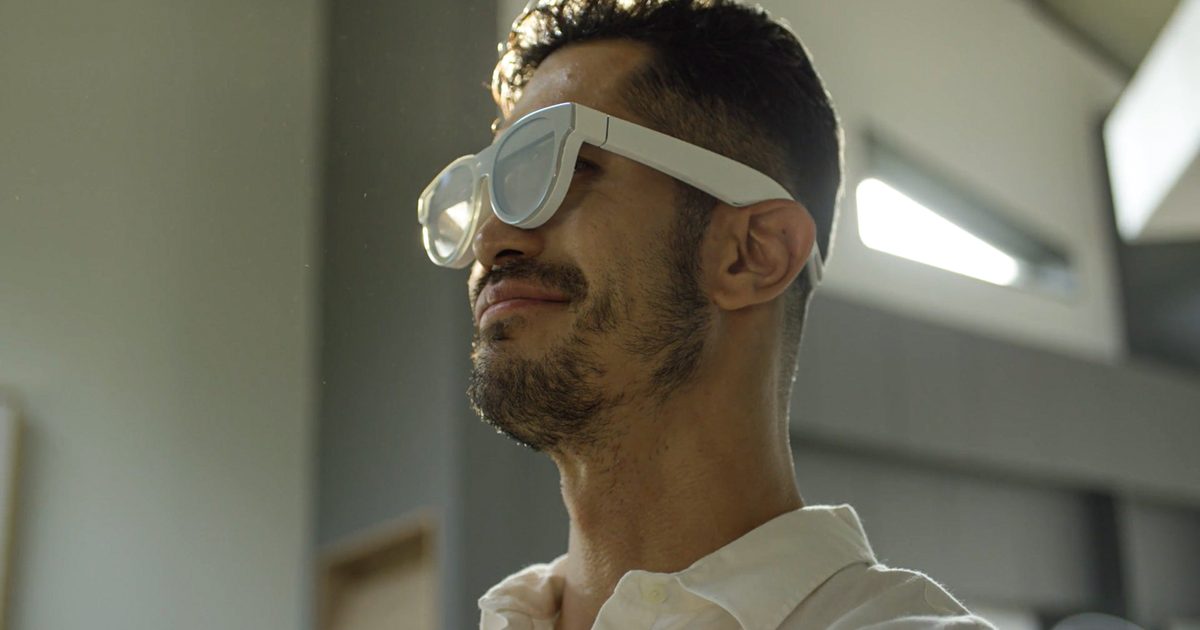
One of the biggest promises of augmented reality is blending digital objects seamlessly into the real world. Ironically, today’s AR glasses often make the real world harder to see. Researchers at the Shibaura Institute of Technology (SIT) in Japan, led by Assistant Professor Xiaodan Hu in collaboration with Dr. Yan Zhang and Professor Xubo Yang from Shanghai Jiao Tong University in China, and Professor Kiyoshi Kiyokawa from Japan’s Nara Institute of Science and Technology, have developed a new AR display technique that aims to make virtual objects look realistic without reducing visibility of the real world. The study was published in IEEE Transactions on Visualization and Computer Graphics.

The biggest AR problem isn’t virtual objects; it’s everything around them

Instead of relying solely on better hardware, they’ve developed a perception-driven display system that intelligently balances the visibility of the real world and virtual objects based on how humans actually see. The goal is simple: make digital content look realistic without making the environment around the user darker or harder to navigate.

You see, modern optical see-through AR glasses work by projecting digital objects into the user’s field of view. To make those virtual objects appear solid and realistic, the display often has to block or dim parts of the real world, a technique known as occlusion. While it improves immersion, it can also reduce visibility, especially in bright environments or when walking around outdoors.

The new research takes a different approach. Instead of simply blocking more light, the team developed what they call a mask-balancing method. In simple terms, the display constantly adjusts how much of the real world and virtual content reaches the user’s eyes, ensuring neither overwhelms the other. Think of it as a smart balancing act that keeps both the physical world and digital overlays comfortably visible.

How the technology actually works

At the heart of the system is a combination of polarized optical components, including a polarizing beam splitter and a linear polarizer. These work together to control how much light from the real world and the virtual display reaches the user’s eyes. By adjusting the angle between these components in real time, the system continuously optimizes visibility depending on the lighting conditions.

The researchers didn’t stop there. The prototype also uses eye tracking and scene analysis to understand what the user is looking at and how bright the surrounding environment is. Based on this information, it dynamically tweaks the balance between the real and virtual images, making digital objects remain convincing while keeping the real world bright and easy to see. While the underlying optics are complex, the idea is fairly straightforward: instead of treating every environment the same, the display adapts itself on the fly.

AR glasses are finally learning to see as we do

Adding to all this, the researchers conducted multiple user studies to understand how people perceive virtual objects under different lighting conditions, using those findings to fine-tune their display algorithm before testing it on a working prototype. The final user study showed that the system improved real-world visibility while keeping virtual objects looking realistic across a range of environments.

The bigger takeaway is that this technology isn’t just aimed at gaming. As AR glasses like the XREAL xbx a01+ and Snap SPECS AR continue pushing toward mainstream adoption, innovations like this could make them far more practical for navigation, medical assistance, industrial work, education, and remote collaboration — situations where users need to clearly see both the real world and digital information at the same time

Share. Facebook Twitter Pinterest LinkedIn Telegram Reddit Email
Previous Article7 Apple Notes tips to elevate your note-taking experience
Next Article Hidden prompts can secretly rewrite an AI’s memory, and researchers say that’s a serious problem

Related Articles

Apple’s latest Sports app update is a win for soccer fans everywhere

Apple’s latest Sports app update is a win for soccer fans everywhere

20 July 2026
Samsung’s secret AI chip could finally cool down Exynos phones

Samsung’s secret AI chip could finally cool down Exynos phones

20 July 2026
Want to try film photography? Kodak’s new  camera is a great place to start

Want to try film photography? Kodak’s new $35 camera is a great place to start

20 July 2026
Apps Marketed to US Troops Are Shipping Chinese and Russian Code

Apps Marketed to US Troops Are Shipping Chinese and Russian Code

20 July 2026
A new AI model wants self-driving cars to think before they swerve

A new AI model wants self-driving cars to think before they swerve

20 July 2026
The ACLU Is Arming Lawyers to Expose State Surveillance Secrets

The ACLU Is Arming Lawyers to Expose State Surveillance Secrets

20 July 2026
Stay In Touch
  • Facebook
  • Twitter
  • Pinterest
  • Instagram
  • YouTube
  • Vimeo

Subscribe to Updates

Get the latest tech news and updates directly to your inbox.

Don't Miss
Samsung’s secret AI chip could finally cool down Exynos phones

Samsung’s secret AI chip could finally cool down Exynos phones

By technologistmag.com20 July 2026

If you’ve ever owned an Exynos-powered Galaxy phone, you already know the drill: heavy tasks…

Want to try film photography? Kodak’s new  camera is a great place to start

Want to try film photography? Kodak’s new $35 camera is a great place to start

20 July 2026
Apps Marketed to US Troops Are Shipping Chinese and Russian Code

Apps Marketed to US Troops Are Shipping Chinese and Russian Code

20 July 2026
A new AI model wants self-driving cars to think before they swerve

A new AI model wants self-driving cars to think before they swerve

20 July 2026
Clair Obscur Actor Jennifer English Steps Away From Tides Of Annihilation Protagonist Role

Clair Obscur Actor Jennifer English Steps Away From Tides Of Annihilation Protagonist Role

20 July 2026
Technologist Mag
Facebook X (Twitter) Instagram Pinterest
  • Privacy
  • Terms
  • Advertise
  • Contact
© 2026 Technologist Mag. All Rights Reserved.

Type above and press Enter to search. Press Esc to cancel.