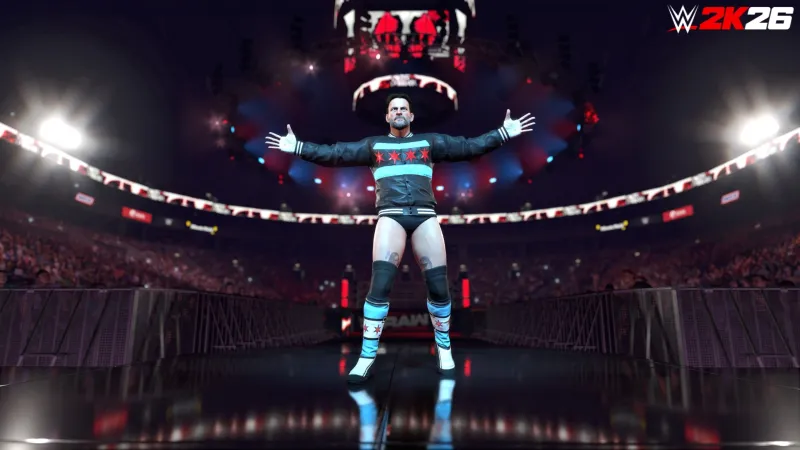
WWE 2K26 doesn’t make the most compelling case for long-time players to upgrade. Sure, the roster has ballooned, its presentation is stronger than ever, and there are small improvements in some areas. But the subtle gameplay tweaks are neither exciting nor overtly perceptible, and certain modes take unwelcome steps backwards.
Describing annual sports games as “more of the same with a few tweaks” is boring and not entirely helpful, but WWE 2K26 fits that description more than any recent entry. The usual modes are present, and existing fans can pick up and play the game with minimal new onboarding lessons. While the in-ring action still isn’t the most pick-up-and-play friendly due to how increasingly dense its systems are becoming, I appreciate additions like the ability to forcefully drive opponents into corners instead of just whipping them. Of the new weapons, thumbtacks are my favorite, and I’m impressed by how they remain stuck to bodies for the duration of matches.
The new match stipulations – Inferno, Dumpster, I Quit, and 3 Stages of Hell – are nice to have and are well replicated, though I only see myself revisiting Inferno and 3 Stages beyond the review period. Superstar models for the 400+ wrestler roster range from very good to fantastic (though Legends, as usual, are the most hit and miss), and the overall presentation benefits from 2K26 being a current-gen only title. The commentary is also the best it’s been in years, thanks to the additions of the excellent Wade Barrett and the ridiculous Booker T, who bring a refreshing energy to the booth. Despite some legacy hiccups like weird physics interactions, I can still have fun with WWE 2K26’s in-ring action.
Arguably, the biggest and potentially most polarizing addition is the Ringside Pass, 2K26’s take on the battle pass. Sporting a free and a premium pass with 40 tiers each, engaging with any activity nets XP that unlocks new wrestlers (with many available on the free tier for Season 1), items like championships and MyFaction cards, timed XP boosts, and Virtual Currency (VC) in a system that replaces the old post-launch DLC pack strategy.
Positive or negative, you likely already have strong feelings about battle passes before laying eyes on WWE 2K26’s. As someone who doesn’t play many online multiplayer games and thus doesn’t engage with battle passes often, I’m neutral on 2K replacing their old monetization strategy with this one. I will say that, after doing some math, although the full price of purchasing every Ringside Pass tier skip is much more expensive than all of 2K25’s post-launch packs combined, it also features greater rewards. The free tiers of Ringside Pass alone unlock more wrestlers than 2K25 offered after its release, which is the main draw of these rewards. I also appreciate that tier rewards never expire, avoiding the toxic FOMO many battle passes create. Ringside Pass will be fine to some and annoying to others; I can’t deny feeling an innate satisfaction when unlocking new stuff merely by playing the game, and I gained rewards at a reasonable pace into the double-digit tiers. But the presence of Ringside Pass has some potential negative side effects on other modes in the game.
This year’s MyRise, for example, is my least favorite rendition of the story-driven mode to date due to its egregious padding. Reaching new story milestones now involves playing multiple random matches in a row to earn performance stars to meet a quota. It is a grind, and it harms the pacing; an intriguing plot twist could happen, then you have to wrestle five or six opponents in a row (often from a small pool, so expect repeat foes) before the story picks back up. I can’t help but suspect this approach was done to help players earn Ringside Pass XP, since you earn more points by winning matches. Regardless of the reasoning, I miss the more brisk and eventful structure of 2K25’s MyRise.
The Island, WWE 2K’s online exploration hub, returns, and while the addition of voice acting breathes some life into the destination, it’s still not an appealing excursion. The sheer assault of VC cosmetic stores makes it feel as much like exploring a digital shopping mall as it does a video game, and I still can’t get behind the idea of paying real money to upgrade my custom superstar’s stats. You can grind points by competing in lame 4-way matches at the new Scrapyard area or in dull roguelike-style runs in gauntlet towers representing the three goofy factions you align with (led by CM Punk, Rhea Ripley, and Cody Rhodes), but the squeeze to buy VC is strong. While I can only speak to the Ripley path, Order of Shadows, an early handicap match against two opponents was so insanely tough that it felt like the game was saying, “You know, if your stats were higher, maybe you could deal with this nonsense.” Call it a skill issue, but even without these headaches, the Island still feels like an icky and grind-heavy destination once you get past the cute environmental references and Easter Eggs.
CM Punk’s Showcase mode is also a mixed bag. It simultaneously serves as a playable trip down memory lane that chronicles Punk’s WWE career while also having a ton of fantasy bouts against dream opponents. The historical half is lacking since a big chunk of it only covers the final year of Punk’s first WWE tenure (2013 – 2014) and his current run. Ignoring rivalries that simply can’t be covered due to opponents being employed elsewhere (like Jeff Hardy and Chris Jericho), it’s disappointing how much of the historical side is so focused on his latter work. No ECW bouts, no Straight Edge Society stuff, and, perhaps because of Vince McMahon’s involvement in the match, even Money in the Bank 2011 is a no-show.
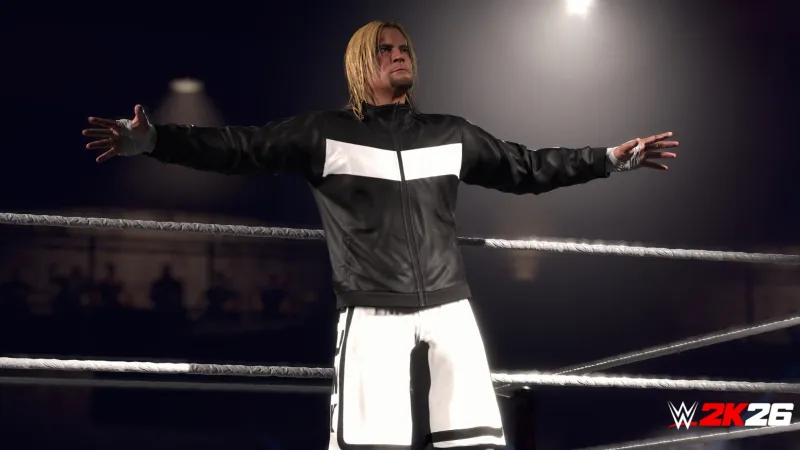
The dream match side of Showcase has some neat “What Ifs”, but it goes on for so long that it starts to lose its appeal. I am happy Showcase matches have far fewer objectives this year, making them less of a chore to fully complete if you’re chasing the unlockables. And if you’d rather skip the timeline entirely, a new Gauntlet format offers a fun but challenging alternative where you can battle all 20 opponents in a gauntlet match to instantly unlock every Showcase reward. Good luck pulling that off, but it’s a cool idea.
Favorite destinations like MyGM remain enjoyable, if familiar at this point, with intergender bouts and bigger multi-man matches to book. The Creation Suite finally allows players to create even more superstars and images – double the amount, in fact – to make one of the best destinations of any WWE game even better. The sim-like MyUniverse gets the WWE Draft to add to its immersion, but the team-building collectible card mode MyFaction will probably never be for me. It’s a VC-heavy destination, and I just don’t find the wrestling/card hybrid engaging in the face of more traditional offerings. Assembling a team of superstars (whose value is based on TCG-style rarity) to complete various series of back-to-back matches under different objectives isn’t outright bad, but it’s another grind-heavy mode that still doesn’t appeal to me.
As the WWE 2K series churns out another game each year, they’re becoming tougher to remain enthusiastic about. Visual Concepts found a strong formula with 2K22 and has steadily iterated on that without rocking the boat too much, making for a consistent but gradually less exciting package each year. Starting with The Island’s debut last year, the VC infiltration is becoming irksome, especially in a package that already has multiple expensive editions and paid unlocks. Art is starting to imitate life – it’s never been more expensive to consume the WWE product, thanks to sky-high ticket prices and the pricey streaming subscriptions required to even watch everything. My feelings while playing 2K26 began to mirror my current relationship with the on-screen product: It’s still enjoyable, but the negatives are catching up to the positives.