





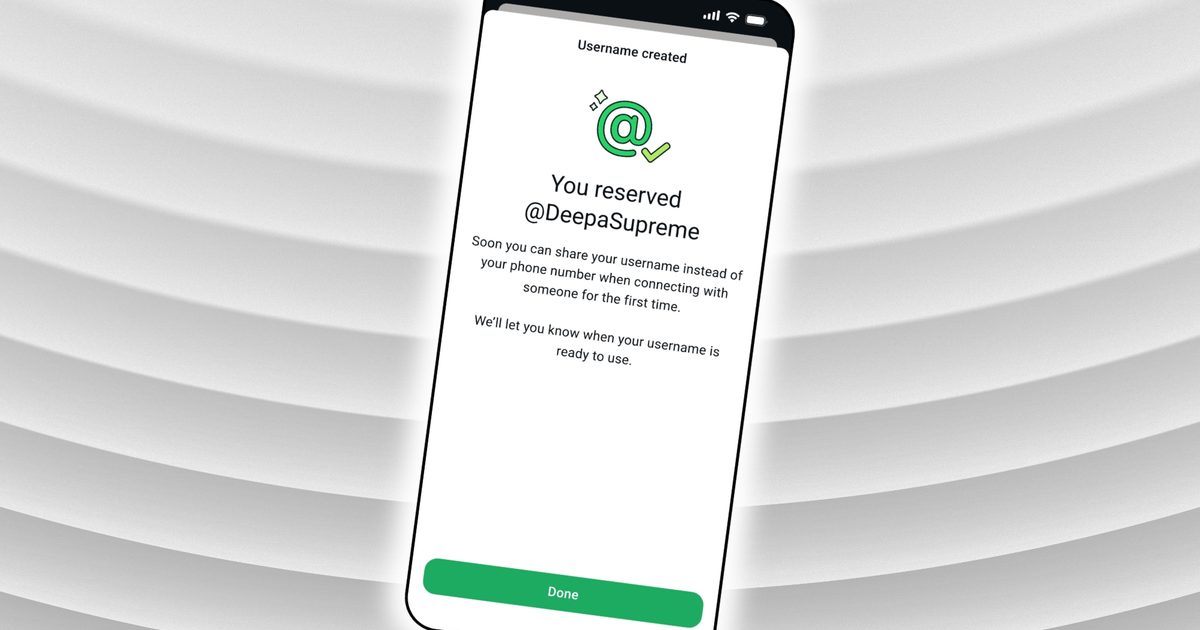
WhatsApp’s plan to let people use usernames instead of phone numbers has run into trouble in India, its biggest market. This newly introduced feature is meant to improve privacy by letting users connect without immediately sharing their phone number. Indian authorities, however, are worried that the same feature could make scams and impersonation harder to control.
India’s Ministry of Electronics and Information Technology (MeitY) has asked WhatsApp to pause the username rollout until consultations with the government are complete. That is a major intervention, since WhatsApp has more than 500 million users in the country, who rely on the app for their everyday personal and professional communications.
Why India is worried
WhatsApp has already started letting users reserve usernames ahead of the wider rollout. Once active, the feature would let people connect through a handle instead of a phone number, which could be useful in large groups, business chats, creator pages, and conversations where users do not want to share their personal number.
WhatsApp says usernames will be optional, not publicly searchable, and protected by safeguards. Users will need to know the exact username to start a chat, and an optional username key can add another layer of protection.
The concern is that scammers could still use familiar-looking handles, display names, and profile photos to impersonate others. That risk is especially sensitive in India, where WhatsApp-related fraud is already common. In “digital arrest” scams, criminals pretend to be police officers, CBI officials, RBI representatives, telecom workers, or Enforcement Directorate officers, then pressure victims over WhatsApp or video calls to send money.
There is also the everyday impersonation problem. Scammers often pose as friends or family members, claim there is an emergency, and push targets into transferring money quickly. WhatsApp’s move into creator subscriptions adds another layer to this issue, since fake or lookalike creator accounts could also be used to mislead followers, collect payments, or exploit trust built around public figures.
What experts are saying
Apar Gupta of the Internet Freedom Foundation says usernames come with both privacy benefits and safety risks. On one hand, they can help users avoid sharing phone numbers, which can expose people to harassment, unwanted contact, and cross-platform identification. On the other hand, usernames could create impersonation risks if someone reserves a recognizable name and uses a familiar profile photo.
Gupta also said WhatsApp’s own privacy claims should be viewed carefully, pointing to prompts that encourage users to link their Instagram and Facebook accounts to WhatsApp while reserving a username. IFF has also argued that MeitY has not clearly identified the legal provision under which it can pause the rollout of a software feature before launch.
For now, WhatsApp’s username feature sits between two concerns. It could reduce phone-number exposure for ordinary users, but India’s fraud problem means WhatsApp will need to show that the feature cannot be easily misused at scale.