Technologist Mag
  • Home
  • Tech News
  • AI
  • Apps
  • Gadgets
  • Gaming
  • Guides
  • Laptops
  • Mobiles
  • Wearables
  • More
    • Web Stories
    • Trending
    • Press Release

Subscribe to Updates

Get the latest tech news and updates directly to your inbox.

What's On
Google’s next XL Pixel may get lighter and pricier, with less RAM to start

Google’s next XL Pixel may get lighter and pricier, with less RAM to start

3 August 2026
Google Pixel 11 Pro leaks in full, revealing minor spec bumps and a higher price

Google Pixel 11 Pro leaks in full, revealing minor spec bumps and a higher price

3 August 2026
AI slop stories are spoiling the childhood

AI slop stories are spoiling the childhood

2 August 2026
Xbox price hikes in Europe are wild and now I’m worried about Project Helix

Xbox price hikes in Europe are wild and now I’m worried about Project Helix

2 August 2026
The MacBook Air is running in short supply, despite a price hike

The MacBook Air is running in short supply, despite a price hike

2 August 2026
Facebook X (Twitter) Instagram
Technologist Mag
SUBSCRIBE
  • Home
  • Tech News
  • AI
  • Apps
  • Gadgets
  • Gaming
  • Guides
  • Laptops
  • Mobiles
  • Wearables
  • More
    • Web Stories
    • Trending
    • Press Release
Technologist Mag
Home » This floating AI robot looks like it escaped a Studio Ghibli film, and that’s exactly the point
Tech News

This floating AI robot looks like it escaped a Studio Ghibli film, and that’s exactly the point

By technologistmag.com12 July 20263 Mins Read
This floating AI robot looks like it escaped a Studio Ghibli film, and that’s exactly the point
Share
Facebook Twitter Reddit Telegram Pinterest Email

Most home robots today have one thing in common: they’re loud, rigid, and unmistakably robotic. Whether it’s a vacuum cleaner bumping into furniture or a drone buzzing overhead, they’re built to perform tasks – not necessarily to make people feel comfortable. Researchers in Japan think there’s a better way, and it starts with taking inspiration from animated creatures rather than industrial machines.

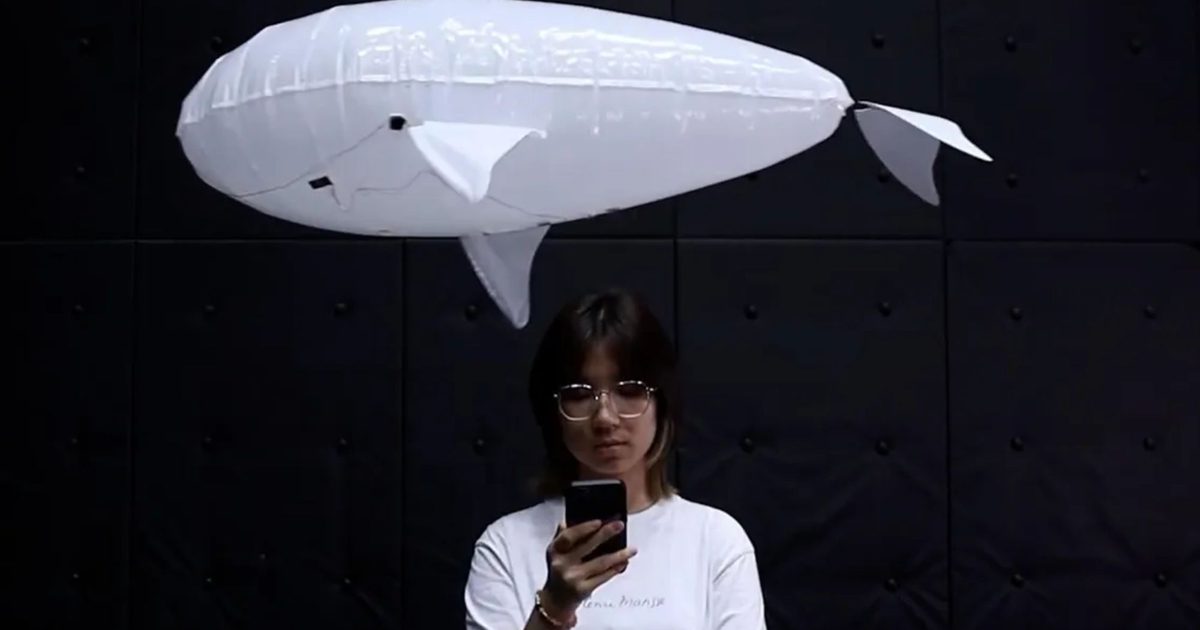
A research team led by Mingyang Xu at Keio University, in collaboration with institutions including the MIT Media Lab, has unveiled a prototype floating companion robot that glides silently through the air instead of rolling across the floor. Rather than looking like another gadget, the robot resembles a tiny floating creature, drawing inspiration from characters such as Tinker Bell, Pokémon’s Mew, and Studio Ghibli’s Soot Sprites.

The team recently demonstrated the concept in a video showcasing how these lighter-than-air robots could one day become part of everyday life.

A softer approach to robots that live alongside humans

Unlike conventional drones, the prototype doesn’t rely on fast-spinning propellers that produce constant noise. Instead, it uses a lighter-than-air design with small fins that gently propel it through the air, giving it the appearance of a floating white whale drifting from room to room.

The design isn’t simply about aesthetics. Because the robot is lightweight, soft-bodied, and lacks exposed moving parts or pinch points, it can safely interact with people without posing the same risks as traditional flying robots. That opens up possibilities for robots that don’t need to stay behind safety barriers or operate only when humans aren’t nearby.

In the demonstration, the floating companion performs surprisingly ordinary tasks. It wakes users up like an alarm clock, delivers reminders, keeps someone company while studying, dances alongside its owner, and even serves as a playful source of entertainment. Rather than replacing smartphones or smart speakers, the robot acts more like a friendly presence that naturally shares the same physical space as its owner.

Why making robots feel approachable matters

The project also tackles one of robotics’ oldest design problems: the uncanny valley. Researchers have long found that robots designed to look almost human often make people uncomfortable because their appearance falls somewhere between familiar and artificial, leading to instances involving the uncanny valley – an effect where someone feels something looks almost human, but not quite there.

Instead of trying to build realistic facial expressions, the research team believes emotion can be communicated through movement itself. Gentle floating motions, soft body language, and playful interactions may prove more effective than synthetic smiles or blinking digital eyes.

That philosophy could become increasingly important as AI companions become more common. Companies such as OpenAI, Meta, and Apple are investing heavily in AI assistants that are expected to move beyond smartphones and into dedicated hardware. At the same time, robotics companies are racing to build home companions that people actually enjoy living with – not just machines that complete chores.

This floating robot isn’t close to becoming a commercial product yet, but it offers an intriguing glimpse of what the next generation of AI companions might look like. If researchers are right, the most successful home robot of the future may not resemble a humanoid assistant at all. It might simply drift quietly into the room like something straight out of an animated fantasy film.

Share. Facebook Twitter Pinterest LinkedIn Telegram Reddit Email
Previous ArticleApple could launch two new Apple Pencils next spring alongside the iPad Pro
Next Article Scammers are now cloning trusted news websites to steal your money

Related Articles

Google’s next XL Pixel may get lighter and pricier, with less RAM to start

Google’s next XL Pixel may get lighter and pricier, with less RAM to start

3 August 2026
Google Pixel 11 Pro leaks in full, revealing minor spec bumps and a higher price

Google Pixel 11 Pro leaks in full, revealing minor spec bumps and a higher price

3 August 2026
AI slop stories are spoiling the childhood

AI slop stories are spoiling the childhood

2 August 2026
Xbox price hikes in Europe are wild and now I’m worried about Project Helix

Xbox price hikes in Europe are wild and now I’m worried about Project Helix

2 August 2026
The MacBook Air is running in short supply, despite a price hike

The MacBook Air is running in short supply, despite a price hike

2 August 2026
Anthropic is paying .5 billion over pirated books, but it can still legally cut up purchased ones

Anthropic is paying $1.5 billion over pirated books, but it can still legally cut up purchased ones

2 August 2026
Stay In Touch
  • Facebook
  • Twitter
  • Pinterest
  • Instagram
  • YouTube
  • Vimeo

Subscribe to Updates

Get the latest tech news and updates directly to your inbox.

Don't Miss
Google Pixel 11 Pro leaks in full, revealing minor spec bumps and a higher price

Google Pixel 11 Pro leaks in full, revealing minor spec bumps and a higher price

By technologistmag.com3 August 2026

Google has already confirmed it will unveil the Pixel 11 lineup during its next Made…

AI slop stories are spoiling the childhood

AI slop stories are spoiling the childhood

2 August 2026
Xbox price hikes in Europe are wild and now I’m worried about Project Helix

Xbox price hikes in Europe are wild and now I’m worried about Project Helix

2 August 2026
The MacBook Air is running in short supply, despite a price hike

The MacBook Air is running in short supply, despite a price hike

2 August 2026
Anthropic is paying .5 billion over pirated books, but it can still legally cut up purchased ones

Anthropic is paying $1.5 billion over pirated books, but it can still legally cut up purchased ones

2 August 2026
Technologist Mag
Facebook X (Twitter) Instagram Pinterest
  • Privacy
  • Terms
  • Advertise
  • Contact
© 2026 Technologist Mag. All Rights Reserved.

Type above and press Enter to search. Press Esc to cancel.