






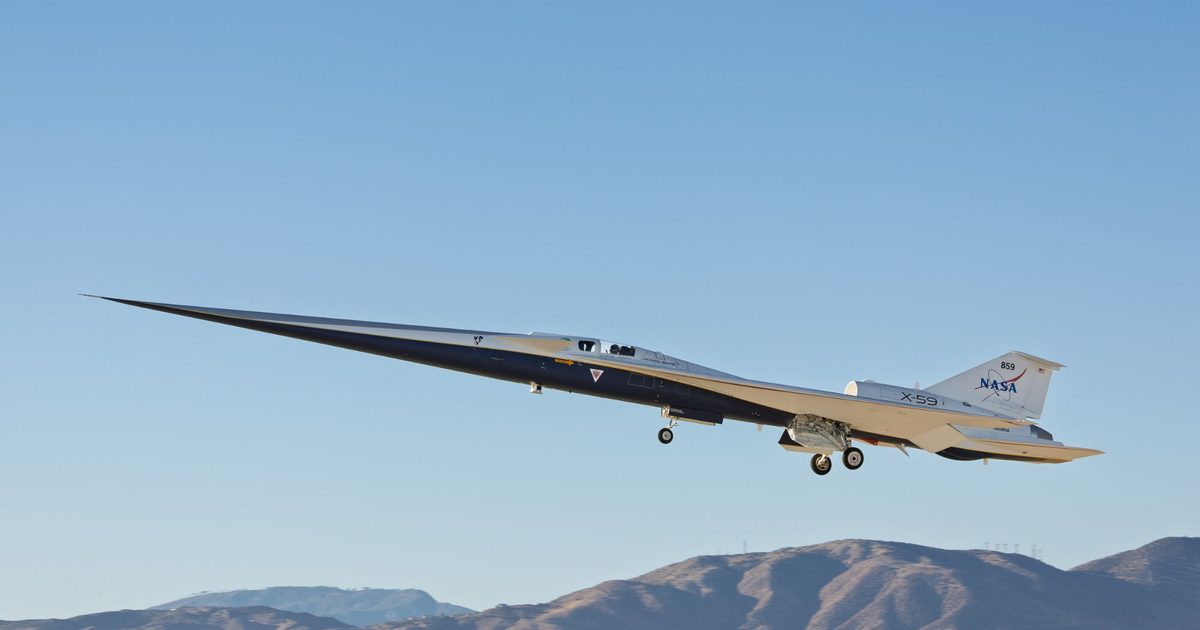
NASA has already proved that its needle-nosed X-59 can move seriously fast in recent test flights. Now, the next step is to find out whether it can break the sound barrier without announcing its arrival to everyone below. The experimental aircraft recently reached Mach 1.4, or about 924 mph (1,487 kph), at an altitude of 55,000 feet. Those are the target conditions NASA plans to use during future tests of the X-59’s quieter sonic signature, making the flight a major milestone for the agency’s Quesst mission.
NASA’s supersonic jet has reached full speed
The X-59 first crossed the sound barrier on June 5, reaching approximately Mach 1.1 and 43,400 feet during an 81-minute test flight from Edwards Air Force Base in California. NASA pushed it to its full mission speed and altitude one week later. Unlike a future passenger aircraft, the X-59 is a one-seat research plane built by Lockheed Martin’s Skunk Works. Its long nose, carefully shaped fuselage, and top-mounted engine are intended to spread out the shock waves that ordinarily combine into a thunderous sonic boom.
NASA wants the resulting sound on the ground to resemble a quieter thump. Proving that claim could eventually convince US and international regulators to establish new noise limits for commercial supersonic aircraft flying over land. In other words, future airlines could use technology to cut journey times between cities without repeatedly blasting the communities beneath their routes.
The quiet part is the tricky bit
Despite the milestone, NASA has yet to properly measure how quiet the X-59 sounds during these flights. An F-15 research jet has accompanied the aircraft as a safety chase plane, producing conventional sonic booms that obscure the X-59’s own sound. During upcoming tests, an F-15 equipped with a shock-sensing probe will fly near the X-59 and measure the pressure waves it creates.

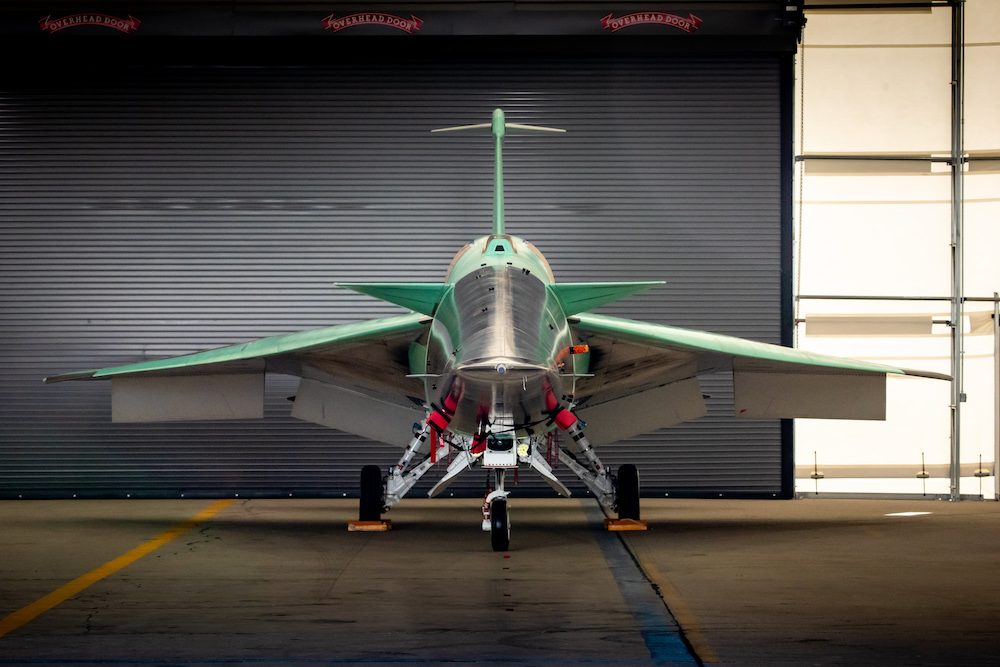
NASA says the aircraft still faces months of performance testing before entering its acoustic-validation phase. Researchers will then measure its sonic signature more precisely before flying it over selected US communities and asking residents how disruptive the thump sounds. The X-59 will never carry paying passengers. But its data and design tools could help aircraft manufacturers build the quieter supersonic airliners that eventually do. So the Concord dream still lives on.
