





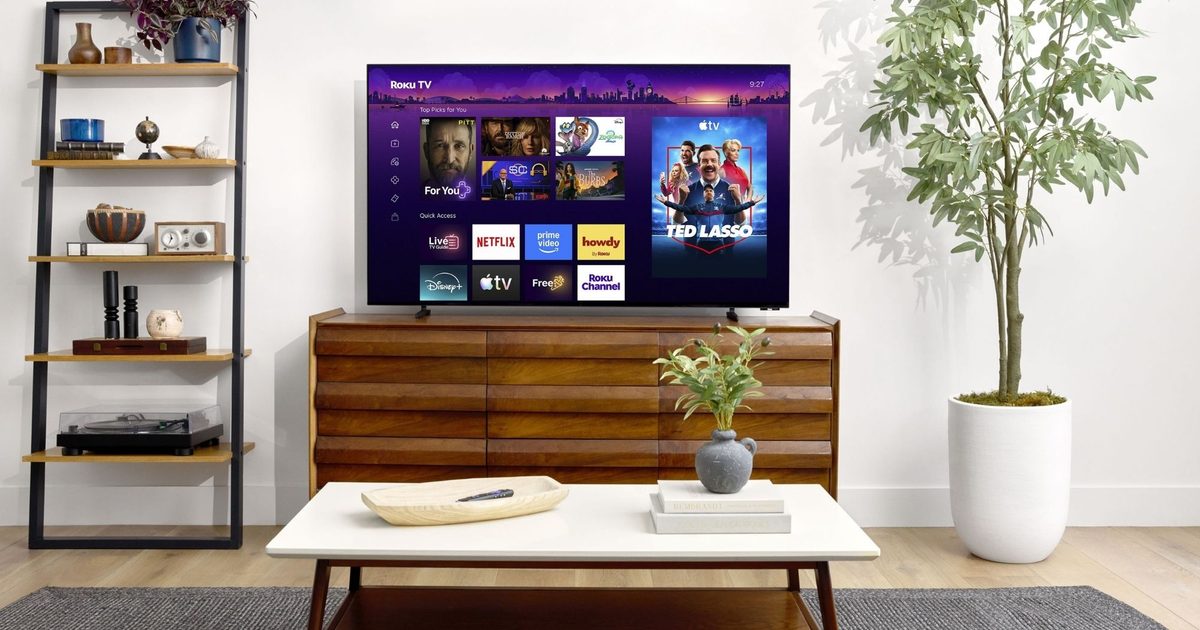
Roku has launched its first-ever OLED TVs, the Roku Pro Series OLED and Roku Pro Series LX OLED, replacing its older LCD-based Pro lineup entirely. For a brand known mostly for budget friendly streaming hardware, jumping straight into OLED territory is a bold move, especially with pricing this aggressive.
The Roku Pro Series OLED undercuts Samsung and LG
The base model starts at just $999 for the 55-inch size, a number worth pausing on. Samsung’s entry-level S85 OLED currently lists for $1,499, while LG’s B6E OLED runs $1,299. Roku is undercutting both by a real margin.
Roku Pro Series OLED features a 4K, 120Hz panel with Dolby Vision, Roku’s Smart Picture Max for automatic picture tuning, and gaming perks like FreeSync Premium and variable refresh rate. It’s also available now in both 55 and 65 inch sizes, exclusively through Amazon.
The Pro Series LX OLED is the pricier, sharper option
Roku’s step-up model adds a brighter panel, a wider color range, a faster 144Hz refresh rate, and an anti-reflective filter that cuts down on glare. It’s not yet confirmed which exact type of OLED panel this model uses, though it’s likely a brightness-optimized variant similar to what LG uses in its C Series. The LX OLED is available for preorder now, officially launching in October for $1,299.
What’s new, and what’s missing, in Roku’s OLED TVs
Both new TVs share Roku’s signature simplicity. You get an adjustable tool-free stand, velcro cable straps, and a push to talk voice remote with backlit buttons that pairs directly with Bluetooth headphones.

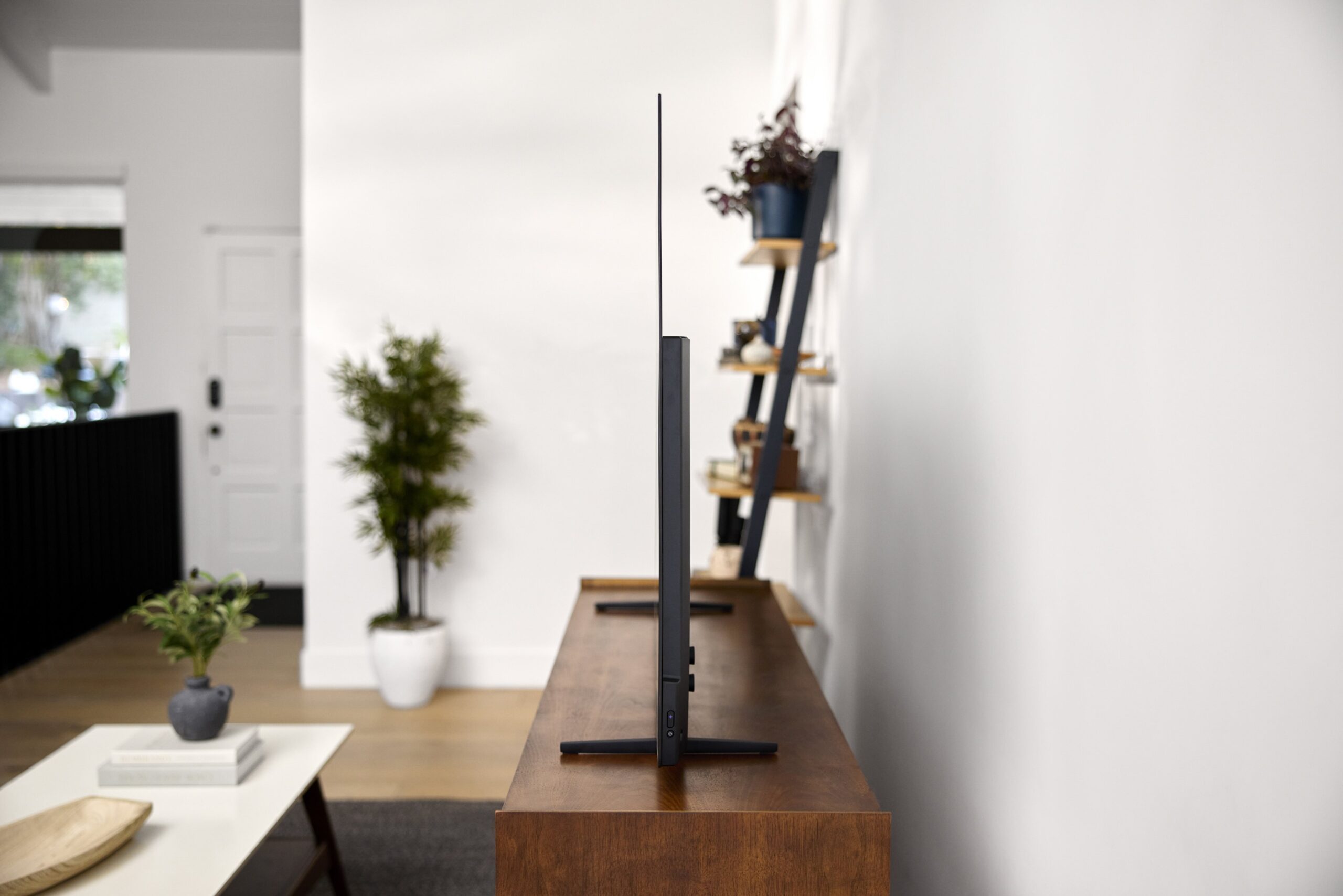
There’s also a tradeoff here. Roku’s ultra-thin metal bezel design meant sacrificing the Soundstage audio port that shipped on the older Pro TV. Roku’s VP of retail strategy, Chris Larson, confirmed the feature would have made the new design too thick to pull off.
For years, Roku has built its reputation on simple software and affordable streaming devices. Now it is bringing that same strategy to OLED TVs. Whether it can challenge LG and Samsung on picture quality remains to be seen, but it has already made the premium TV market far more competitive.
