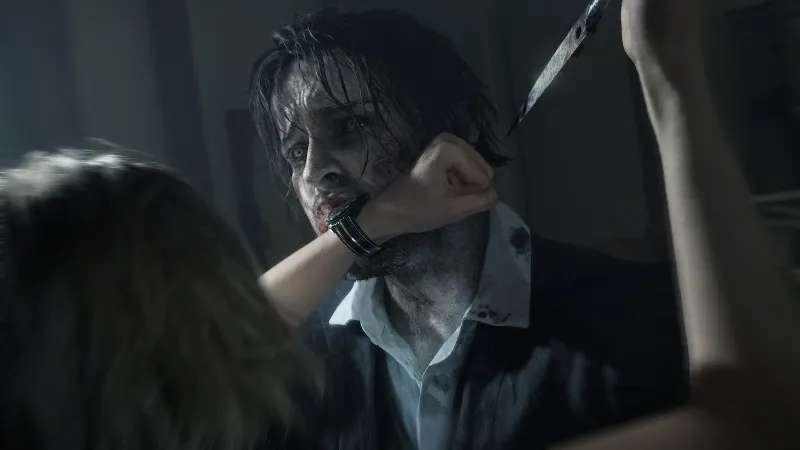
Resident Evil Requiem will soon be upon us, launching February 27 on PlayStation 5, Xbox Series X/S, Switch 2, and PC. Ahead of its launch, I went hands-on with the upcoming survival horror game to play an hour as Leon S. Kennedy and two hours as Grace Ashcroft, and you can read my thoughts here.
Following that gameplay session, though, I interviewed Requiem director Koshi Nakanishi, who addressed rumors surrounding the game’s exploration, making clear that it is not an open world game. I also spoke to Nakanishi about giving Leon a chainsaw, this game’s take on Resident Evil zombies, nostalgia, building tension in horror, and so much more. You can read the full transcript of our interview below:
Interview Q&A With Resident Evil Requiem Director Koshi Nakanishi
Game Informer’s Wesley LeBlanc: The first question I want to ask is about the chainsaw. Why now? Why is now the time to put a chainsaw in Leon’s hands finally?
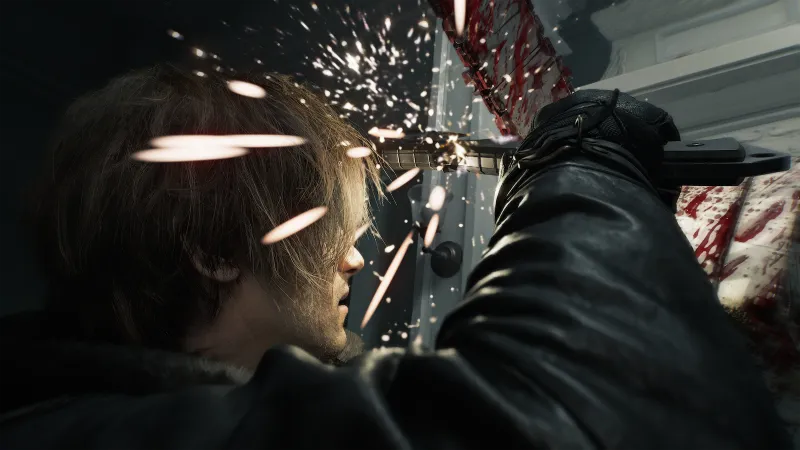
Resident Evil Requiem director Koshi Nakanishi via an interpreter: So the chainsaw – first off, if you’ve played previous Resident Evil games, you probably know chainsaws are a pretty symbolic weapon in a lot of different games. So whenever a new entry in the Resident Evil series, or whenever the developers are working on a new entry in the Resident Evil series, there’s always a lot of thought put into how the chainsaw will be used in this game. So in this game, the zombies can actually use tools. They have retained some of their memory pre-turning into a zombie. And so yeah, being able to use tools is something the zombies can do here. And so with that being the case, it made sense for all the zombies to also be able to use a chainsaw. So, going from there, if one enemy with the chainsaw is defeated, it makes sense for the other zombies to pick it up and to be able to use it. And so from there, it went to, “Well, if that’s the case, then of course, you as the player also want to use it.” And so that’s kind of how that line of thought naturally progressed and resulted in Leon being able to wield a chainsaw in Resident Evil Requiem.
Another driving force behind it is that by Resident Evil Requiem, Leon has a lot of experience under his belt at this point, so it felt like a good time for Leon to turn the tables a bit and use a chainsaw himself, since he’s gone up against so many chainsaws previously.
And keeping up with the chainsaws, I noticed immediately in the Leon section that when it hits the ground, it’s spinning. Zombies walked over it and it cut their legs off. I’m curious if there are any other kind of physics interactions like that in the game, or is that just a cool little one-off with the chainsaw?
Nakanishi: Using enemy weapons is a pretty big feature of gameplay, so being able to use enemy weapons against them is also going to be something you’ll see come up beyond the sections that you’ve played as well.
I’m curious – you can switch perspectives between third-person and first-person. How did the team land on it defaulting to first-person for Grace and third-person for Leon?
Nakanishi: So, actually, for the preview that you played, it doesn’t start at the very beginning of the game. The story has progressed a bit. So actually, in the final version of the game, when you start the game, it’s going to ask you, which do you prefer? It’s up to the player, really, on what they want to use, and they can freely choose what they want to use when they start the game.
Is the intention for Grace and Leon’s varying gameplay experiences to speak to each other in terms of balancing tension?
Nakanishi: It’s exactly as you said – the idea there is to build tension with the very horror-focused sections with Grace; she doesn’t have as many options for combat as Leon, as he’s much more combat-focused. So yeah, exactly as you said, that’s the intention behind the design of the two characters, to have that tension and release between the two. And so [I’m] really happy that you were able to pick that up from just playing the preview.
What was the ethos behind designing the monsters and zombies in this game?
Nakanishi: For Requiem, the main theme that ties basically all the enemies together is a virus. So obviously, the zombies are infected by a virus. There was not a whole lot shown in the preview, but there are other creatures as well who’ve been infected by the virus. So, it’s kind of going back to that very central theme of Resident Evil, the enemies, basically, that that through line that goes through them all is centered around a virus.
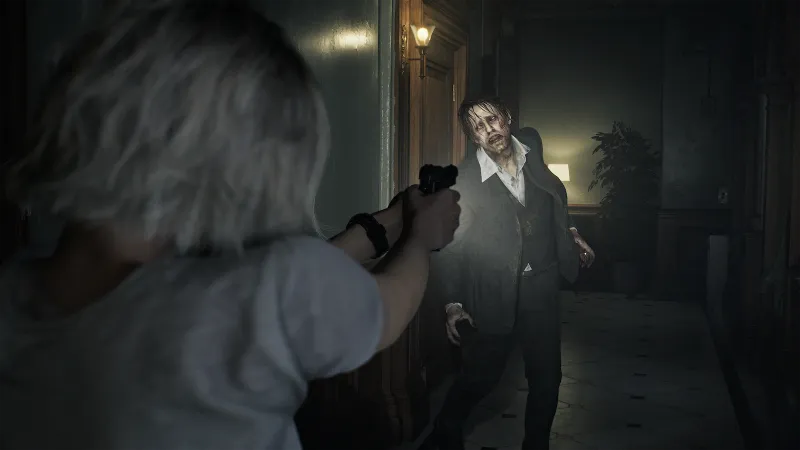
Something I really enjoyed in the preview is that it felt almost nostaglic, in the sense that the Grace section felt very Resident Evil 2 police station, and Leon felt like toward the end of the game, where you’re just kicking butt. I’m curious – is that intentional to set up a surprise feel for later in the game, or is it just a greatest hits of Resident Evil?
Nakanishi: Obviously, Capcom has a long history with the Resident Evil franchise. The idea was to present an evolved version of some of the gameplay you know and love. So, as you said, Grace, there’s a strong feeling of RE2 to show an evolution of the zombies, again, an evolution of RE2’s gameplay, and Leon as well. So yeah, you’re right on the money there too.
What is the design intention behind the blood synthesis system?
Nakanishi: There are kind of two things that led to including that crafting system with blood in Requiem. So the first one is: in lots of RE games, there’s always a lot of blood in the environment, right? There’s always a lot of blood everywhere in different environments. So the first question that kind of led to that system was the dev team looking at that and saying, “Is there any way to implement that element into the actual gameplay?” So that was one of the first drivers behind it.
As for the intention behind that mechanic, it was to add another layer of player choice. So, for instance, yes, there’s always the choice of running away or fighting the enemy, but knowing that you can possibly collect blood from the enemy gives you another incentive to defeat the enemy, like you were mentioning. So it just adds another layer of choice, and I guess risk and reward for players going through the game. Speaking about choice, I don’t know if you utilized it or not, but there’s an injector in the game that you can also craft that, if you sneak up, you can defeat an enemy with one hit. You’ll notice that you can’t collect their blood. So, yeah, again, it’s really about, you know, adding player choice and giving different incentives for choosing different things.
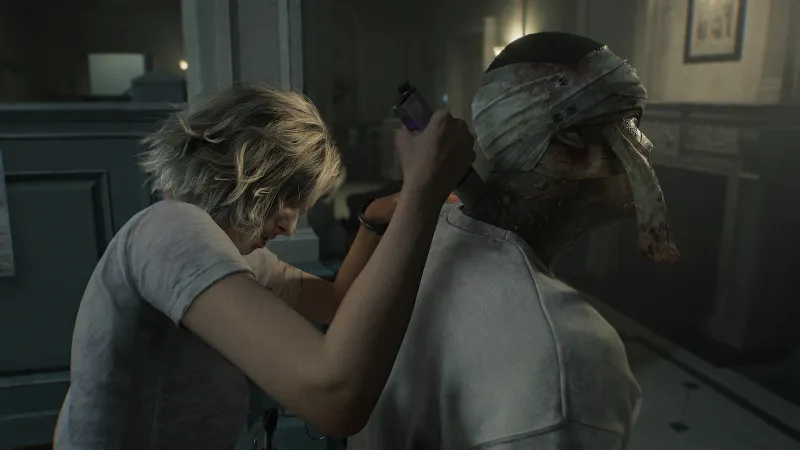
What do you think is the most defining aspect of these zombies versus others in the RE series?
Nakanishi: The thing that really sets these zombies apart, which we’re sure you experienced when you played, is that the zombies actually retain some memory of their life before they turned into a zombie. So you can actually see that in their actions, as they’re kind of focused on what they were doing or what they were responsible for before they turned into a zombie. So retaining a little bit of their past lives is something that’s really new for the RE series here, and you’ll actually, if you look closely, be able to utilize that stuff to your advantage.
Nakanishi closed out the interview by addressing rumors that Resident Evil Requiem is an open world game – it isn’t, and here’s what he had to say.
Resident Evil Requiem launches February 27 on PlayStation 5, Xbox Series X/S, Switch 2, and PC.
For more about the game, read my hands-on preview of Resident Evil Requiem here, and then check out the latest news from the Resident Evil showcase that aired last month. After that, read about Leon’s custom Porsche in the game, and then check out the Resident Evil Requiem Nintendo Switch 2 Pro controller.