






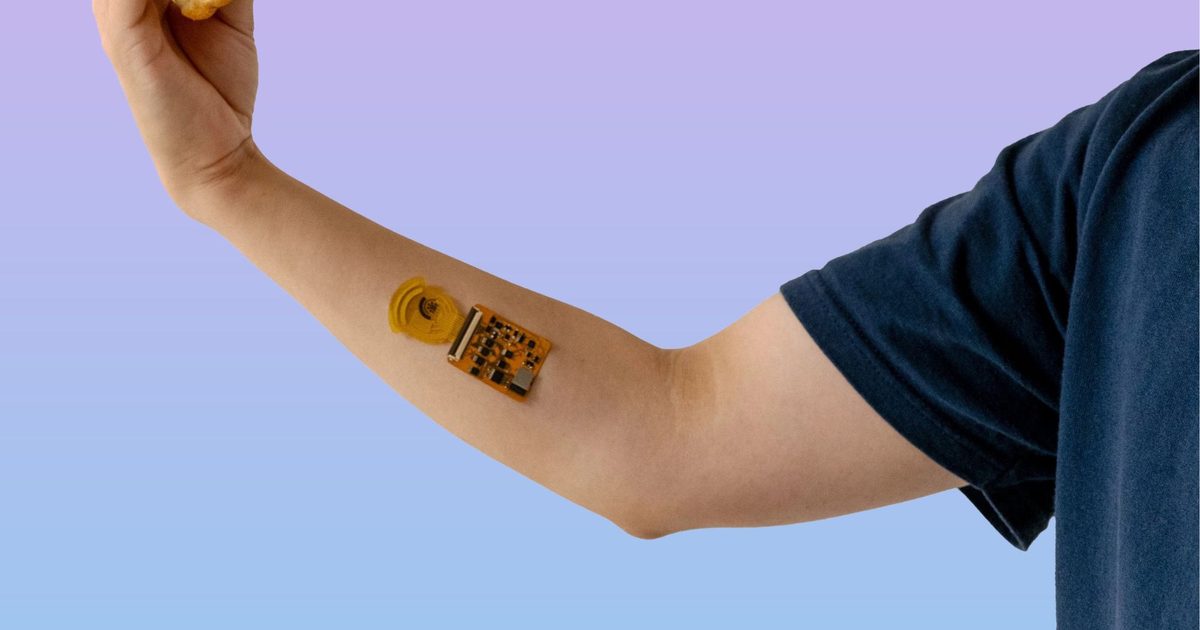
Think about the last time you actually had your cholesterol checked. If you are like most people, it has probably been years since it usually means scheduling a lab visit and getting your blood drawn. Caltech researchers just built something that could change that entirely — a small stick-on patch that reads your cholesterol and triglyceride levels continuously, using sweat instead of blood.
How the sweat patch actually reads your cholesterol
Sweat and blood do not share a simple, predictable relationship, so you cannot just measure cholesterol in sweat and expect it to match what shows up in a blood test. The team, led by Professor Wei Gao, solved this by pairing the physical sensor with a machine learning model that factors in details like your body mass index, gender, and how much you are actually sweating, then uses all of that to accurately estimate your blood lipid levels.
There was also a tricky chemistry problem standing in the way. Most cholesterol in sweat exists in a form that cannot be measured directly, so the researchers developed a two-step chemical reaction that converts it into something the sensor can actually detect. The team explains this process in detail in their published paper.
This is not the first time sweat has been explored for health monitoring. Similar sweat sensing patches have even been tested by the US Air Force for tracking hydration and stress in difficult environments.
Solving the triglyceride problem, and what comes next
Measuring triglycerides required its own fix, since the sensing reaction needs a steady supply of ATP (adenosine triphosphate), the molecule your cells rely on for energy. The team solved this by building a special polymer directly into the patch that slowly releases stored ATP over time, essentially feeding the sensor a steady supply so it can keep taking accurate triglyceride readings continuously for more than 20 hours instead of stopping after just a few minutes.
The device has only been tested on 24 participants in an early-stage study, meaning it is still years away from your local pharmacy, but the underlying science marks real progress toward continuous, needle-free health monitoring. If this kind of research keeps advancing, your next smartwatch could eventually analyze sweat to provide useful health insights.
