







Hidden cameras keep turning up in sneaky spots, tucked inside pen, clock, chargers, or picture frames in hotel rooms and rentals. This is why researchers at KAIST built a fix that costs less than a nice lunch. Their new tool, called SweepLED, turns any smartphone into a reliable hidden camera detector using an attachable LED case that costs under $7 to build.
Why your current hidden camera detector probably isn’t working
Most handheld detectors rely on a pretty basic trick, shine light at something and look for a bright reflection bouncing back. The problem is that glass, metal, and shiny plastic all bounce light back too, which means you’re stuck squinting at chargers and clocks trying to guess whether that glint is a lens or just a coincidence.
SweepLED eliminates the guesswork entirely. Instead of moving the light and the viewing angle together, it keeps the phone’s camera locked in place and sweeps the LED light from different directions instead. That’s crucial because a camera lens has an internal structure, aperture, sensor, and layered glass, so its reflection warps and deforms in a very specific way as the light angle shifts. Ordinary shiny surfaces just don’t do that.
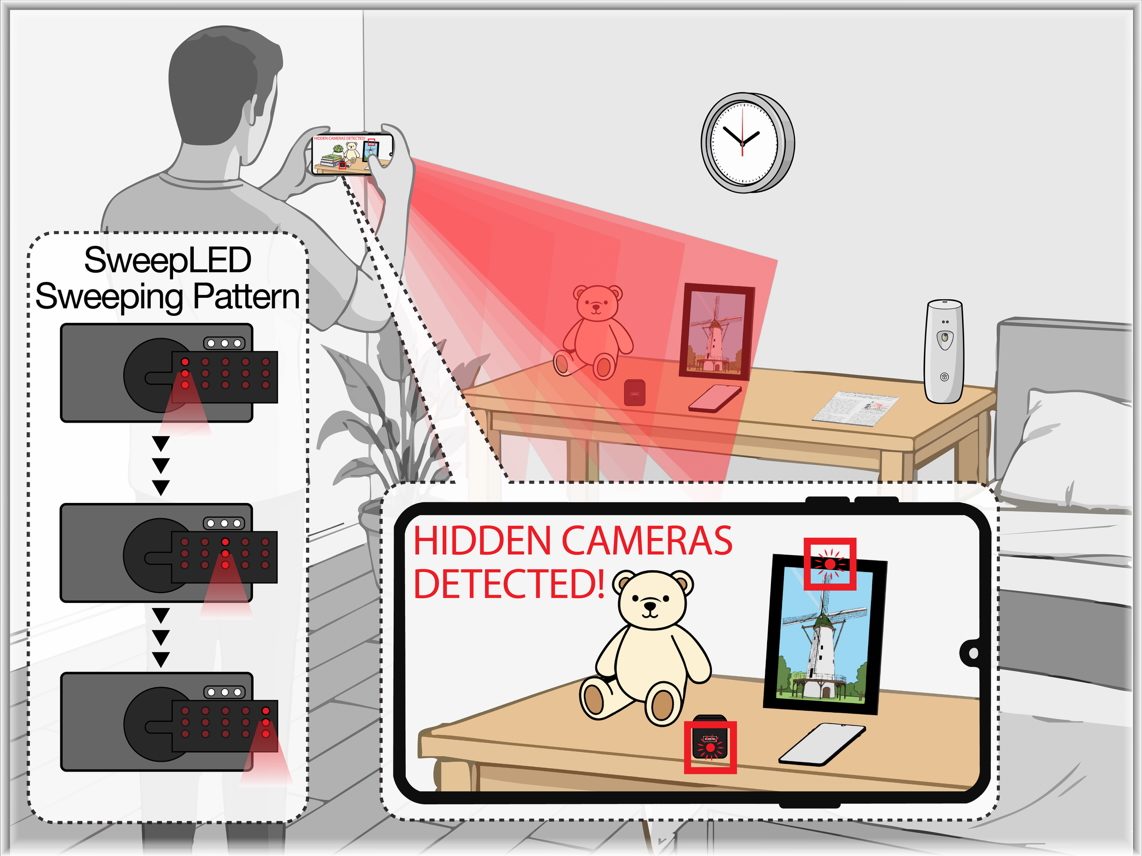
How SweepLED works
SweepLED records the whole light sweep as a short video, then runs it through an AI model trained to spot those telltale lens deformations, flagging exactly where a hidden camera might be hiding. Researchers tested it against 30 everyday objects you’d realistically find in a hotel room or rental, and it caught hidden cameras with about 94% accuracy, all in under five seconds per object.
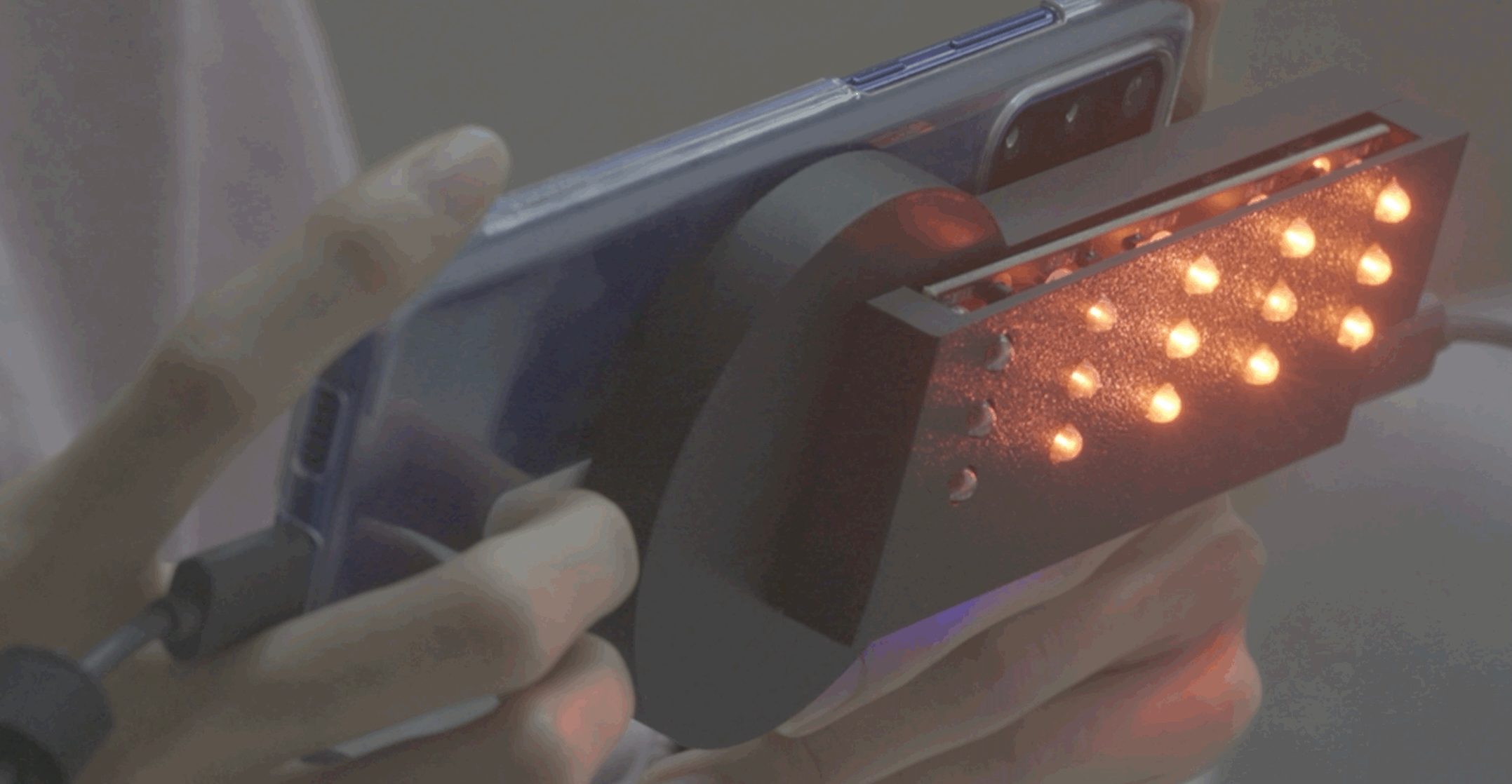
A recent UCL study found people using consumer hidden camera detectors still missed 59% of devices in testing, so SweepLED’s 94% lab result is a strong sign, with real world testing likely next.
Led by Professor Jun Han at KAIST’s School of Computing, working alongside researchers from the National University of Singapore and Singapore Management University, the project was presented earlier this year at ACM MobiSys 2026. It’s not a shipping product yet, but the underlying idea is simple enough that it could realistically show up in an actual gadget before long.

