

Publisher Critical Reflex was founded six years ago and has since curated one of the most unique, strange, and interesting game catalogs. If I had to guess, the game that put Critical Reflex into your game publisher lexicon was probably 2024’s Mouthwashing, which launched the same year the publisher released other indie hits like Buckshot Roulette and Arctic Eggs. During Tokyo Game Show last week, I spent a couple of hours at the Critical Reflex booth, which was themed like an underground neon-punk bunker, and it was there I played four games that I immediately added to my Steam wishlist (even though one of them was so grody that it made me gag).
Below, I’ll be discussing my thoughts on the following four games after going hands-on with each for roughly 30 minutes: Tiny Chills – Not From Ear, Grobnopolis | Last Days, Sated, and Flawless Abbey. Enjoy!
Tiny Chills – Not From Ears
Tiny Chills – Not From Ear

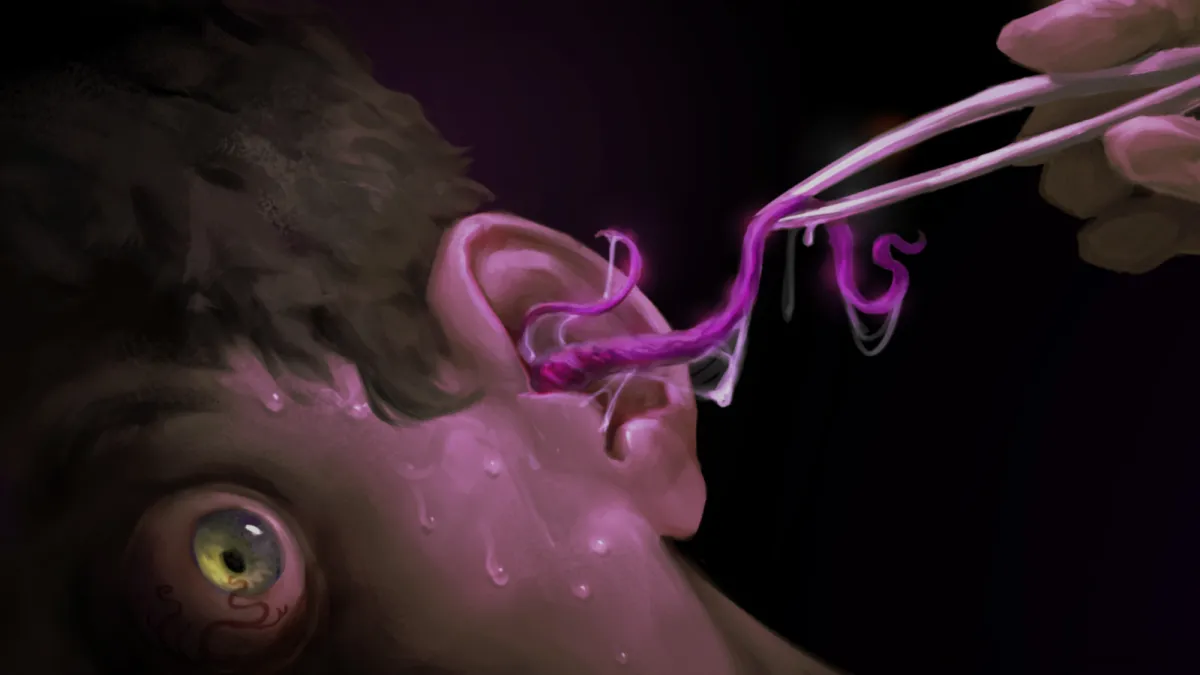
I don’t know if Tiny Chills – Not From Ear is my TGS game of the show, but it is certainly the only game I played there that made me gag… so that’s something. Don’t worry, though – that’s not a turn-off for me. In fact, I can’t wait for more. From developer Docktopus Games, Tiny Chills is a horror/freak game set in a small town where earthquakes don’t stop, and neither do the human disappearances. Nobody knows what’s going on, and it’s freaking everybody out, but that doesn’t stop you from getting in a fight at school and getting suspended. Stuck at home, you help your mom at her ear-cleaning clinic, using a variety of tools to dig through patients’ horrendous, wax-filled canals to clean out gunk, bugs, monsters (???), and more.
The world has an overall Coraline vibe: something is off about my parents and the way they treat me. And Tiny Chills’ grainy, shadow-filled, dreary lo-fi look sets it apart from other games in the ear-cleaning genre. At your mom’s decrepit and lonely clinic, patients bang on the door as if the world is ending (and it might be?) and they’re desperate for one last ear-cleaning before it all goes up in smoke. The knocks on the doors scared me every time – it was seriously so loud. Patients explain that something is itchy or ringing in their ears, and in no time at all, you’re looking through their canals from a first-person perspective, guiding tools to the eardrum.
You can use a suction tool to suck up clumps of wax and a hook-like instrument to latch onto bigger pieces, which you must then carefully drag out of the ear. There are other tools, but ultimately, your job is to clean up the ears and get whatever is clogging them out, and it is always. so. dang. nasty. Between the actual act of cleaning these ears, the squelchy, moist noises that accompany it, and the overall sickening vibe of Tiny Chills’ atmosphere, my tolerance for grodiness reached its threshold, and I couldn’t help but gag. It’s disgusting; it’s awesome.
Besides cleaning ears, you do some strange things in your house, like catching a pet crow that flies around and figuring out where your mom keeps disappearing to. Something/everything is off about this world, and I cannot wait to learn more about just what the heck is going on in Tiny Chills. In the meantime, I’m going to prepare my stomach for whatever else lurks in the ears of this game’s patients.
Grobnopolis | Last Days
Grobnopolis | Last Days

Grobnopolis | Last Days uses a word – Grobnopolis – that you will say out loud once and then say it out loud hundreds of times afterward because of how good it rolls off the tongue. After playing it for roughly 20 minutes, I think Grobnopolis is also a game you should keep on your radar if you’re into atmospheric horror games that have you asking yourself, “Just what the hell is going on here?”
Set in Huta-Grobno in the year 1983, you are an apartment caretaker who’s just trying to do his job while the world outside becomes blurrier and blurrier with suffocating smoke, the result of something gone wrong in a mine somewhere in town. Inside my humble apartment, painted with drab browns and depressing greys, I interact with various objects to learn the lay of this oppressive land. I eventually reach a radio, and by scrolling through live stations, I hear strange opera music, workers mumbling as they piece together what’s gone wrong, and broadcasts warning of impending danger, a Church cult, and more. This radio seems key to Grobnopolis’s narrative, as I’m clearly listening to stations I shouldn’t have access to and learning things I shouldn’t know.

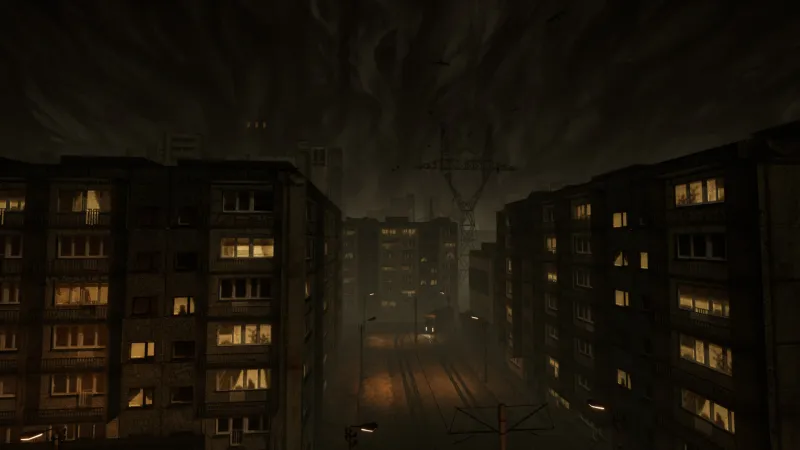
I interact with other people who call this apartment block home, and while none of them are outright sinister, something is definitely up, and they all freak me out. If I were this caretaker, you wouldn’t catch me leaving my apartment, but specific tasks, like finding cords and other objects in the hallways to connect up some equipment in my place, force me to. All the while, a large crack or hole in my kitchen keeps growing, whispering things I don’t yet understand.
“From the black veins of the old mines rises a thick, blood-red ichor the locals whisper of as ‘Soup,'” the game’s Steam description reads. “It climbs through foundations, stains stairwells, and pools in places that should not hold liquid. Some things should never be unearthed. Some things were meant to remain buried.”
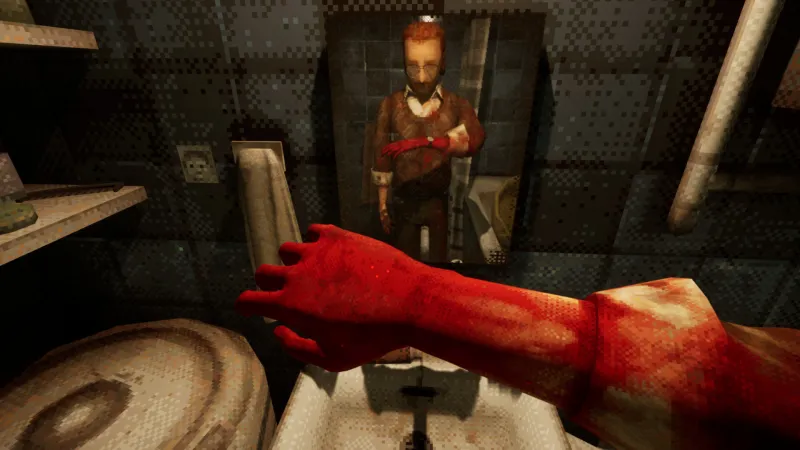
As this mysterious “Soup” makes its way to more cracks and crevices in Huta-Grobno, the local Church gets involved, bussing certain civilians out of town and out of danger, while asserting its control to gain power in the decaying city. I genuinely have no idea where any of this is heading, but Grobnopolis has my attention, and I look forward to learning more about what’s going on here.
Sated
Sated

Of the four games I played during my Critical Reflex preview during TGS, I think Sated has the most potential to be the publisher’s next hit. It mixes something the indie space loves – roguelites – with monstrous horror fused with a little food-inspo by way of Cooking Mama. This demo wasted no time, putting me in front of a giant mechanical shark who hopped out of the water to hand me his hand/fin-written order. He requests some strange but not surprising ingredients, and though I don’t know exactly what each is, each has a symbol associated with it.
I take that order to my nearby fridge, which acts like a slot machine with a lever I can pull for another random drop of ingredients, and grab what I need based on those symbols. Sated smartly neglects to detail exactly how much of each ingredient is needed, instead giving you an ambiguous bar that shows how much of this or that ingredient should make up the entire recipe. This keeps you on your toes, because to make the most satisfying meal, you need to guesstimate as close as possible to what the hungry monster requires.
After feeding the monster, you’re given a score indicating how much they liked or disliked the meal you prepared. After that, you head to your underground train’s captain’s seat, select your next destination on a typical roguelite map/chart, and see what monster awaits their next meal there. Unfortunately, at the next stop, I fail to make a decent meal for the monster and, as a result, become the meal. I’m eaten alive, and my run is over. The hooks are there, and I’m ready for my next run; now I just need to know when that next feeding run will happen.
Flawless Abbey
Flawless Abbey

Flawless Abbey is both a surrealist, dreamlike kaleidoscope of colors and adventure, and a moody and oppressive mystery, and I’m interested in both pieces of its puzzle. In Flawless Abbey, you are a dreamseeker who lives inside a purple-and-grey facility where you hook yourself up to strange pods that allow you to explore an obelisk known as a dream-tower. While that sounds fantastical, it’s just another day on the job for you. I go from door to door, trying to find today’s pod of choice, only for it to break down when I finally find the one I’m tasked with sitting in. I walk to the IT person/being of consciousness who clearly loves the company it works for and is able to reboot the pod in question.
I make my way back there, plug in, and find myself aboard a mythical train soaring through the stars and swirling sky. Aboard this train, I solve typical environmental puzzles, like one that tasks me with opening a door using a special mechanism I can only understand after using a train ticket as a symbol key. Throughout Flawless Abbey, I answer questions by selecting dialogue choices that feel less like answers for this game’s world and more like ways for the game to learn more about me, the player. It’s odd and thought-provoking, even if I don’t really know what’s going on. Visually, though, I’m sold, and the painterly, patchwork-style art, coupled with a far-out score, has me intrigued enough to figure out exactly where this train is headed.
The game’s Steam page promises more, like corporate benefits and health insurance, a beast trying to tear down the dream-tower, a personal assistant who will guide me through dreams (even though they are also terrified about what’s going on), and other dreamseekers to meet. “Something isn’t right,” the game’s description reads, and I agree, but I’ll have to wait for the game’s launch to learn what’s wrong.