








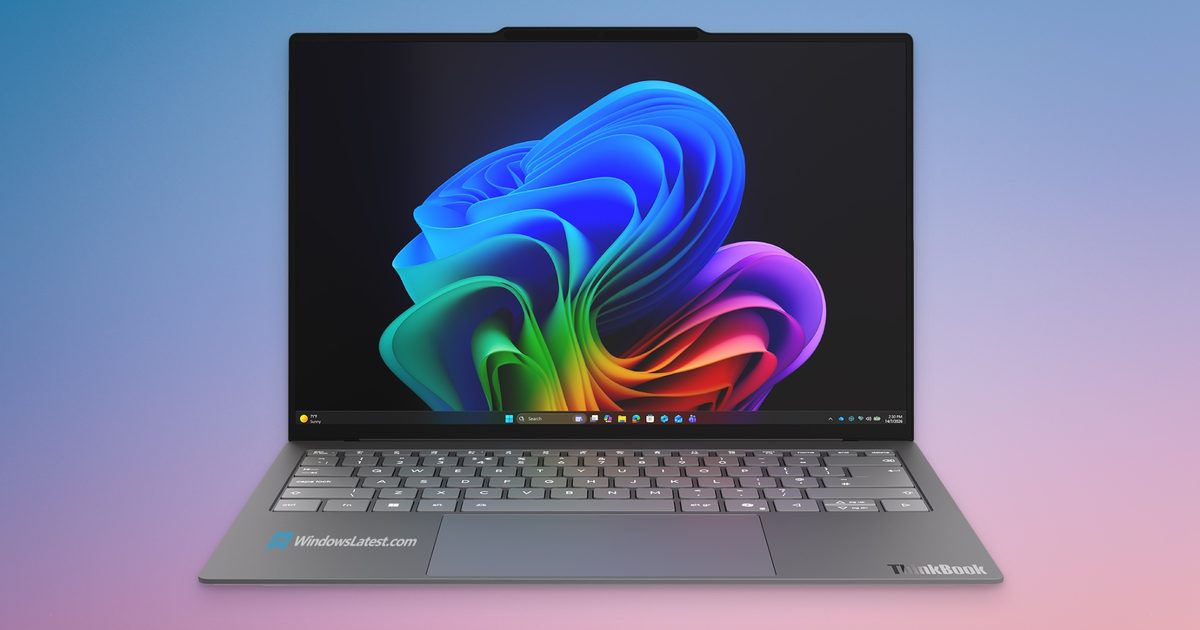
Lenovo might have a new obsession, and it’s all about being thin. Windows Latest got its hands on marketing images of an unannounced Lenovo laptop, and buried in the files is a name we’ve never seen before: Aeroblade. The device itself is clearly branded as a ThinkBook, so this could launch as the ThinkBook Aeroblade.
If you’re not familiar, ThinkBook sits just below the premium ThinkPad lineup and is built for small and medium businesses who want that ThinkPad look without the ThinkPad price tag.
What makes this ThinkBook different?
At first glance, Aeroblade looks like a fairly standard ThinkBook. You get slim bezels and a raised camera housing instead of a cutout into the display, along with the usual ThinkBook branding on the palm rest. But look closer at the keyboard, and the keys appear noticeably flatter than what we usually see from Lenovo. That’s worth noting if you’ve used a ThinkPad or ThinkBook before, since deep keypresses are practically a Lenovo trademark.
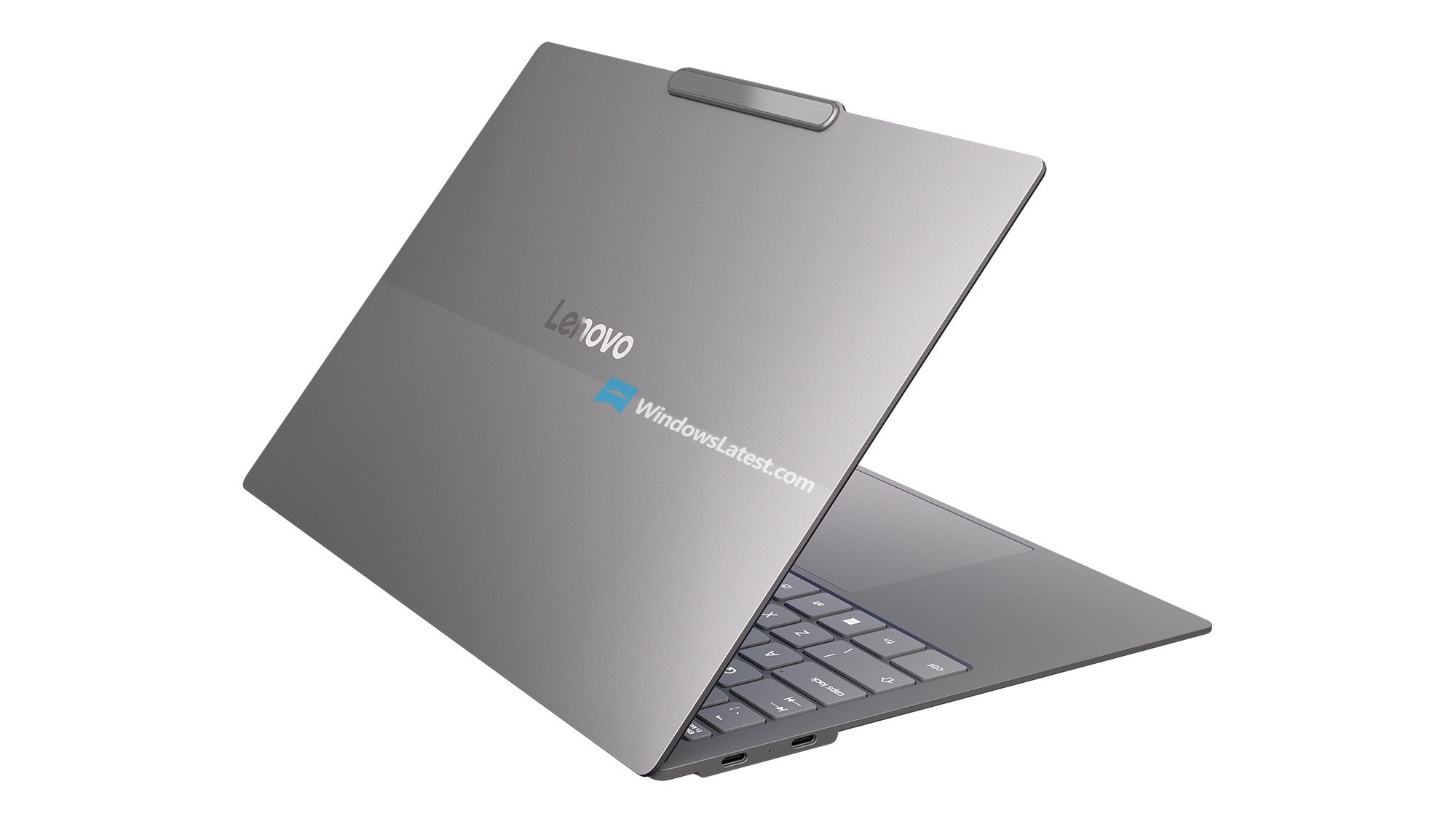
The side profile is where things get interesting. The chassis edge looks blade-thin for most of its length, thin enough to seem even slimmer than the USB-C ports themselves. There’s a small raised section housing two ports and a microphone hole, likely there because Lenovo needed the extra room for its internals. The rear keeps the theme going too, with a dual-tone finish and a raised pill-shaped camera housing.
Can Lenovo actually pull off this thin design?
Thin laptops usually mean sacrificing battery life and performance, and running hot under load isn’t uncommon either. But chips have improved a lot. Qualcomm’s Snapdragon X2 series and Intel’s Panther Lake processors are efficient enough now that going ultra-thin doesn’t automatically mean a compromised laptop. That said, we still don’t know which chip Aeroblade will use.

Apple is also slated to introduce a new MacBook Ultra this year, and thinness is a major design focus. It seems that with new efficient chips, the laptop cycle is again moving towards thin and light laptops. Hopefully, these new ultra-thin laptops will not suffer the drawbacks of their predecessors.
