



I’ve spent years watching gaming phones make the same promise and stutter at expected chores. Needless to say, I’ve learned to brace for the caveat every single time. The chip is fast, the display refreshes at a number that sounds impressive, and then, twenty minutes into a ranked match, the experience starts to crumble, heat builds up, and the frame output quietly falls off a cliff. Throttling is an almost inescapable reality of mobile gaming.
So when Infinix offered me a sit-down with the product manager behind the latest and greatest in its GT Series, I went in with the one big conundrum that I actually cared about. Has a brand finally built a phone around the heat problem instead of skirting around it? The answer, it turns out, is the entire pitch of the GT 50 Pro. And to the team’s credit, they didn’t miss.
Starting Hot
The biggest draw of the Infinix GT 50 Pro is the HydroFlow Liquid Cooling system. It’s the headline achievement, and the team is proud of engineering what it claims to be the industry-first 100% coverage of the core heat sources. Most phones cool a region and hope the rest sorts itself out. Infinix’s approach is active circulation, and when I asked about the engineering challenges of cramming that system into a slim chassis, the manager framed it as the most ambitious thing the series has done:
“The integration of the HydroFlow Liquid Cooling system represents our most ambitious engineering achievement in the Infinix GT Series to date,” Infinix GT Series Product Manager told me. What struck me was that they treated it as a design constraint rather than a marketing afterthought. The biggest concern, they explained, was that even a powerful chipset throttles after fifteen or twenty minutes of heavy play, leaving you to pick between graphics quality and stable frames.
Nobody wants to make that choice mid-match. I don’t want to live with that constraint either, but on mainstream phones, it’s inevitable. What I think is the standout aspect of this phone is how Infinix took the idea of building around cooling. Rather than treating the thermal system as a supporting feature bolted on at the end, the team designed the chassis to accommodate it first. It’s a bold claim, and when I pushed on whether the engineering actually backed it up, I saw it working in more ways than one.
HydroFlow Liquid Cooling Architecture is the bold secret

Now, HydroFlow might sound like a fancy name, but it’s actually what the tech is all about. It’s essentially a liquid that carries heat and keeps the phone running cool. The conversation got technical at this point, but I appreciated it because I wanted to get an inside look at the thermal engineering. Most phones cool a region and hope the rest sorts itself out. Infinix’s approach is active circulation.
“The liquid cooling system precisely targets and suppresses thermal stress right at the source.”
At the heart of the whole system is a piezoelectric-driven ceramic micro-pump moving specially formulated coolant at 6.5ml per minute across a 6,437mm² diaphragm, which they say is the largest in the industry. The channels carrying the coolant liquid are laser-etched at micron-level precision so that heat gets pulled directly off the components that generate it.
Over the years, I’ve heard a lot of cooling claims from different brands, but what made this one land was the durability data. Infinix told me that they ran over 720 hours of accelerated aging tests, including punishing sessions at 75°C ambient temperature and 85% humidity. When subjected to those conditions, the ceramic pump can manage hours of continuous operation with minimal degradation. The real-world example they gave was the one that mattered the most, and this is something that mobile gaming enthusiasts ultimately want to hear.
“During intense team fights when gaming, a sudden performance surge can spike total power consumption to a 9W peak. Without efficient thermal management, instant SoC overheating will immediately trigger frame rate drops and severe stuttering,” the Infinix executive tells me. “The liquid cooling system precisely targets and suppresses thermal stress right at the source.” Simply put, that’s the difference between bold claims and material engineering you can actually feel making a discernible difference in your hands.
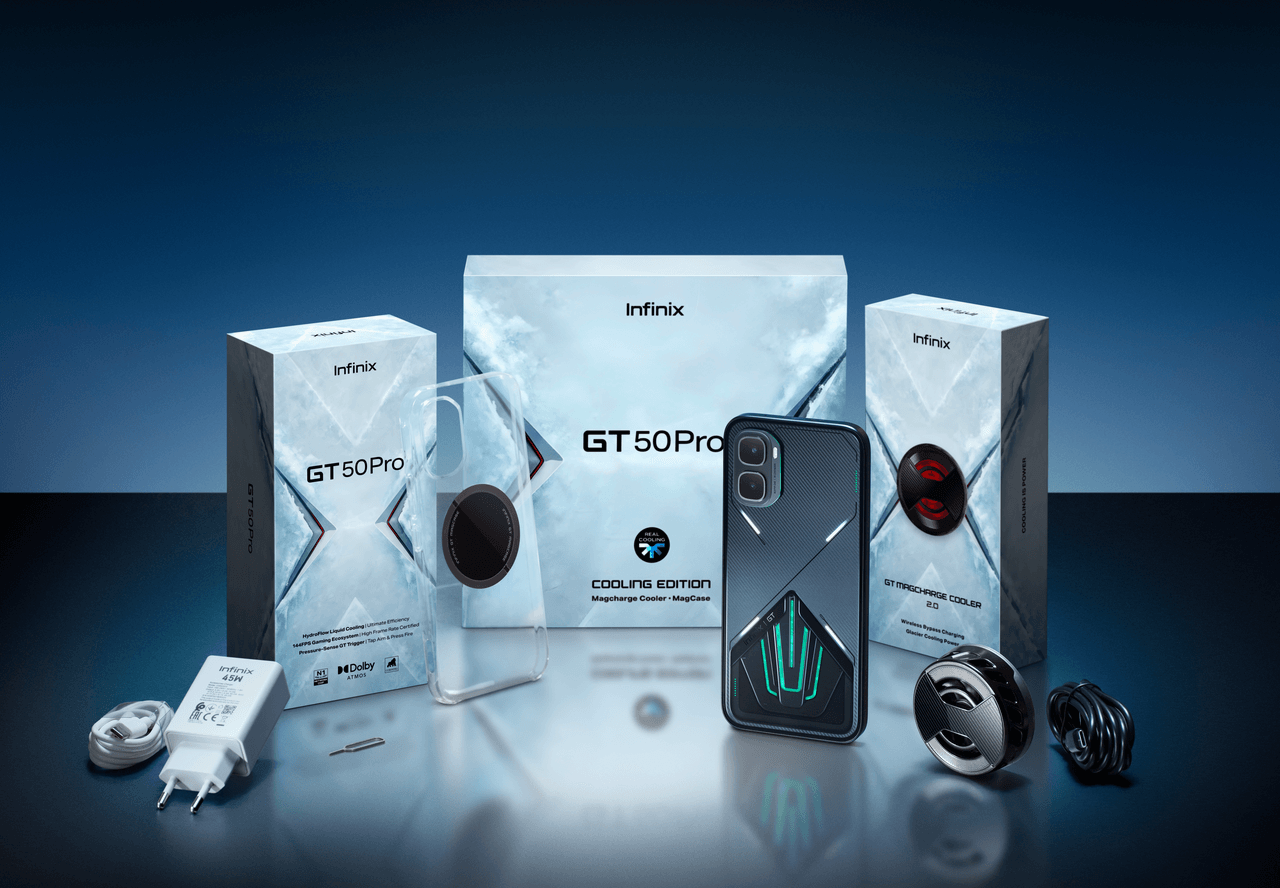
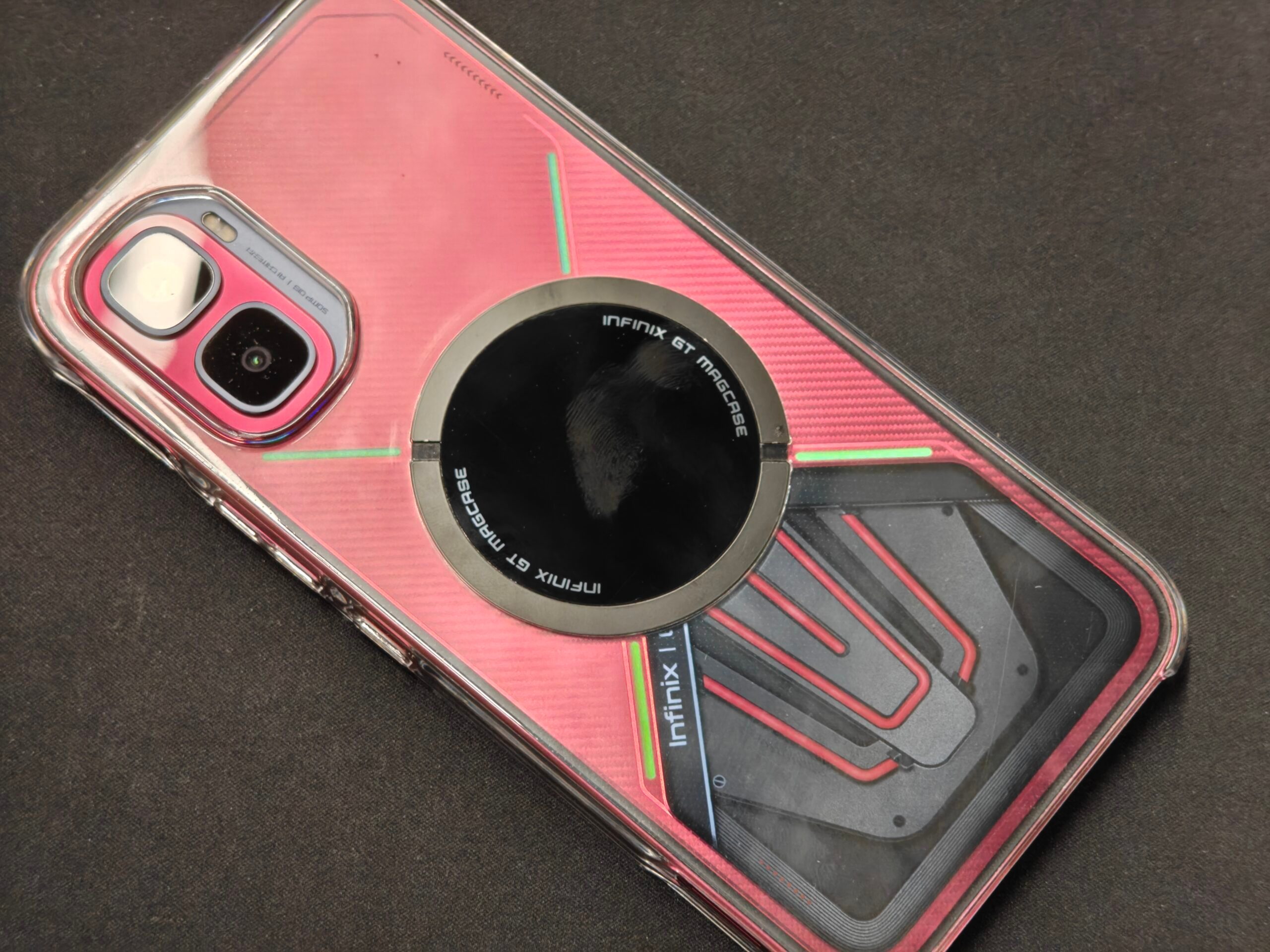
There’s a showy element, too, and I’ll admit I’m a fan. Instead of hiding all this liquid cooling wizardry, the Infinix GT 50 Pro puts a transparent Pipeline Window on the back so that you can watch the coolant liquid’s flow in real time. The design language leans into hypercar aesthetics. You get Kevlar and carbon-fiber-inspired textures, and aerodynamic contours that the team says were inspired by hypercar wind tunnel testing to improve grip during long gaming sessions. When I expressed that the design was bold and that I quite liked it, Infinix pointed out that the design maturity over the GT 10 Pro was deliberate. It leans less into the overt “gamer” class and edges closer to a refined performance machine.
The inside look
It goes without saying that cooling is the foundation for any performance-centric phone, and the Infinix GT 50 Pro embodies that label. A phone, however, still needs the right silicon to justify the hype. The latest from Infinix comes armed with the MediaTek Dimensity 8400 Ultimate silicon built atop the 4nm process. It’s a fairly powerful chip, but the team, in particular, focused on a few key perks. We are the first to feature MediaTek D8400 frame rate converter ( MFRC) , delivering GPU motion estimation and motion compensation technology, both of which combine to push the native 144FPS output while reducing the graphics engine load. The core logic behind the whole exercise is fairly obvious — deliver segment-leading frame rates with a cooling system that can actually sustain it for long gaming sessions.

Mobile gaming, however, is not all about the raw firepower. Internet speeds play a crucial role, too, especially if you’re engaged in fast-paced multiplayer games. Thankfully, Infinix paid attention to this aspect, as well. On the Infinix GT 50 Pro, Connectivity gets the same in-house treatment courtesy of the self-developed N1 network chip, which the team linked to with a 360-degree layout of twelve antennas. Lab tests tout a roughly 60% improvement in weak-signal environments, like elevators and underground garages. For online play, fewer signal drops matter as much as frames, so I’m glad that a robust on-device network infrastructure wasn’t an afterthought.
Then there is the Pressure-Sense GT Trigger, and as someone who has tested physical and capacitive shoulder buttons on smartphones for years, this is where I get picky. The Open-Cut Pressure-Sense GT Trigger on the Infinix GT 50 Pro is special for multiple reasons. It delivers sub-20ms latency, offers ten levels of adjustable sensitivity, and lets you play with up to eight mapping points. These are fairly resilient, too, thanks to a claimed lifespan rated at over three million presses. I asked Infinix what tangible edge these triggers bring to the table for a serious player over capacitive systems, which I’ve always found a little vague under the finger.
“This physical tactile feedback allows pro-level esports players to feel exactly how much pressure they are applying, enabling much finer control than capacitive systems, which often feel imprecise,” the Infinix executive tells me. The manager’s advice for anyone learning, including my own tech-obsessed siblings, was refreshingly practical. The best way is to start with the built-in trigger tutorial in XArena, begin at medium sensitivity, and expect noticeable gains within a week or two.
AI done meaningfully
I’m usually skeptical when a gaming phone claims “AI optimization.” Gaming enthusiasts aren’t fans of AI seeping into the world of gaming, either. Refreshingly, the GT Gaming Co-Lab pitch, which is Infinix’s engineering partnership with game publishers, came with specifics I could dug into. The team described three engines working together during a 144FPS session in titles such as Call of Duty: Mobile.
“Most gaming devices in the industry operate on a reactive model, they only try to suppress the heat after the phone has already overheated. The Infinix GT Gaming Co-Lab changes this paradigm.”
Simply put, the intelligent power allocation system dials back the CPU and GPU during low-intensity moments like early-game looting, so the device runs cooler before the fight even starts. The AI Frame Rescue Engine touts predictive foresight, as it anticipates a processing deficit a few frames before a heavy scene hits. When needed, it delivers a frequency boost to rescue the frame before players can experience a frame drop. And as the thermals approach their limit, the Game Thermal Control Engine jumps into action and dials down the frame output in progressive gradients instead of the big 144-to-60 FPS drop I’ve seen on a majority of smartphones.
“While other devices wait until they are boiling hot to start cooling down, the Infinix GT 50 Pro uses AI to prevent heat before it builds, rescue frames before they drop, and gently smooth performance when thermal limits are pushed,” Infinix tells me. Whether it holds up under my own testing is another article, but as a design philosophy, it all makes sense.
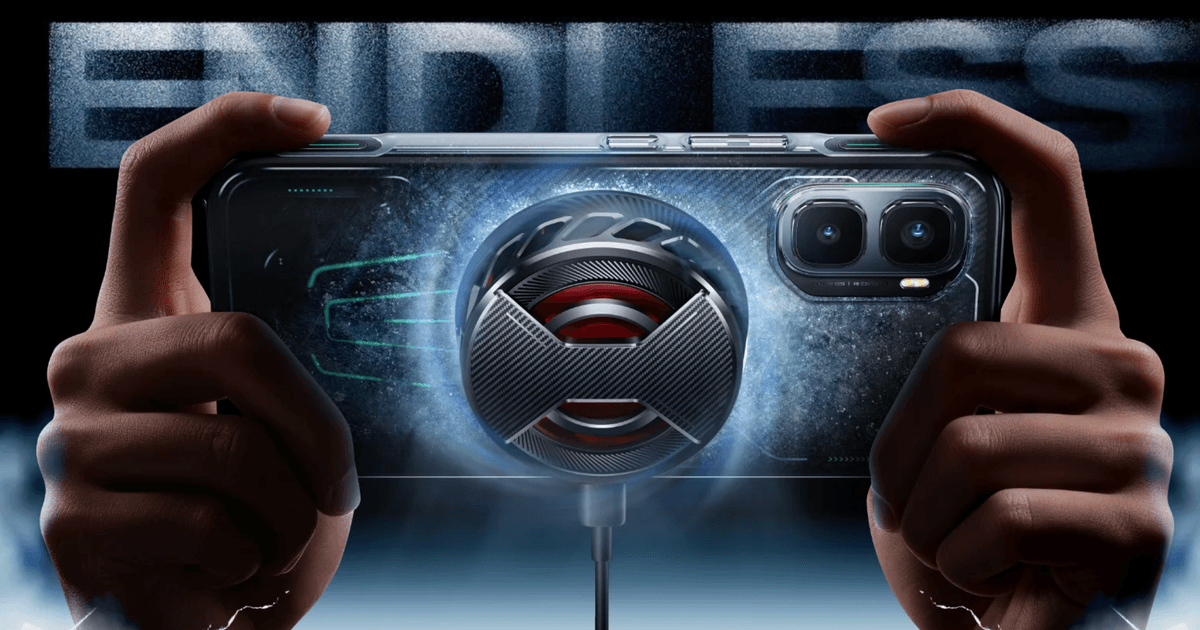
The GT Magcharge Cooler 2.0 further extends that thinking with industry-first wireless bypass charging, routing up to 15W juice directly to the motherboard so the battery is largely skipped during the top-up session. The team tells me that they measured a 4°C drop in peak temperatures when compared to charging through the battery. On the topic of battery health, I asked why they capped wired charging at 45W while rivals chase bigger numbers. The decision was strategic, I was told.
“We refused to sacrifice long-term battery health and premium design for marketing gimmicks, delivering a phone that stays slim, light, and reliable for years,” says the Infinix executive I interviewed. The team zeroed in on 45W wired and 30W wireless output with a bypass charging facility. Furthermore, the AI battery self-healing tech helps the battery unit reach 1,600 charge cycles. I respect this approach, because it avoids marketing hype at the peril of real-world in-hand experience.
The ecosystem and the long game
My conversation with Infinix branched off toward the end, as interviews tend to do. Notably, the Infinix GT 50 Pro anchors what the company refers to as the New GT Ecosystem, an “esports sanctuary” built alongside the GTWATCH 5 Pro and GTBUDS 5. The smartwatch acts as a tactical second screen, pushing notifications to your wrist so that the phone stays distraction-free, while also monitoring your heart rate. The buds lean on Bluetooth 6.0 and LE Audio standards to deliver an impressive 44ms latency, while Dolby spatial tuning delivers an immersive listening experience with sharp sonic details.
For an average value-conscious buyer eyeing a switch from a major brand, Infinix’s pitch is that you’re investing in a platform that keeps evolving through the Co-Lab’s software work rather than a phone that peaks on day one. And now that Infinix has progressed to the fifth iteration of the GT Series, they are reaching for a new standard. What’s changed is the levels of sophistication and a holistic approach.
“ In the long term, this ecosystem represents a much smarter investment. While many flagship phones deliver strong one-time performance that may degrade over time, the New GT Ecosystem is designed as a continuously evolving platform. Infinix has a clear 3–5 year roadmap that includes new additions like the upcoming GT Game Controller, which will deliver enhanced ergonomics and powerful haptic feedback synced with the phone’s vibration motor,” Infinix tells me.
“This results in faster reaction times, smoother execution of advanced maneuvers, and reduced finger fatigue during long sessions.”
I’ll reserve my final verdict for a full hands-on, because claims are claims until the phone is in my hands, sweating through a few intense online battles. But what makes the Infinix GT 50 Pro interesting isn’t any single number. On the contrary, Infinix made cooling the organizing principle and then built everything else, which includes the triggers, a proactive AI engine, the clever bypass charging tech, and a whole ecosystem. If you’re a hardcore mobile gamer who keeps running into the throttling curse, or chasing top-tier endurance without elite sticker shock, this is a phone worth experiencing in person. On paper, at least, it’s the rare gaming phone that seems to understand its own asterisk and set out to delete it handsomely.