


This feature originally appeared in issue 372 (The Outer Worlds 2) of Game Informer magazine.
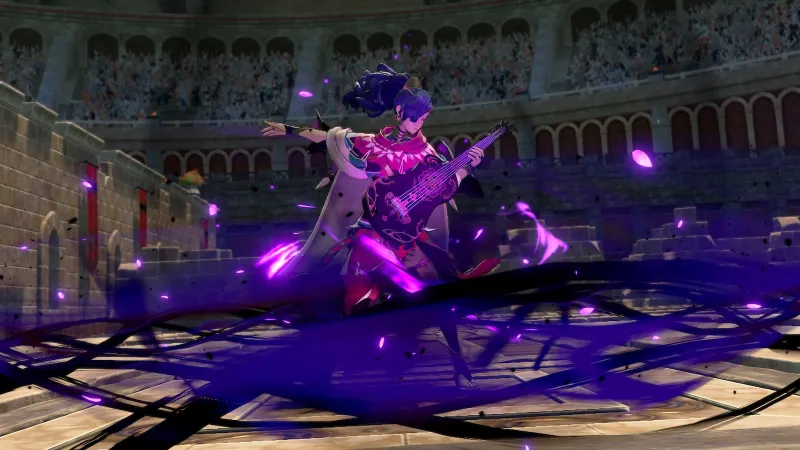
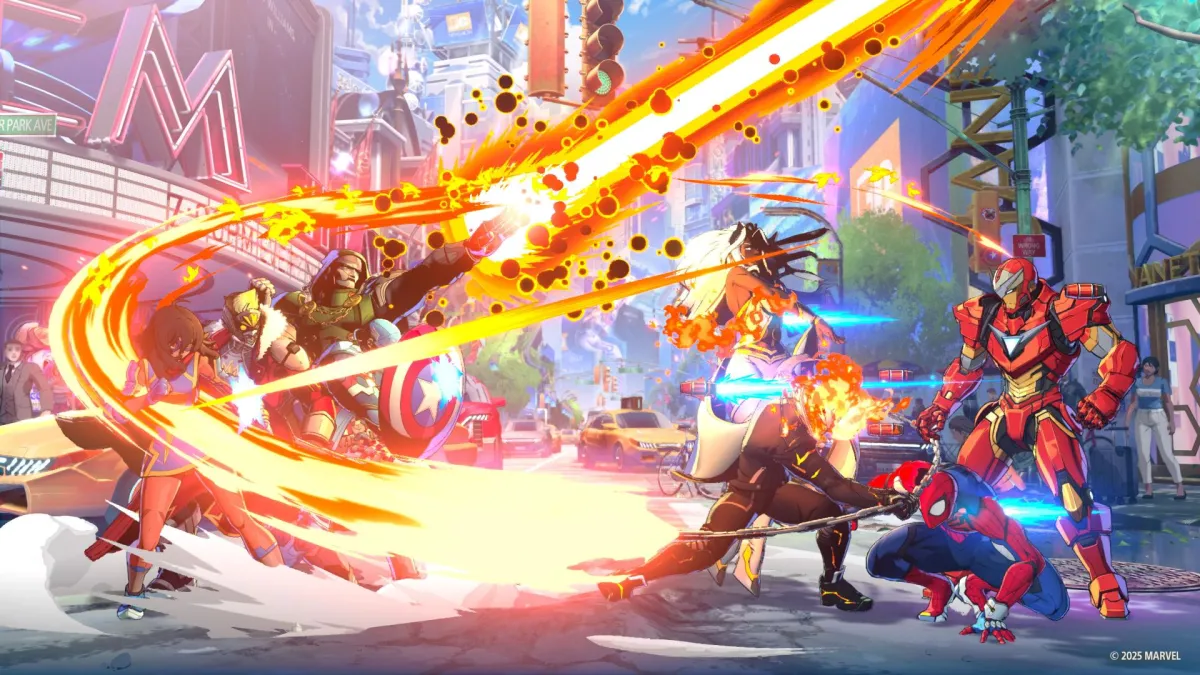
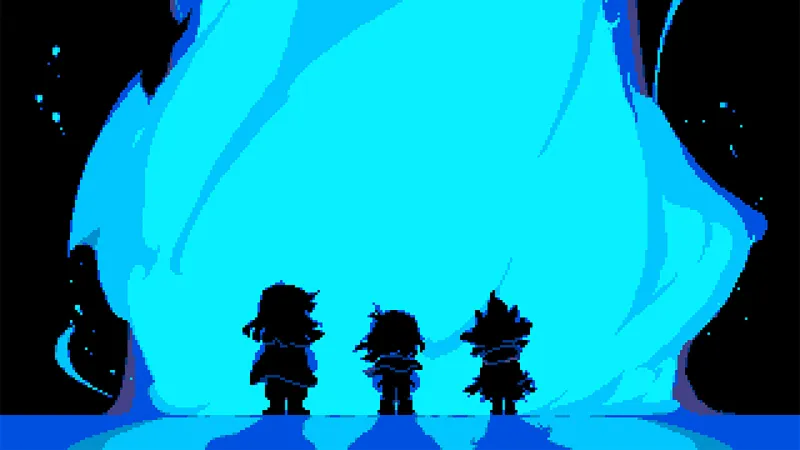
Special thanks to Deltarune’s enthusiastic and creative community for allowing us to highlight a small sampling of their impressive fan art!
When I asked Toby Fox, the developer behind the viral hit, Undertale (and now its spin-off Deltarune), if I could interview him, the somewhat reclusive creator questioned if talking to him would be of interest to readers. He told me the way he makes games is pretty “stupid,” so it might not be worthwhile to have a conversation.
I found his apprehension surprising, because on the surface, Fox is clearly interview-worthy. He is the creator of Undertale, a commercially successful game that sold millions of copies and inspired a dedicated fandom consisting of meme-lovers and the internet-obsessed. Still, the value of his work reaches far beyond any numerical or monetary accolade. His next game, Deltarune, is a canvas for Fox’s own joyful artistic expression and a delightful romp of an RPG that continues to experiment with incorporating new genres. Even in its current (and incomplete) state, the game feels like a meaningful evolution for a game-maker that could have easily been a one-hit wonder.
So when the developer and I finally set up a text interview over email, I pressed him on his hesitancy.
“I don’t actually think [the way I make games is] stupid, at least in a totally bad way. Clearly many people are pleased with the result,” Fox wrote.
Art by Marcel Mosqi (@mohsqi)
Fox explained that the “smart” way to create a game would be to allow the development team to reuse certain mechanics. “For example, in other RPGs, there may be enemies across the games which primarily only use physical attacks,” Fox writes. “The appearance and animations may be different, but aspects like weaknesses, HP, and other statistics can just be altered near instantly in a database.
“In Deltarune, we can’t rely on just tweaking numbers. Everything in the game is simply a container for a never-before-seen gimmick. Every enemy has new bullet patterns, new [actions], every area has new puzzles, etc. I don’t necessarily think this is a good or bad thing, after all Final Fantasies are some of my favorite RPG’s… but the method that I have chosen is not very efficient for development.”
What Fox gets at in his response is that although his way of working might be inefficient and laborious (and thus stupid), it doesn’t necessarily mean it’s not worthwhile. In the case of Deltarune, this added effort translates to verified gameplay that surprises players in every map, battle, and boss fight. One battle might contain a full rhythm game, whereas another might insert a functional roulette machine as a damage mechanic. Sure, it takes more effort for the team to think of each concept for every fight, but the effort results in a much livelier game.
Fox explains why he and the team put so much work into making each battle a unique experience. According to him, there are two large factors. The first reason is it can be more “fun” for both players and creators to try new things. The other has to do with difficulty and the overall enjoyability of the game.


Art by @Natalieleif
“As far as bosses go – most players are not going to be experts at bullet hell games, so there’s a limit to how reasonable it is to push the difficulty with the regular dodging system,” Fox writes. “By introducing a new gimmick for a boss battle, I can create fresh forms of difficulty that don’t rely on a player’s prior experience with other games.”
Fox and his team must decide if the amount of work it takes to add a certain element in the game is worth it in the end. While it might be impossible for the developers to add certain features to Deltarune – the team couldn’t turn Deltarune into a hyper-realistic AAA game overnight – the answer of what to include might not always be clear. I ask Fox how he decides when a certain element is worth the amount of work, and I imagine him shrugging behind his screen as he writes the answer.
“I only ask people to do things that I am confident are possible to do, or I have a vague idea of how I would do myself. I think it’s up to the players who waited to decide whether it was worth it.”
How long a player is willing to wait and whether or not the final product was worth it depends on the tastes of each fan. If a developer told me they really needed to take three months to elaborately animate a funny poop joke, I would respect that. For me, every new game I get feels like a surprising treat, and not something I am entitled to. However, some fans might lose interest over time, and in the case of Deltarune, its players have been waiting for years to play a slice of the game.


Art by Claire Godbold Hilliard
The Long Road To Deltarune
The Long Road To Deltarune
I chuckle when I hear people talk about how long fans waited to play another anticipated indie game, Hollow Knight: Silksong. That’s because six years just doesn’t seem like that long when I’ve been sitting around playing Deltarune slowly for even longer.
Getting sucked into the toilet bowl flush of Deltarune’s prolonged development cycle is easy, so let’s just go over the general dates quickly so you can get an idea of how development progressed. Fox released the demo (which included the first chapter of the game) in fall 2018. Then his team released Chapter Two in the fall of 2021. After that, he delayed the release of Chapter Three, Chapter Four, and Chapter Five several times. In the end, the team didn’t release Chapter Three and Chapter Four until June of 2025. (We still don’t have a release date for Chapter Five.) Fox says there will be seven chapters in total. It’s been more than six years, and roughly half the game is out.
To say that development was a slog might be undercutting it a bit. The team shifted its plans several times and players didn’t get any new content for years. To Fox’s credit, he kept players in the loop with wordy developer blogs that updated fans on the process of creating the game. Each blog started with an itemized list of progress where Fox updated players on the minutiae of game development, like what kinds of work was needed to complete certain maps and gimmicks.


Art by Wynton Yang (@wyntonyang.bsky.social)
In his various developer blogs, Fox cites issues surrounding localization of the game, porting it to other consoles, debugging, and a new game engine feature as barriers throughout development that prolonged shipping earlier chapters of Deltarune.
In the spring 2024 newsletter, Fox straight-up told his fans he hired more people to help him make the game. He said his new producer’s mission objective was, “for the fan’s sake, let’s finish this before we become old and wrinkled.” It struck me because it didn’t seem like the kind of update fans would ever need to know. Why tell people he hired new employees? However, its inclusion highlighted his desire to keep the development process transparent and the importance of the new staff.
I ask Fox if there was a certain moment when he knew he needed to beef up the team. He told me it was “more like a continuous miasma,” and he reflects on how it affected development on Deltarune. He told me a benefit to having a larger team is it ensures the game is “possible to make in the first place.”


Art by Wynton Yang (@wyntonyang.bsky.social)
“It would not be possible to make or release by myself,” Fox writes. “Not only just in terms of sheer hours but also in terms of my physical condition. I still have wrist issues, which, while improved, prevent me from typing for an extended period of time. (I just use voice to text for everything). Also, it can be fun to work with other people and thinking of ideas together.”
But for Fox, who maintains a strong directorial role in Deltarune, growing the team also came with challenges. When I ask if Undertale prepared him to make Deltarune, he writes that the games are “similar” so he did learn a lot from making his first game. However, it didn’t prepare him to work with a team. “It’s more like making Deltarune made me ready to make Deltarune,” he writes. In a follow-up response, Fox expanded on some of the challenges that came with managing a larger team.


Art by @Natalieleif
“I’m not sure this matters to players, but not being as involved in the programming means that the individual tastes and execution of the people working on the scenes often ends up coming into play.” Fox writes, “As the director my main concern is whether something is fun and matches my intention for the story.
“Basically what I’m saying is that I’m in charge of the kitchen, and other people are in charge of the soup. If I think the soup tastes bad, we need to remake it. If the soup has a slightly different flavor than what I asked for but still tastes good, then I’ll let it go. If the soup has a totally different flavor, like corn cheetos, then it definitely needs to be remade.
“That sounds easy, but the problem is that when the soup ‘tastes bad,’ the answer isn’t always necessarily obvious. It could be because I failed to teach them how to make the soup correctly, but it could also be that my recipe is bad in the first place. Basically, when I’m making something myself, if I can’t execute it, then it’s a bad idea. But when someone else is making something, it’s harder to understand where that line is, and how far to keep pushing through.”
Ana Diaz is a former culture writer at Polygon whose work has also appeared on NPR, Wired, Business Insider, The Verge, and more. You can find her on Bluesky at @pokachee.bsky.social.