
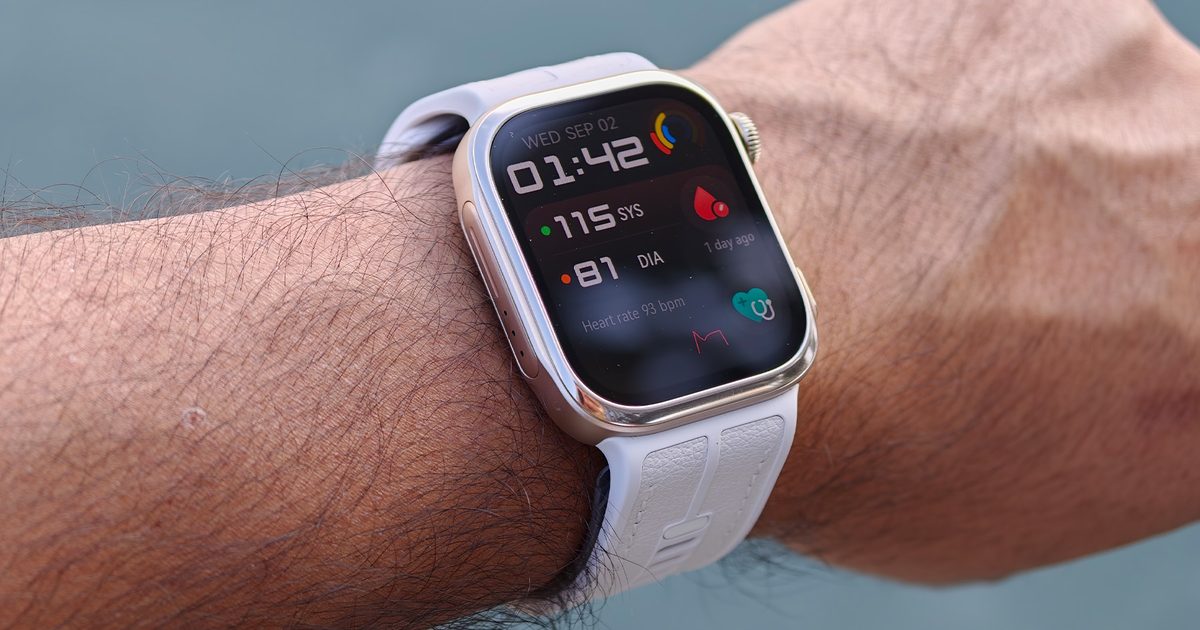


There are plenty of smartwatches that can tell you how many steps you’ve taken, how well you slept, and whether your heart rate is doing something unusual. Then there’s the Huawei Watch D3, which looks at all of that and essentially asks: “That’s nice. But what’s your blood pressure?”
I’ve been wearing the Watch D3 for a handful of days now, and it’s quickly become one of the more interesting smartwatches I’ve tested in a while. Not necessarily because it does everything better than the competition, but because it is trying to solve a very different problem. This is a smartwatch built around cardiovascular health first, and everything else second.
A slimmer Watch D makes a big difference
The first thing you’ll notice about the Watch D3 is that it looks considerably less imposing than its predecessor. Huawei has brought the thickness down to 11.4mm from 13.3mm, and while that might not sound dramatic on paper, it makes a noticeable difference once the watch is actually sitting on your wrist.
It’s also considerably easier to live with overnight. That’s important because the D3 isn’t really a watch you buy just to glance at notifications during the day. A big part of its appeal is continuous health monitoring, and that works much better when you can comfortably forget you’re wearing it. The larger 1.92-inch display helps, too, making everything from blood-pressure readings to other health metrics easier to read at a glance.
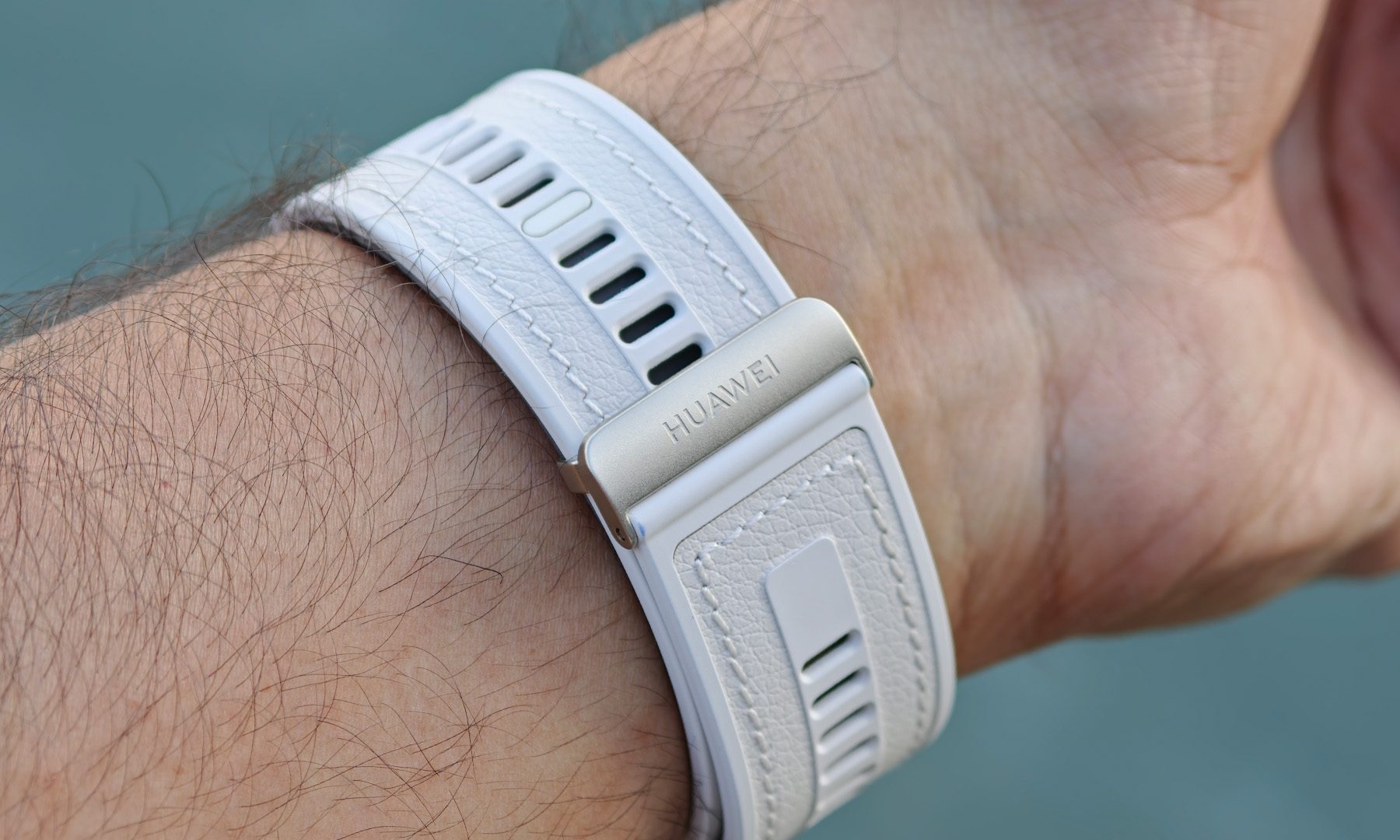
The clever bit is hiding in the strap
The D3’s party trick is something you won’t find on your average Apple Watch or Galaxy Watch: an inflatable cuff built directly into the strap. There’s a miniature pump inside the watch that inflates the cuff around your wrist, allowing the D3 to take a pressure-based blood-pressure measurement rather than simply estimating it from optical sensor data.
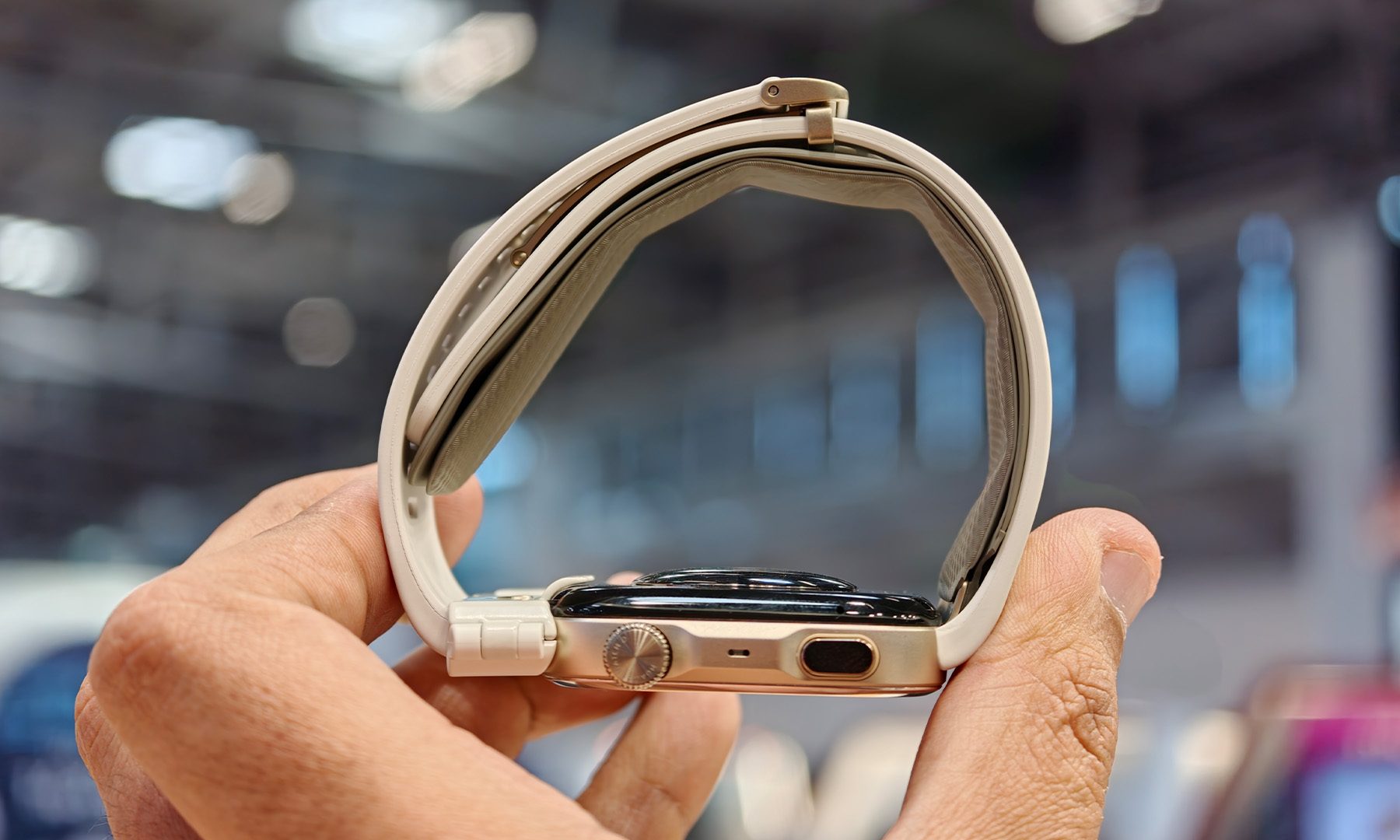
The process itself is surprisingly painless. Raise your wrist so the watch is positioned close to heart level, start a measurement, and roughly 30 seconds later you’ve got a reading. There’s obviously some pressure involved as the cuff inflates, but it’s hardly an ordeal. After a few attempts, it becomes just another thing you can do from your wrist.
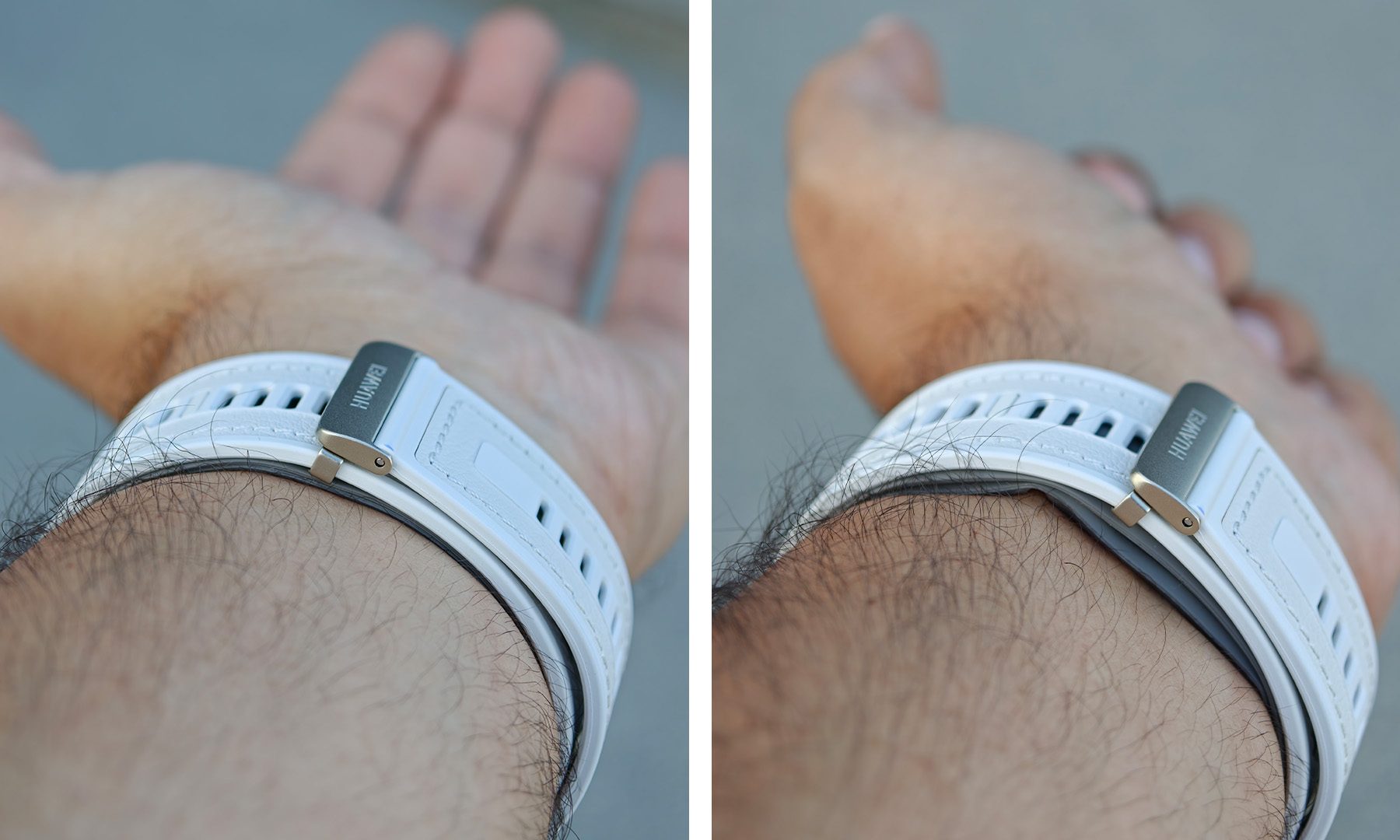
That hardware does come with a few compromises. The Watch D3 carries an IP68 rating, but Huawei’s design means this isn’t a smartwatch I’d treat like a dedicated swimming companion. Prolonged water exposure, diving, hot showers, and similar activities aren’t really what this particular piece of wrist hardware was designed for. It’s a small price to pay for having an inflatable blood-pressure cuff hiding in the strap.
Blood pressure gets a little more interesting
The real appeal of measuring blood pressure this way is that it gives the D3 a different perspective on your health. Most smartwatches build their stress and wellness insights from signals such as heart rate, heart-rate variability and sleep. The D3 can add actual blood-pressure measurements to that picture.
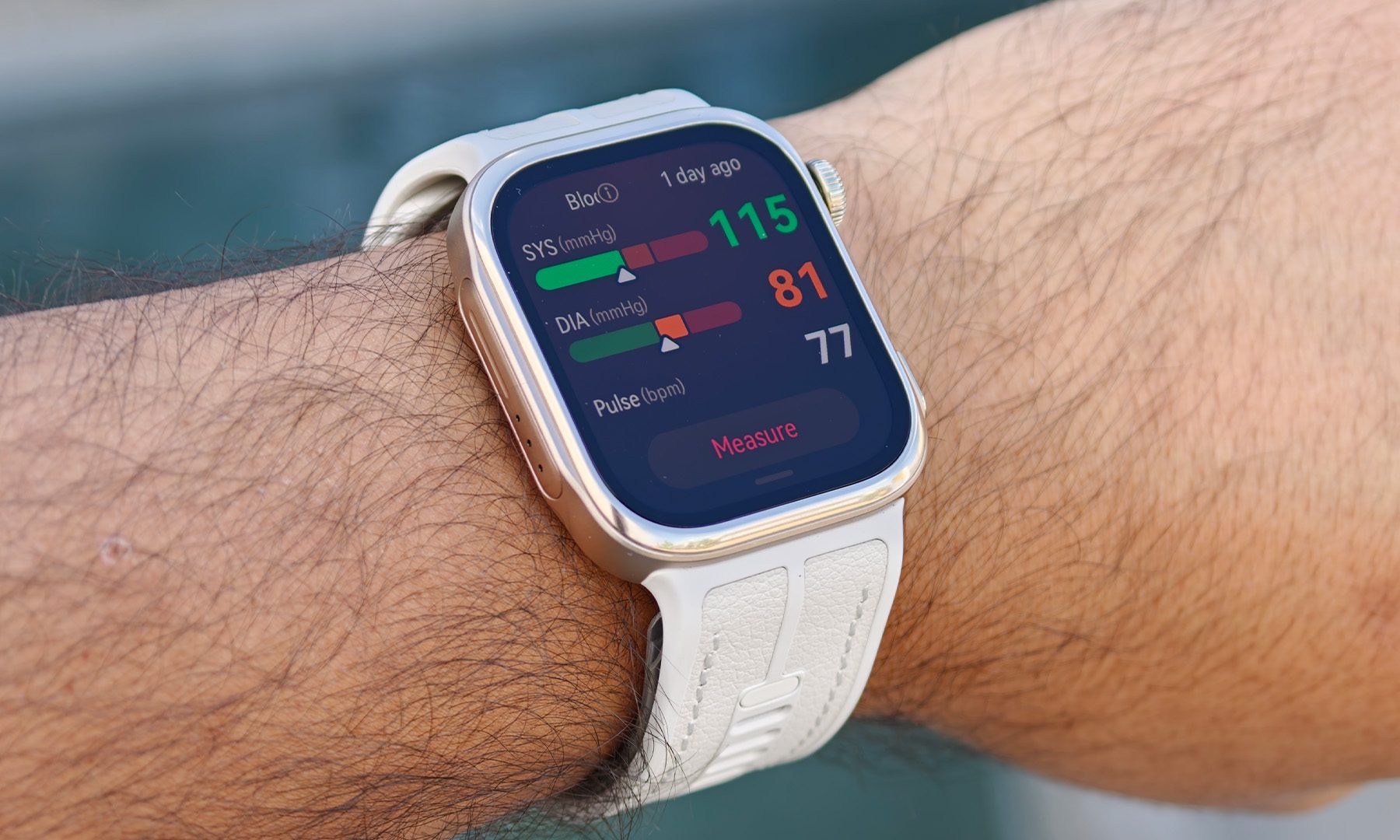
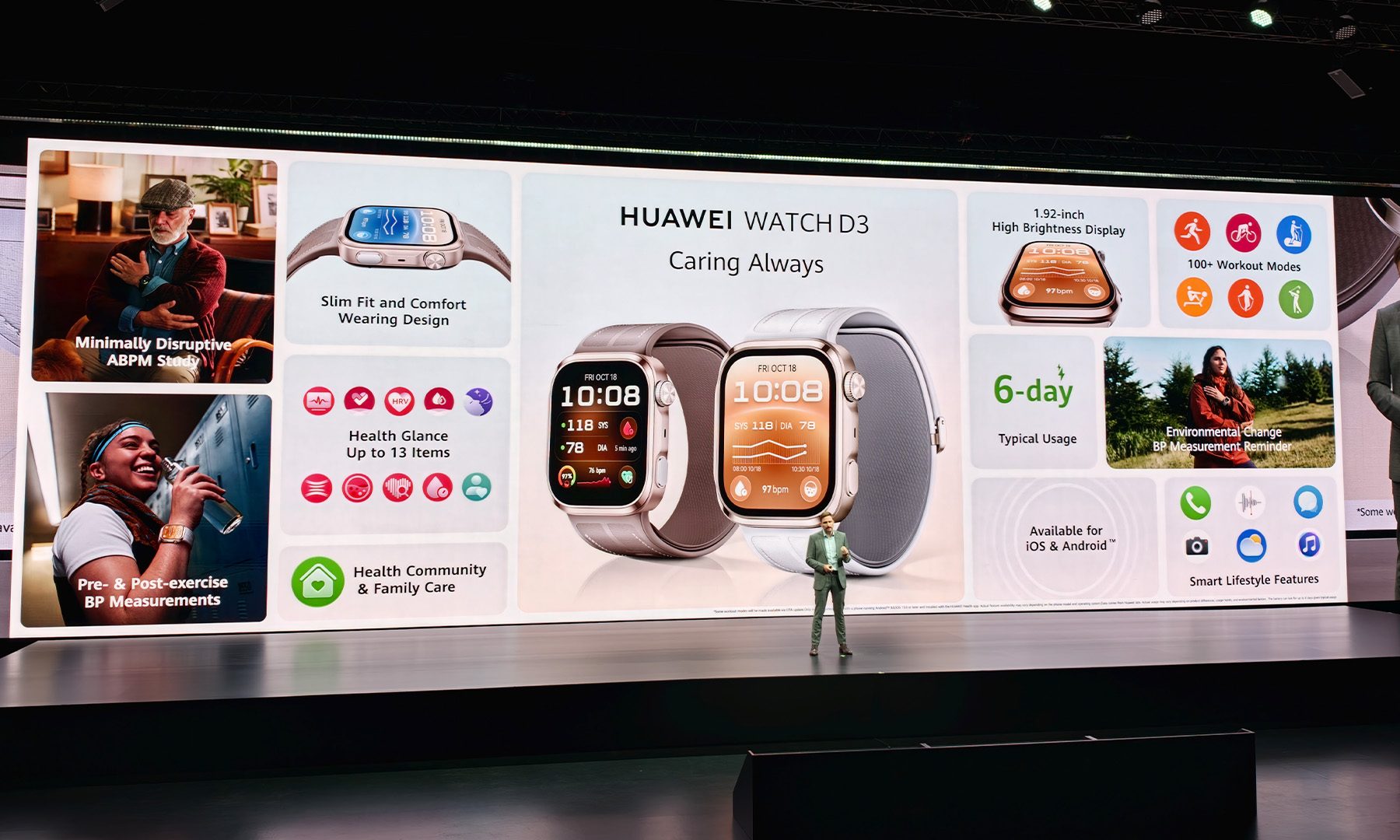
Huawei has also expanded the blood-pressure capabilities of the previous-generation D2. The D3 can record blood pressure before and after exercise, and Huawei says it can maintain accurate measurements at elevated heart rates. It also introduces contextual reminders to check blood pressure during situations such as sudden temperature changes or stays at high altitude.
That last bit is particularly interesting because it makes the monitoring feel a little more intelligent. Instead of simply collecting numbers and dumping them into an app, the D3 can recognize situations where a blood-pressure check may be useful and nudge you toward taking one. It’s a small feature, but one that makes the whole concept feel more purposeful.
This isn’t trying to be an Apple Watch
And that’s where the Watch D3 gets interesting. It would be easy to compare it with an Apple Watch, Galaxy Watch, or Garmin and start ticking off the features it doesn’t have. There are fewer sports modes, the water restrictions are more significant, and its entire design is dictated by hardware that most smartwatches don’t need to accommodate. But that misses the point.

The D3 isn’t really designed to win a smartwatch feature checklist. Its target audience is much more specific: people who care deeply about cardiovascular health, users managing hypertension, adults aged 40 and above, or anyone for whom regular blood-pressure monitoring is more important than having the most comprehensive sports watch on their wrist.

That medical focus was on full display when Huawei previewed the D3 at the European Society of Cardiology (ESC) Congress in Munich, where it attracted positive interest from cardiology professionals. Huawei says the D3’s CE-MDR certification in the European Union covers single blood-pressure measurements, ambulatory blood-pressure monitoring, and measurements before and after exercise.
A surprisingly compelling niche
After a handful of days with the Watch D3, I’m still figuring out how useful all of this additional health data will be over the long term. That’s something I’ll need more time to properly evaluate, particularly when it comes to accuracy in different circumstances, battery life, and whether the novelty of taking blood-pressure measurements actually translates into a lasting habit.
But the early impression is certainly positive. Huawei has managed to shrink a fairly complicated piece of health-monitoring hardware into something that feels much more like a conventional smartwatch than you might expect. And the fact that the D3’s CE-MDR certification specifically encompasses several blood-pressure monitoring scenarios makes its proposition considerably more interesting than simply adding another estimated health metric to a smartwatch.
The Watch D3 isn’t going to replace the Apple Watch or Galaxy Watch, and I don’t think Huawei wants it to. It’s going after a much narrower, but potentially much more valuable audience. If you’re someone who actually needs to keep tabs on your blood pressure, having that capability wrapped around your wrist instead of sitting in a drawer could be a pretty big deal.