

Technologist Mag
  • Home
  • Tech News
  • AI
  • Apps
  • Gadgets
  • Gaming
  • Guides
  • Laptops
  • Mobiles
  • Wearables
  • More
    • Web Stories
    • Trending
    • Press Release

Subscribe to Updates

Get the latest tech news and updates directly to your inbox.

What's On
Anthropic Thinks Its Own Success Is Key to Making AI Safe

Anthropic Thinks Its Own Success Is Key to Making AI Safe

25 June 2026
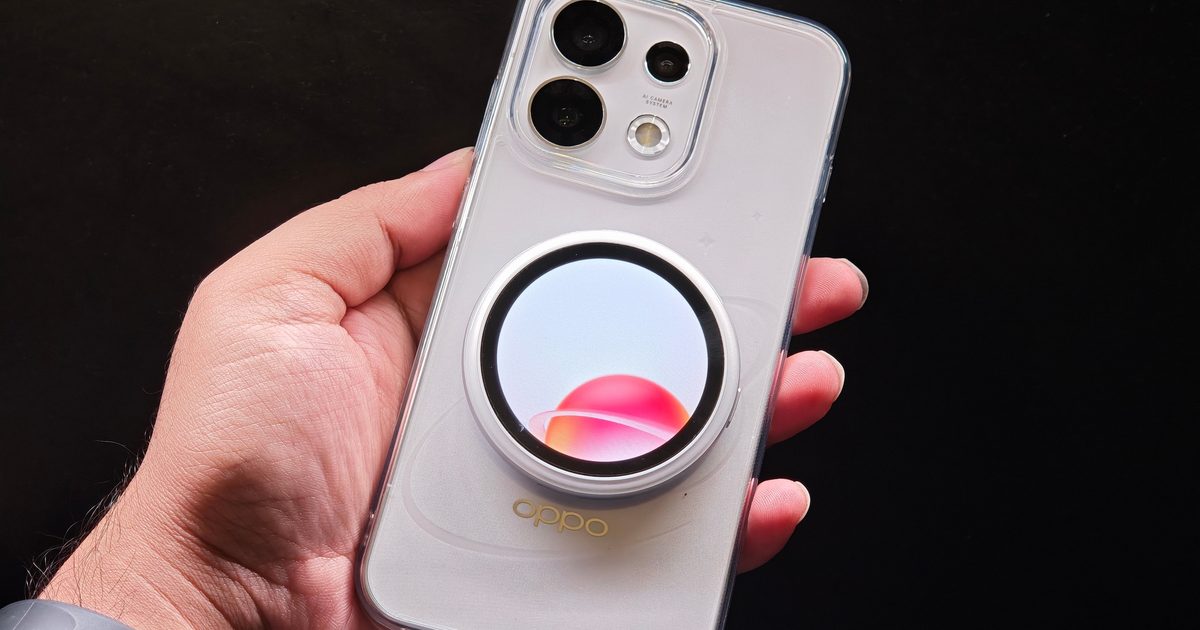
This Oppo phone has a wild 3D back, but its magnetic Bubble is the real party trick

This Oppo phone has a wild 3D back, but its magnetic Bubble is the real party trick

25 June 2026
This Is Probably Your Last Chance to Buy a Cheap MacBook for a While

This Is Probably Your Last Chance to Buy a Cheap MacBook for a While

25 June 2026
Samsung’s wider Galaxy Z Fold 8 may fix the two foldable flaws people still complain about

Samsung’s wider Galaxy Z Fold 8 may fix the two foldable flaws people still complain about

25 June 2026
Why Amazon Dropped Its OpenAI Movie, Data Center Workers Fight Back, and Meta Leaks Employee Data

Why Amazon Dropped Its OpenAI Movie, Data Center Workers Fight Back, and Meta Leaks Employee Data

25 June 2026
Facebook X (Twitter) Instagram
Technologist Mag
SUBSCRIBE
  • Home
  • Tech News
  • AI
  • Apps
  • Gadgets
  • Gaming
  • Guides
  • Laptops
  • Mobiles
  • Wearables
  • More
    • Web Stories
    • Trending
    • Press Release
Technologist Mag
Home » How Can Astronauts Tell How Fast They’re Going?
Tech News

How Can Astronauts Tell How Fast They’re Going?

By technologistmag.com17 April 20263 Mins Read
How Can Astronauts Tell How Fast They’re Going?
Share
Facebook Twitter Reddit Telegram Pinterest Email

Let’s use our car again, but this time we’ll get real numbers from the accelerometer in our smartphone. Say we start at a red light and then accelerate at 2 m/s2 (meters per second squared) for five seconds. From the equation above, Δv1 would be 2 x 5 = 10 m/s, so that’s our velocity. Now, after cruising for a while, we accelerate again at 1 m/s2 for five more seconds. Δv2 is then 1 x 5 = 5 m/s. Adding these two changes, our velocity is now 15 m/s. And so on.

The only problem is that inertial measurement isn’t as accurate as the Doppler method over long periods, because small errors will keep accumulating. That means you need to recalibrate your system periodically using some other method.

Optical Navigation

On Earth, people have long navigated by the stars. In the northern hemisphere, just find Polaris. It’s called the North Star because Earth’s axis of rotation points right at it. That’s why it appears stationary, while the other stars seem to revolve around it. If you point a finger at Polaris you’ll be pointing north, and you can use that orientation to go in whatever direction you want.

Now, if you can measure the angle of Polaris above the horizon, you’ll also know your latitude. If the angle is 30 degrees, you’re at latitude 30 degrees. See, it’s easy. And once you can measure position, you just need to do it twice and record the time interval to find your velocity.

But celestial navigation works because we know how the Earth rotates, and that doesn’t help in a spacecraft. Oh well, can we just use the stars like you would use the cows on the side of the road? Nope. The stars are so far away, astronauts would need to travel for many, many generations to detect any shift in their position. Like the airplane flying over the sea, you’d seem to be stationary, even while traveling 25,000 mph.

But we can still use the basic idea. For optical navigation in space, a spacecraft can locate other objects in the solar system. By knowing the precise location of these objects (which change over time) and where they appear relative to the viewer, it’s possible to triangulate a position. And again, by taking multiple position measurements over time, you can calculate a velocity.

In the end, even though spaceships lack speedometers, it’s possible to track their speed indirectly with a little physics. But it’s just another example of how flying in space is really, totally different—and way more complicated—than driving or flying on Earth.
Share. Facebook Twitter Pinterest LinkedIn Telegram Reddit Email
Previous ArticleTesla’s rare Signature Edition cars come with a resale trap
Next Article Xiaomi makes dirt-cheap gadgets, but its CEO just ruled out cheap EVs

Related Articles

Anthropic Thinks Its Own Success Is Key to Making AI Safe

Anthropic Thinks Its Own Success Is Key to Making AI Safe

25 June 2026
This Oppo phone has a wild 3D back, but its magnetic Bubble is the real party trick

This Oppo phone has a wild 3D back, but its magnetic Bubble is the real party trick

25 June 2026
This Is Probably Your Last Chance to Buy a Cheap MacBook for a While

This Is Probably Your Last Chance to Buy a Cheap MacBook for a While

25 June 2026
Samsung’s wider Galaxy Z Fold 8 may fix the two foldable flaws people still complain about

Samsung’s wider Galaxy Z Fold 8 may fix the two foldable flaws people still complain about

25 June 2026
Why Amazon Dropped Its OpenAI Movie, Data Center Workers Fight Back, and Meta Leaks Employee Data

Why Amazon Dropped Its OpenAI Movie, Data Center Workers Fight Back, and Meta Leaks Employee Data

25 June 2026
Apple just raised Mac prices, and Prime Day is your last chance to but them at old prices

Apple just raised Mac prices, and Prime Day is your last chance to but them at old prices

25 June 2026
Stay In Touch
  • Facebook
  • Twitter
  • Pinterest
  • Instagram
  • YouTube
  • Vimeo

Subscribe to Updates

Get the latest tech news and updates directly to your inbox.

Don't Miss
This Oppo phone has a wild 3D back, but its magnetic Bubble is the real party trick

This Oppo phone has a wild 3D back, but its magnetic Bubble is the real party trick

By technologistmag.com25 June 2026

Oppo has started rolling out the Reno 16 Pro globally, giving Europe its newest style-heavy,…

This Is Probably Your Last Chance to Buy a Cheap MacBook for a While

This Is Probably Your Last Chance to Buy a Cheap MacBook for a While

25 June 2026
Samsung’s wider Galaxy Z Fold 8 may fix the two foldable flaws people still complain about

Samsung’s wider Galaxy Z Fold 8 may fix the two foldable flaws people still complain about

25 June 2026
Why Amazon Dropped Its OpenAI Movie, Data Center Workers Fight Back, and Meta Leaks Employee Data

Why Amazon Dropped Its OpenAI Movie, Data Center Workers Fight Back, and Meta Leaks Employee Data

25 June 2026
Apple just raised Mac prices, and Prime Day is your last chance to but them at old prices

Apple just raised Mac prices, and Prime Day is your last chance to but them at old prices

25 June 2026
Technologist Mag
Facebook X (Twitter) Instagram Pinterest
  • Privacy
  • Terms
  • Advertise
  • Contact
© 2026 Technologist Mag. All Rights Reserved.

Type above and press Enter to search. Press Esc to cancel.