


Technologist Mag
  • Home
  • Tech News
  • AI
  • Apps
  • Gadgets
  • Gaming
  • Guides
  • Laptops
  • Mobiles
  • Wearables
  • More
    • Web Stories
    • Trending
    • Press Release

Subscribe to Updates

Get the latest tech news and updates directly to your inbox.

What's On
Mattress Firm Coupons: Save up to 0

Mattress Firm Coupons: Save up to $700

5 September 2026
The Watch World Went Crazy This Week. Here Are the 10 You Need to See

The Watch World Went Crazy This Week. Here Are the 10 You Need to See

5 September 2026
OpenAI Agents Hacked Another Website

OpenAI Agents Hacked Another Website

5 September 2026
There May Not Be an iPhone 18 This Year

There May Not Be an iPhone 18 This Year

5 September 2026
The Best Alexa Speakers I’ve Tried

The Best Alexa Speakers I’ve Tried

5 September 2026
Facebook X (Twitter) Instagram
Technologist Mag
SUBSCRIBE
  • Home
  • Tech News
  • AI
  • Apps
  • Gadgets
  • Gaming
  • Guides
  • Laptops
  • Mobiles
  • Wearables
  • More
    • Web Stories
    • Trending
    • Press Release
Technologist Mag
Home » Getting to Mars may require a pit stop in orbit, and NASA just tested the nozzle to make that happen
Tech News

Getting to Mars may require a pit stop in orbit, and NASA just tested the nozzle to make that happen

By technologistmag.com27 June 20262 Mins Read
Getting to Mars may require a pit stop in orbit, and NASA just tested the nozzle to make that happen
Share
Facebook Twitter Reddit Telegram Pinterest Email

Getting a spacecraft to Mars or beyond requires an enormous amount of fuel, most of which has to be hauled from Earth, adding to the overall cost and weight of the spacecraft. NASA has been working on a different approach, one that could be more efficient and effective.

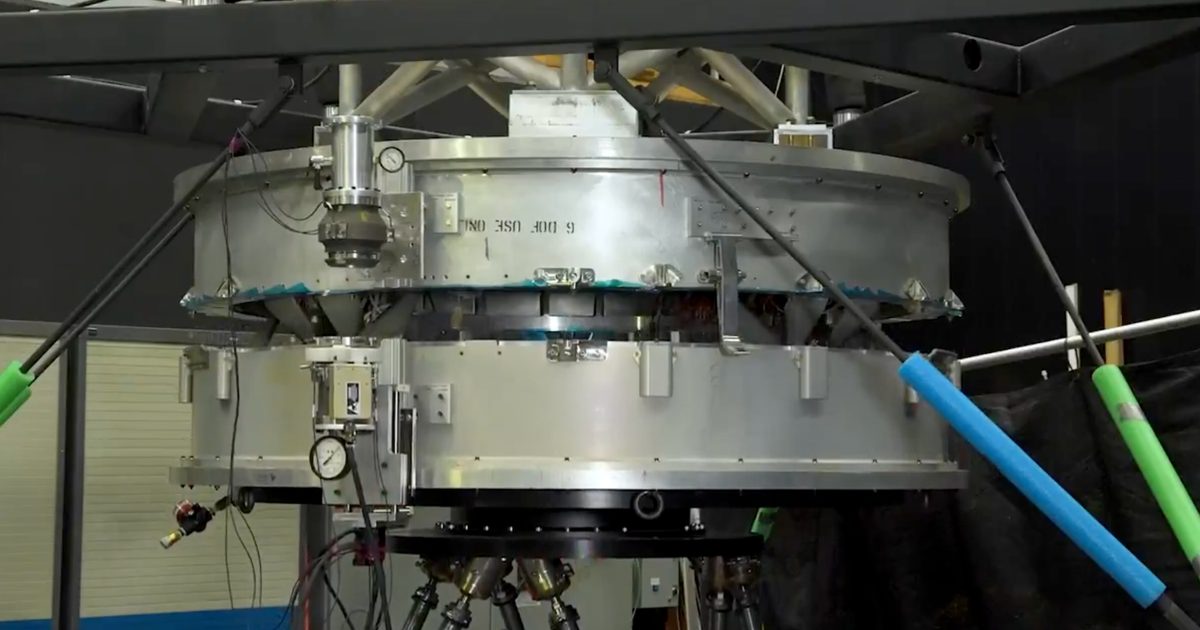
It wants to refuel a spacecraft in orbit before heading out for the mission. What’s even more interesting is that the space agency just finished testing a component that could make that possible: a cryocoupler.

So what exactly is a cryocoupler, and why does it matter?

Think of it as the nozzle of a gas pump, except for a spacecraft. A cryocoupler allows a rocket or deep-space probe to dock with an orbiting fuel station, refueling it with cryogenic propellants such as liquid hydrogen and liquid oxygen before pushing the craft into the depths of the solar system.

The cryocoupler has been developed by American defense and technology company L3Harris. The team at NASA’s Marshall Space Flight Center in Huntsville, Alabama, tested it by running liquid nitrogen through the coupler at -321 degrees Fahrenheit, analyzing its performance at extremely cold temperatures in both connected and disconnected configurations.

They also ran misaligned docking simulations as the device is designed to accommodate off-axis coupling (via Engadget).

Does this mean in-orbit refueling is almost here?

Unfortunately, not yet. As cryocoupler project manager Travis Belcher puts it, “in-orbit cryogenic refueling between two spacecraft has yet to be done and remains one of the toughest engineering challenges in spaceflight.” 

The encouraging part, however, is that this coupler is fully automated with no spacewalk needed. Furthermore, it can attach and detach multiple times.

Even so, these are early-stage tests, and future evaluations will be tailored to specific conditions and missions. If the engineering holds, spacecraft could one day top up in orbit rather than carrying all the possible fuel from the ground. 

Share. Facebook Twitter Pinterest LinkedIn Telegram Reddit Email
Previous ArticleThe Gooner Music Video Boom Is Here
Next Article I Found The Best Amazon Prime Day Headphone Deals (2026)

Related Articles

Mattress Firm Coupons: Save up to 0

Mattress Firm Coupons: Save up to $700

5 September 2026
The Watch World Went Crazy This Week. Here Are the 10 You Need to See

The Watch World Went Crazy This Week. Here Are the 10 You Need to See

5 September 2026
OpenAI Agents Hacked Another Website

OpenAI Agents Hacked Another Website

5 September 2026
There May Not Be an iPhone 18 This Year

There May Not Be an iPhone 18 This Year

5 September 2026
The Best Alexa Speakers I’ve Tried

The Best Alexa Speakers I’ve Tried

5 September 2026
Scientists Put Caterpillars in an Ultraquiet Chamber to Learn How They Hear Without Ears

Scientists Put Caterpillars in an Ultraquiet Chamber to Learn How They Hear Without Ears

5 September 2026
Stay In Touch
  • Facebook
  • Twitter
  • Pinterest
  • Instagram
  • YouTube
  • Vimeo

Subscribe to Updates

Get the latest tech news and updates directly to your inbox.

Don't Miss
The Watch World Went Crazy This Week. Here Are the 10 You Need to See

The Watch World Went Crazy This Week. Here Are the 10 You Need to See

By technologistmag.com5 September 2026

While Watches and Wonders every April is undoubtedly the watch world’s main event of the…

OpenAI Agents Hacked Another Website

OpenAI Agents Hacked Another Website

5 September 2026
There May Not Be an iPhone 18 This Year

There May Not Be an iPhone 18 This Year

5 September 2026
The Best Alexa Speakers I’ve Tried

The Best Alexa Speakers I’ve Tried

5 September 2026
Scientists Put Caterpillars in an Ultraquiet Chamber to Learn How They Hear Without Ears

Scientists Put Caterpillars in an Ultraquiet Chamber to Learn How They Hear Without Ears

5 September 2026
Technologist Mag
Facebook X (Twitter) Instagram Pinterest
  • Privacy
  • Terms
  • Advertise
  • Contact
© 2026 Technologist Mag. All Rights Reserved.

Type above and press Enter to search. Press Esc to cancel.