



Cloudflare just entered the AI-browser race with a twist. Instead of building another Chrome alternative for people, the company launched Kitesurf, a cloud-hosted browser made only for AI agents. Since autonomous AI systems are increasingly the ones doing the actual browsing and scrolling online, Cloudflare just made its to claim that space.
Why did Cloudflare make Kitesurf browser exclusively for AI agents?
Traditional browsers carry features humans rely on daily, including tabs, extensions, and smooth visual rendering. AI agents need none of that. What they need is speed, low cost, and the ability to process content efficiently within limited context windows.
Kitesurf strips away the extras and runs entirely on Cloudflare Workers, its serverless computing platform, instead of relying on Chromium like most browsers do. Cloudflare says this approach uses significantly less computing power for common agent tasks like taking screenshots or extracting page content. This is important because running thousands of agent sessions on traditional browsers can be very expensive.
What makes Kitesurf different from other browsers?
Cloudflare built Kitesurf using a mix of existing open source technology, including a rendering engine called Blitz and Firefox’s CSS parser Stylo. The project reportedly began just 12 weeks ago and already passed over 215,000 web platform compatibility tests.
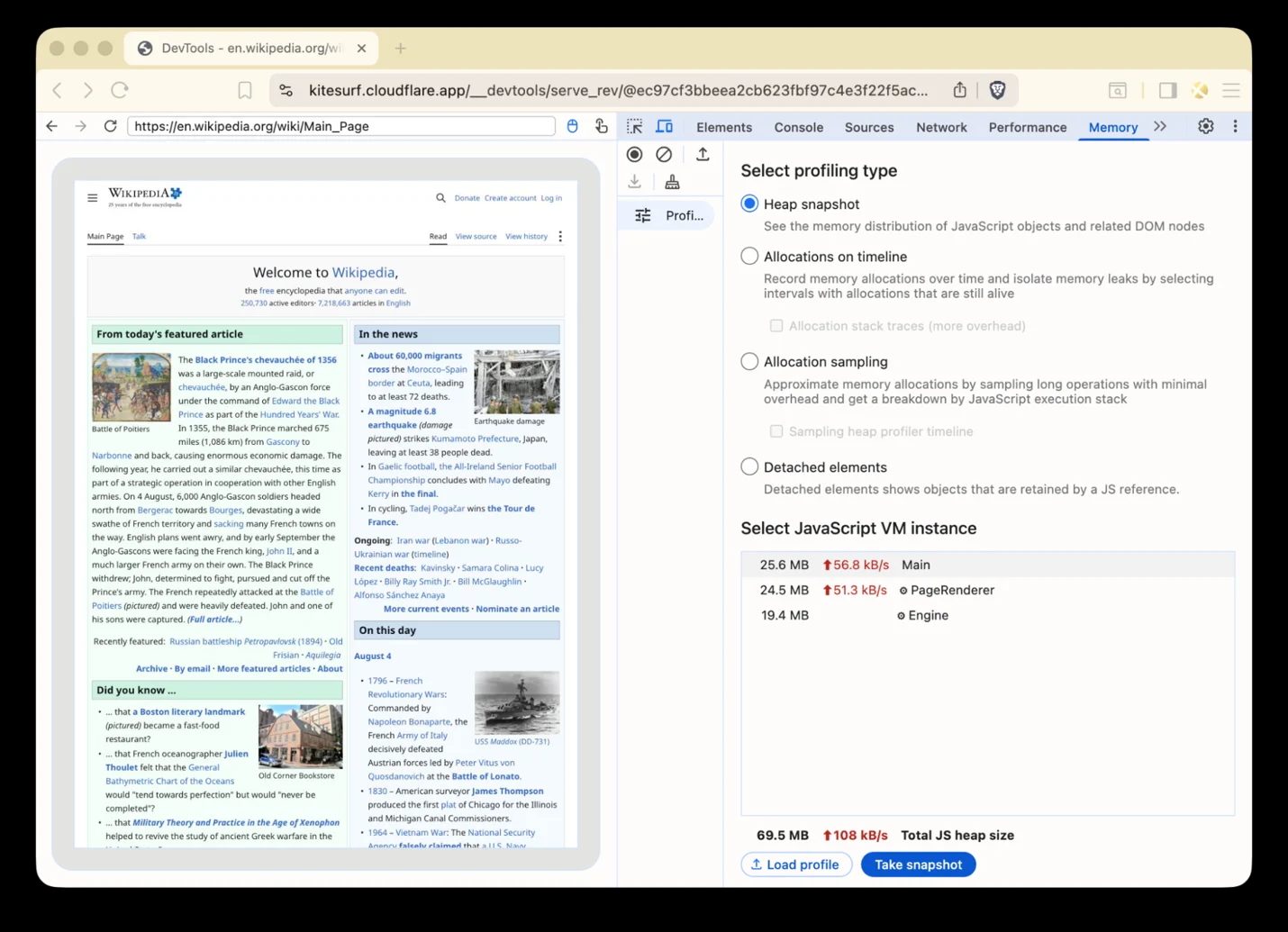
It can correctly render websites like Wikipedia and Hacker News, though it still cannot handle video playback or long authenticated sessions. Kitesurf is available for free during its beta phase through Cloudflare’s Browser Run product, and anyone curious can try it firsthand through a public playground at kitesurf.cloudflare.app.
Cloudflare also says it plans to open-source Kitesurf down the line, letting any customer deploy and run their own version. As AI agents gain more capabilities to book flights, fill out forms, and shop online for people, they need a platform to browse faster, and Cloudflare just built that missing piece.