



.jpg "How to Claim Your Cut of Apple’s 0 Million Siri Settlement")


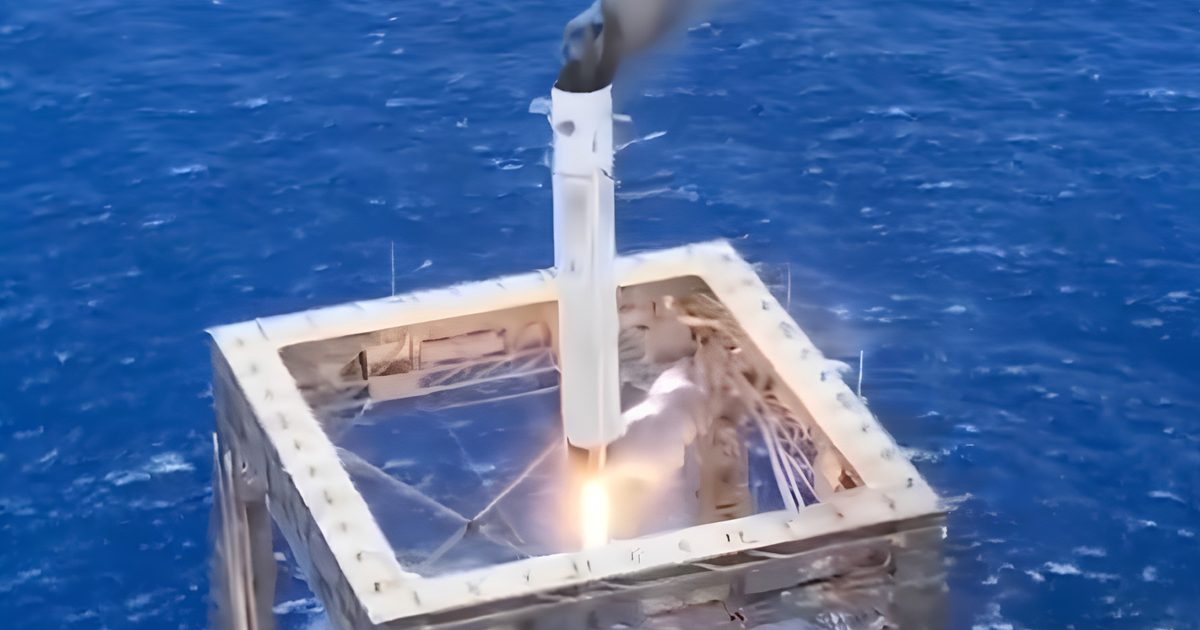
SpaceX’s playbook for recovering a rocket booster generally involves legs, a precisely controlled vertical landing, and either a concrete pad or a drone ship.
China just managed to pull off something similar, but in a slightly different way, and on July 10, it tested the method as well.
So what exactly did China just pull off?
China launched the Long March 10B from the Wenchang Spacecraft Launch Site in Hainan Province on July 10, 2026, at 12:15 PM local time.
About six minutes after liftoff, the rocket’s first stage separated and began a controlled descent, which was caught by a cable net system aboard a specially designed recovery vessel called the Linghangzhe.
No landing legs, no touchdowns, and a net on a ship. That is a world first. No other space program has ever captured an orbital-class booster this way, and that speaks volumes. China Aerospace Science and Technology Corporation confirmed that the primary mission succeeded, with the satellite payload reaching its designated orbit (via Ars Technica).
For the uninitiated, the Long March 10B is a two-stage medium-lift rocket capable of carrying approximately 16 metric tons into low-Earth orbit, slightly below the Falcon 9’s lift capacity.

A total of seven YF-100K engines power the kerosene-and-liquid-oxygen first stage, with a single methane-fueled YF-219 engine pushing it through the second stage. China plans to refly the recovered booster before the end of 2026, which is basically the entire point if you ask me.
Why does any of this matter beyond the headline?
Because reusability is the entire reason why SpaceX can currently launch at roughly twice the rate of all Chinese rockets combined.
It’s the gap in the cadence that allows SpaceX to dominate commercial launch contracts. In fact, US Space Force officials have been explicit about their concern over what will happen when China closes it.
The recovery of the Chinese rocket does not immediately close the gap, but it is the first credible sign that China is on the same path, and it could catch up quite soon. Net or legs, the destination is the same: reusable rockets.
