


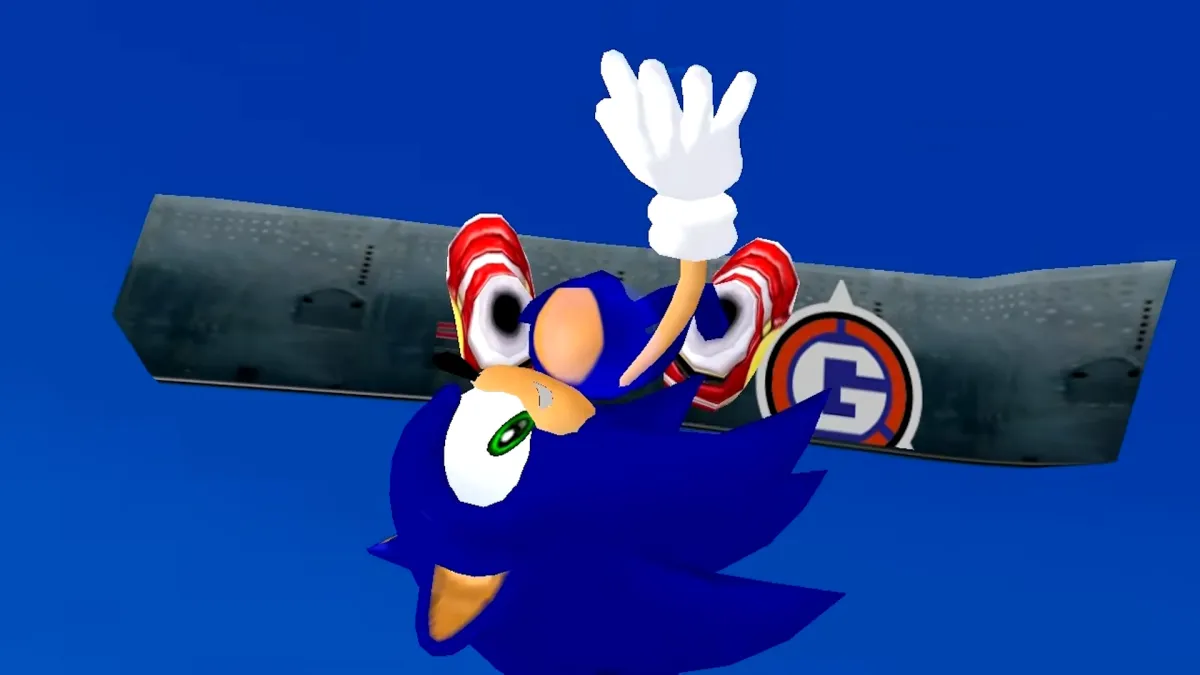
Few video game openings make the impression City Escape does in Sonic Adventure 2. After jumping out of a helicopter, Sonic uses a piece of debris to snowboard down the city streets as the generational earworm, “Escape from the City” blasts. It was a defining moment for gamers, whether they were playing it on the original Dreamcast in 2001 or GameCube in 2002. It’s also one of the best-designed levels in 3D Sonic history. Ahead of its appearance in Sega and iam8bit’s 35 Years of Speed: The Sonic Art Exhibit this weekend in Los Angeles, we got ahold of the design document Sonic Team used to lay out just how this iconic level would eventually play out while Sonic Adventure 2 was still in development.
Originally codenamed Project GAIA 2, Sonic Adventure 2 had the unenviable task of following up the acclaimed Dreamcast launch title, Sonic Adventure. Not only was that a daunting task on its own, but Sega found itself in dire financial straits as the PlayStation 2 was decimating the Dreamcast in sales. Sega, on the brink of exiting the hardware business, dramatically downsized the development team behind Sonic Adventure 2 and relocated them to San Francisco, California, which heavily inspired the hilly urban design of the game’s opening level.
“Our team of 120 got pared down to 11, sent to America, and told to go make Sonic Adventure 2,” Sonic Team creative officer and Sonic Adventure 2 director Takashi Iizuka told me in 2016. “Part of what we had to resolve was ‘How are we going to make the same game with 11 people when we have less than a tenth of the staff on-board?’ I was really tasked with trying to make the impossible possible.”
Regardless of the challenges, Sonic Team, under Iizuka’s leadership, was able to clear the hurdles and deliver one of the Dreamcast’s most beloved games in just a year and a half of development time. According to several long-tenured members of Sonic Team, including Iizuka, art director Hiroshi Nishiyama, and sound director Jun Senoue, Sonic Adventure 2 was their favorite game they’ve worked on.
“It was a small development team so we were able to condense all the good elements from the previous game, and deliver a story and game that was satisfying to players everywhere,” Iizuka told me in 2022. Nishiyama followed up with, “I had a lot of new ideas for the game because of all the new stimulus and experiences I got by living in America and was able to make a game with a lot of great moments together with the other members.”
While Sonic Adventure 2 is often remembered primarily as the game that introduced the world to Shadow the Hedgehog and songs like “Live and Learn,” City Escape is up there as one of the most iconic elements of the popular title. The design document showcases various elements of the Hero Side’s opening mission, including the aforementioned snowboard sequence, plus the chase sequence involving the massive GUN truck.
You can check out the City Escape design document from Sonic Adventure 2 below, and if you need a little accompanying music as you flip through the pages, we recommend hitting play on the “Escape from the City” YouTube video above.
If you’re in the Los Angeles area the weekend of September 25, you’ll be able to see this in person, alongside other historical pieces of art from the Sonic franchise through the 35 Years of Speed: The Sonic Art Exhibit showcase at ARK/8. Admission is free, but attendees should register through Eventbrite. For more on the art of Sonic the Hedgehog, including how Sonic Team’s approach to making art has evolved over the last 35 years, check out our conversation with Kazuyuki Hoshino here.