





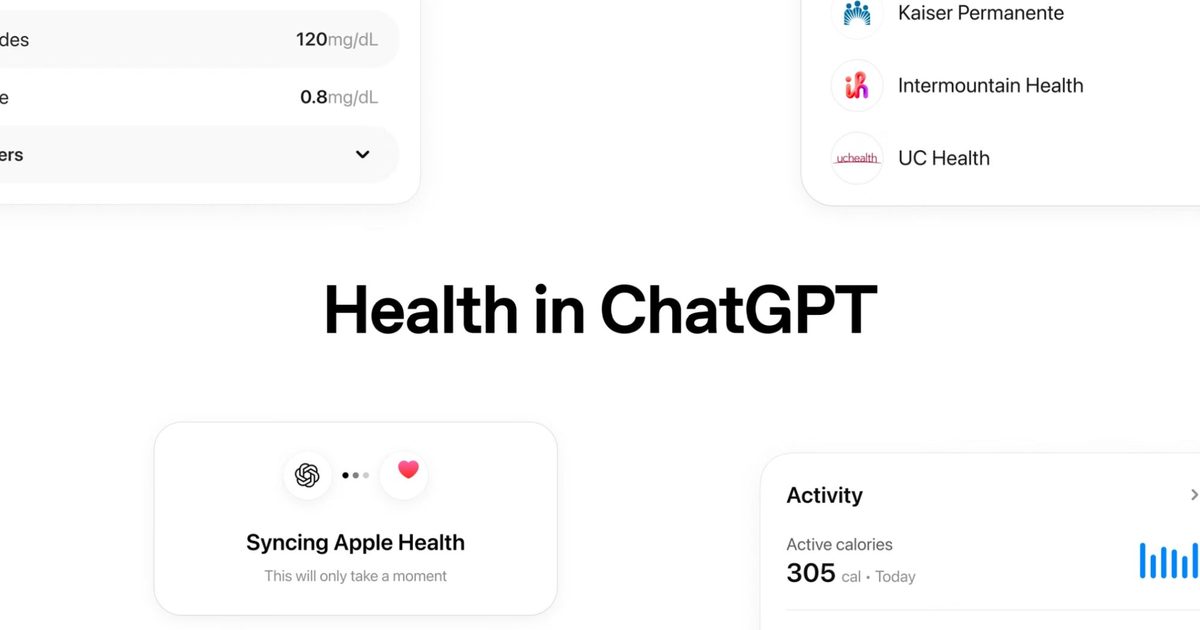
OpenAI is expanding ChatGPT into a new category with the launch of Health in ChatGPT, a feature that allows users to securely connect health information from Apple Health and supported medical records. The feature is rolling out to users in the United States and is designed to help people ask health-related questions with more personalized context, instead of relying on isolated conversations.
According to OpenAI, more than 300 million people use ChatGPT every week for health-related queries, ranging from understanding lab reports to preparing for doctor appointments.
The company says one of the biggest challenges is that health information is often scattered across patient portals, wearable devices, hospital records and fitness apps, making it difficult for users to get a complete picture of their health. The new feature aims to bring that information together inside ChatGPT while keeping users in control of what data is shared and when it can be accessed.
The launch marks one of OpenAI’s biggest moves into consumer health, an area where AI companies have been increasingly positioning their assistants as tools that can help users better understand medical information rather than replace professional healthcare.
Apple Health integration and user-controlled permissions
Health in ChatGPT allows users to connect Apple Health and supported medical records to their conversations. Once connected, ChatGPT can reference that information when answering questions, helping users understand changes in their health, review medications, or discuss information from recent medical visits. Users can also update their health profile by adding conditions, medications and family medical history directly within ChatGPT.
OpenAI says the experience is built around user control. ChatGPT asks for permission before using health information in conversations, and users can choose to allow access once, always grant permission, or disable it altogether through the Health settings. The company also notes that connected health information may not always be complete or current, encouraging users to verify important details against their original medical records.
The feature also works with wearable devices and third-party fitness or nutrition apps that sync data with Apple Health. As long as those apps share information with Apple’s health platform, ChatGPT can use the available data to provide more contextual responses, although OpenAI notes that some proprietary scores may not transfer between services.
OpenAI is pushing ChatGPT beyond conversations.
The announcement reflects a broader shift in how AI assistants are evolving. Rather than functioning solely as chatbots that respond to prompts, companies are increasingly connecting AI systems to personal data sources so they can provide more relevant assistance. Health is one of the most sensitive examples of that approach, making user consent and transparency central to the experience.
OpenAI positions Health in ChatGPT as a way to help users better understand their own health information, not as a replacement for doctors or medical advice. By combining wearable data, medical records, and conversational AI in one place, the company is betting that future AI assistants will become increasingly useful because they understand more of a user’s personal context, rather than simply answering questions in isolation.
