






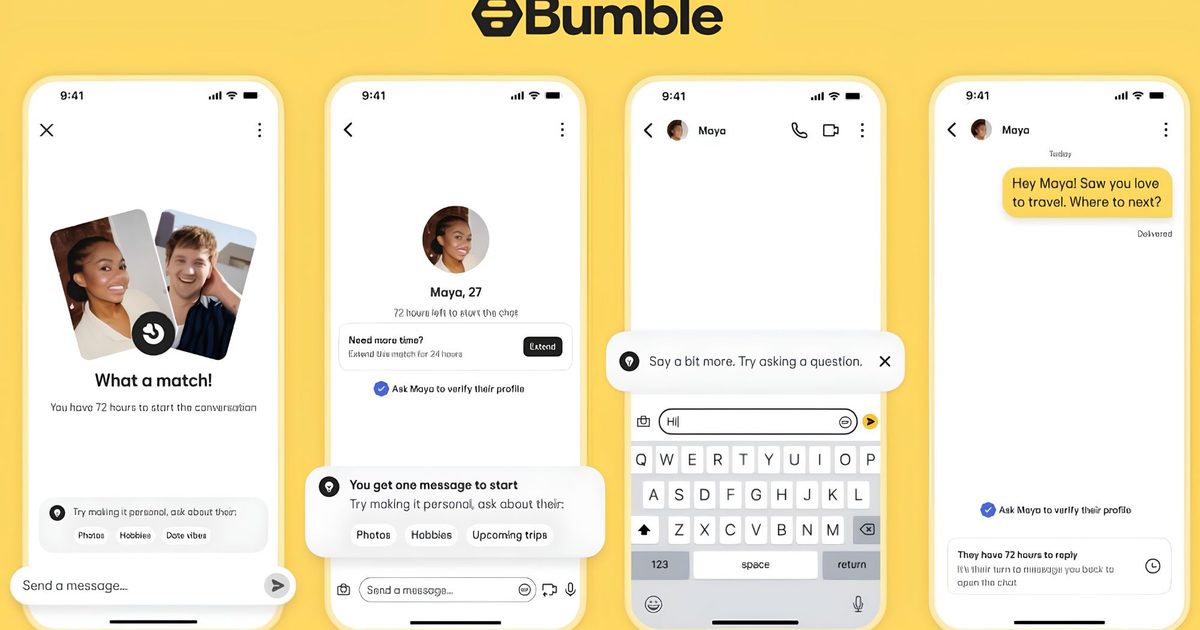
Bumble is changing one of the rules that has defined the dating app since its launch: either person in a match can now send the first message.
The change is rolling out globally from today, giving men and women more flexibility over how a conversation begins. Bumble is also extending the time available to respond from 24 hours to 72 hours, which should make it less likely that a promising match disappears simply because someone was busy for a day.
It is a notable shift for an app built around the idea that women should make the first move. Bumble says the update is not intended to abandon that principle, but to give members more choice over how they start conversations.
You can make the first move, but you only get one shot
There is still some structure around the new system. Whoever sends the first message gets one initial message, and the chat only opens once the other person responds. Bumble will also prompt users to rethink extremely low-effort openers, such as one-word messages, before they are sent.
The company says its testing showed an increase in chat initiation, while opening messages became more evenly distributed between men and women. More than half of surveyed members said the longer response window improved their experience, while 92% of women surveyed said they still felt in control of their dating experience.
That last part matters because Bumble is trying to change a familiar experience without throwing away the safety and control that originally separated it from other dating apps.
Bumble says women still have the option of making the first move, but its research suggests many, particularly Gen-Z women, also appreciate having the flexibility to let men start the conversation. Nearly two-thirds of surveyed men and women said having a choice over how and when a conversation begins makes them feel more confident.
Bumble is trying to make matches survive real life
The bigger issue Bumble is addressing is not necessarily who sends “Hey” first. It is the fact that people are busy, and dating apps are very good at turning a missed day into a missed opportunity.
Extending the response window to three days gives matches more breathing room, while Bumble says testing also showed declines in chat expirations and unmatching. Women saw a mutual chat rate increase more than twice that of men during testing.

The change also fits into Bumble’s wider push to improve what happens after the swipe. The company has recently introduced refreshed Profile Prompts and AI-powered profile feedback, and says it plans to introduce more features aimed at helping users move from matching to actual dates.
In other words, Bumble is not completely abandoning its original idea. It is loosening one of its most recognizable rules because dating has changed, and apparently sometimes the biggest obstacle to a conversation is simply being busy at the wrong time.
