


Jon Batiste has collaborated with the likes of Alicia Keys, Lenny Kravitz, Prince, Stevie Wonder, Willie Nelson, and many more. He performed the national anthem at Super Bowl LIX. He’s headed up the musical efforts of The Late Show with Stephen Colbert. He’s taken home more awards than we can realistically list in this article (including eight Grammys, as well as an Academy Award, a BAFTA Award, and a Golden Globe). But as I sit down with Batiste for a brief conversation about video game music, his energy transcends the Zoom call.
Before I can even ask a question, Batiste begins singing to greet me, then nerds out about my NBA Jam and Street Fighter II cabinets. He begins humming the menu music from NBA Jam and reminiscing about all the quarters he pumped into his local Street Fighter cabinet. The Louisiana native and Juilliard School alum has been an ardent gaming enthusiast for nearly three decades, with compositions from games like Sonic the Hedgehog and Final Fantasy VII inspiring his earliest musical endeavors. Spend enough time watching video game music performances on social media, and you’ll likely soon find videos of Batiste sitting with famed Final Fantasy composer Nobuo Uematsu, or of Batiste performing gaming music.
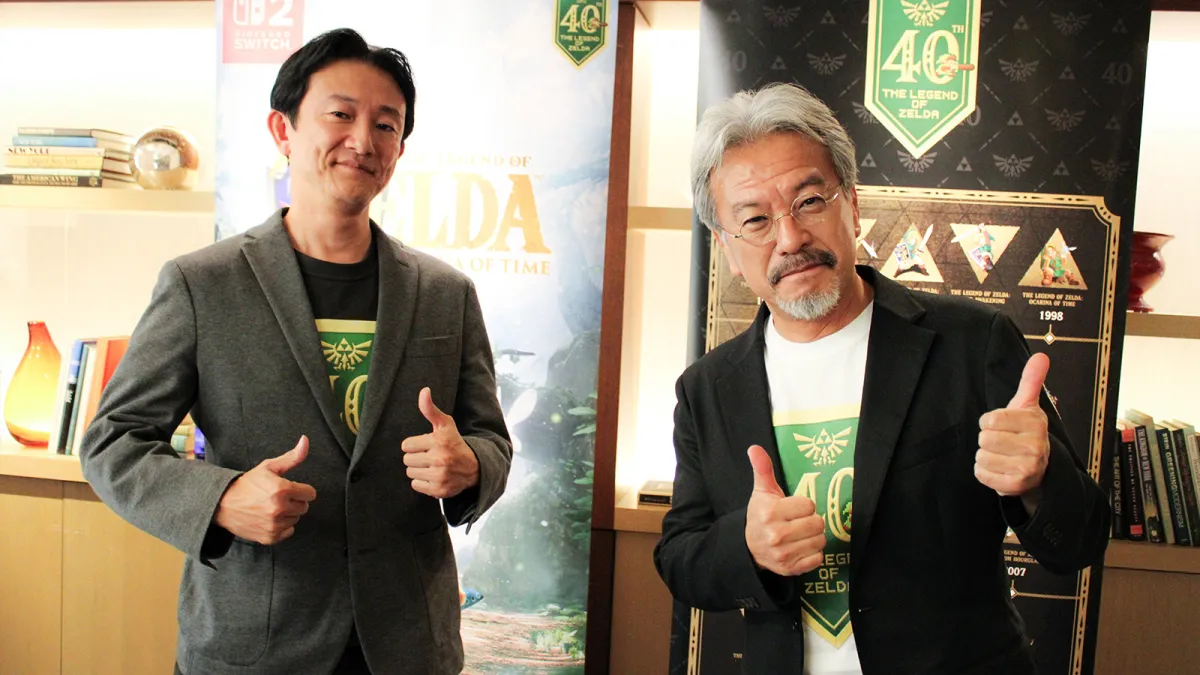
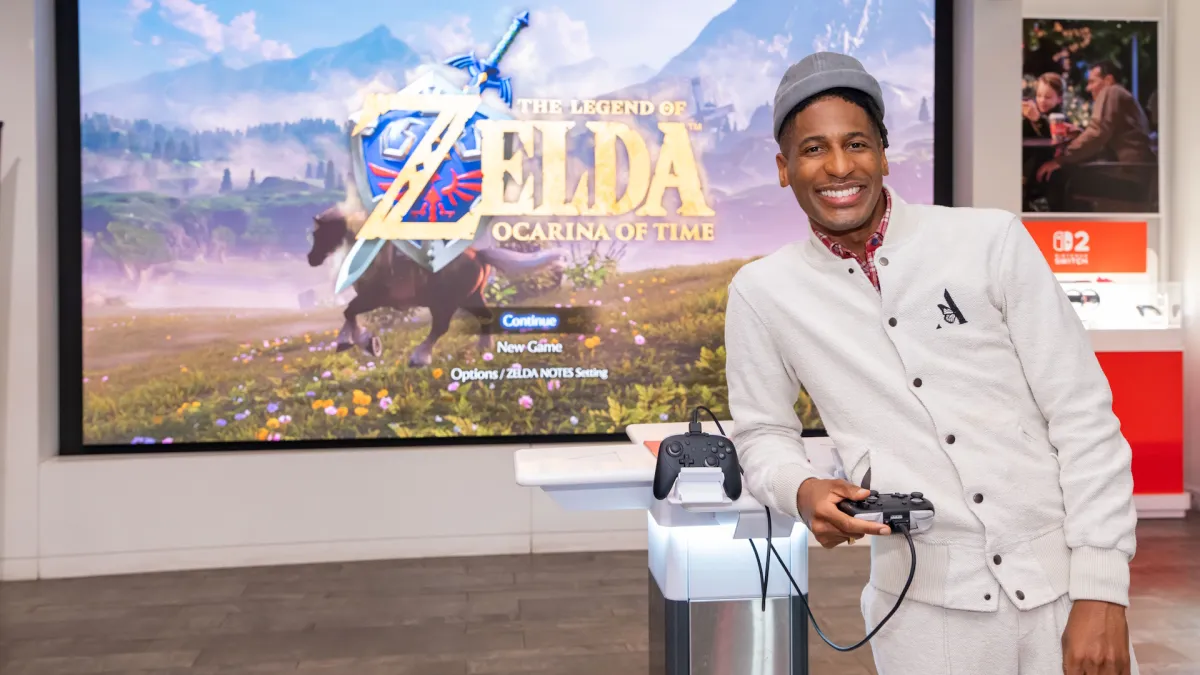
With The Legend of Zelda: Ocarina of Time delivering some of the most iconic music of all time (and Batiste famously loving the music), it makes sense that Nintendo would bring him out to New York to serve as a special guest at the launch event for the Legend of Zelda: Ocarina of Time remake on Switch 2. I sat down with Batiste for a few minutes to chat about his love of video game music, his history with Nintendo, and why “Guile’s Theme” from Street Fighter II just goes so well with everything.
Ocarina of Time is easily one of the most important video games ever made, and one of the things that makes it so special is the music. What about Ocarina of Time sticks out to you sonically?
First off, if you want to get super inside baseball, technical music nerdery, which I love to do, in the compositions, there’s a way that major chords and minor chords in… no sevenths, just root, third, fifth. They alternate, and it creates this magic that is, like, it’s wistful, and it’s simple. It feels ancient, and it feels like it’s the music that is going on in your mind as you’re generating thoughts and your imagination is churning. And the major chords are happening just after the minors in this contrary motion that’s happening, so it feels like the music is going like this: It’s going up – major, minor – like [sings the main Legend of Zelda theme song].
So, it’s expanding and contracting, which is a musical allegory for the expansion and the openness of the world that Link is in. It’s like [Koji Kondo] figured out how to capture the essence of the gameplay, but also the essence of magic and simplicity, which I think is really what makes… that’s the music’s power! So, you could listen to the music in the game, and you could also listen to it apart from the game and experience that magic.
Are there any tracks in Ocarina of Time that stand out to you as the most musically sophisticated or compositionally impressive?
Oh man. Well, I think of it as a suite, so that’s what makes it actually… there’s nothing that’s more or less complex, but the thought to figure out how to make all of the themes be interrelated yet singular. “Song of Storms” is, like, for me, that’s a personal favorite. That’s why I like to play it. I like to play a lot of the themes. That’s how I grew up! I would play the game, and then, I would go to an instrument. Once we played for hours on Nintendo, we’d go and play Nintendo on piano! It was like a trade-off there, you know? I’ve been doing this since I was about 11 years old.
Taking it back to that 11-year-old Jon, talk to me a little bit about your history in general.
Okay, so my history with Nintendo goes back to the NES. Christmas morning. Duck Hunt. You remember that? Maybe the first game I ever played. No, the first game I ever played was Donkey Kong, and then Duck Hunt, and then Super Mario Bros. Staples! We’re talking about the early ’90s. We had a room where I would go – it was my domain – and we had this blue shag carpet, and I would sit back there, and I would basically disappear into the carpet playing Nintendo for hours and hours.
And my mind is kind of… my mind can become a spiral; it can become a tornado. And I realized even then that going into this world of the game, even if I didn’t win – it’s not about winning or losing – it helps to organize the spiral of my mind and give me ideas and inspiration. So then, I started to get into Street Fighter II when I started to play more communally with my sister and my cousins. Yoko Shimomura, who I also had the pleasure of meeting and collaborating with, she composed incredible themes for each character, and that’s when I really started to get a true love for fighting games.
And then, we would play so many of the Street Fighter franchise. We would play a lot of Final Fight. There were so many things… there was Double Dragon, then we got Mega Man… all these different series. Mega Man X is [an] all-time favorite. And then, here comes The Legend of Zelda: Ocarina of Time, and that sort of expands the canon while also blending all of the elements: score, combat, the sort of linear quality of, like, a Donkey Kong or Super Mario World, and expanding the world in that way, expanding the canon in that way. Mind-blowing! So, that sort of solidified my palate in terms of my favorite type of game.
You mentioned Street Fighter II. There’s a meme about “Guile’s Theme” and how it goes with everything. What about that composition makes it so it has the ability to enhance whatever video you pair it with?
Wow! So, it has momentum in a way that is extremely [sings the melody of “Guile’s Theme”] … It draws you in, which is what you want [with] anything that you’re starting when you’re commencing a journey or watching something. You want it to draw you in, and that kind of pulls you in as that call and response. But it’s an immediate announcement with the brass, and then the bass call and response. So, it’s automatically giving you this feeling that something’s happening, and I’ve got to pay attention to it! So that’s the first step right there. And the tempo is really… it’s a great tempo! It almost has the feeling of the great themes from, like, an ’80s protagonist that’s in a fighting movie. I think that was kind of the archetype. Yoko was probably drawing from that archetype, right? The action-hero archetype.