






AMD has been hinting at Multi-Frame Generation for its Radeon cards for a while now, and it looks like the company is further along than it has let on. Preliminary support quietly showed up in the ADLX FidelityFX SDK back in April with the FSR Redstone update, letting users pick a frame generation ratio for the best mix of performance and image quality.
Since then, AMD has shipped several big driver updates, including FSR 4.1.1. As reported by Wccftech, a user on the Chiphell forums used a tool called RadeonTuner to dig through the Adrenalin 26.6.2 WHQL drivers and found options AMD has not talked about publicly. RadeonTuner is a cleaner, more user-friendly take on the Adrenalin software, and it can surface features that live inside the driver but never appear in the official app.
What did the driver actually reveal?
Running RadeonTuner on a Radeon RX 9070 XT, the user spotted four new toggles sitting under the FSR panel. There’s an FSR Multi Frame Generation Override and a ratio that climbs all the way to 8x, alongside overrides for FSR Ray Regeneration Denoiser and FSR Neural Radiance Caching.
The 8x figure is the headline here. Nvidia currently tops out at 6x, which means five generated frames for every real one. AMD’s ceiling would push that to seven. Right now, AMD only offers standard frame generation with a single generated frame, so this is a serious leap.
Will it actually feel good to play?
More generated frames mean smoother motion on paper, but AMD will need much better frame pacing and latency handling to make it feel right. The override options might matter even more to you.
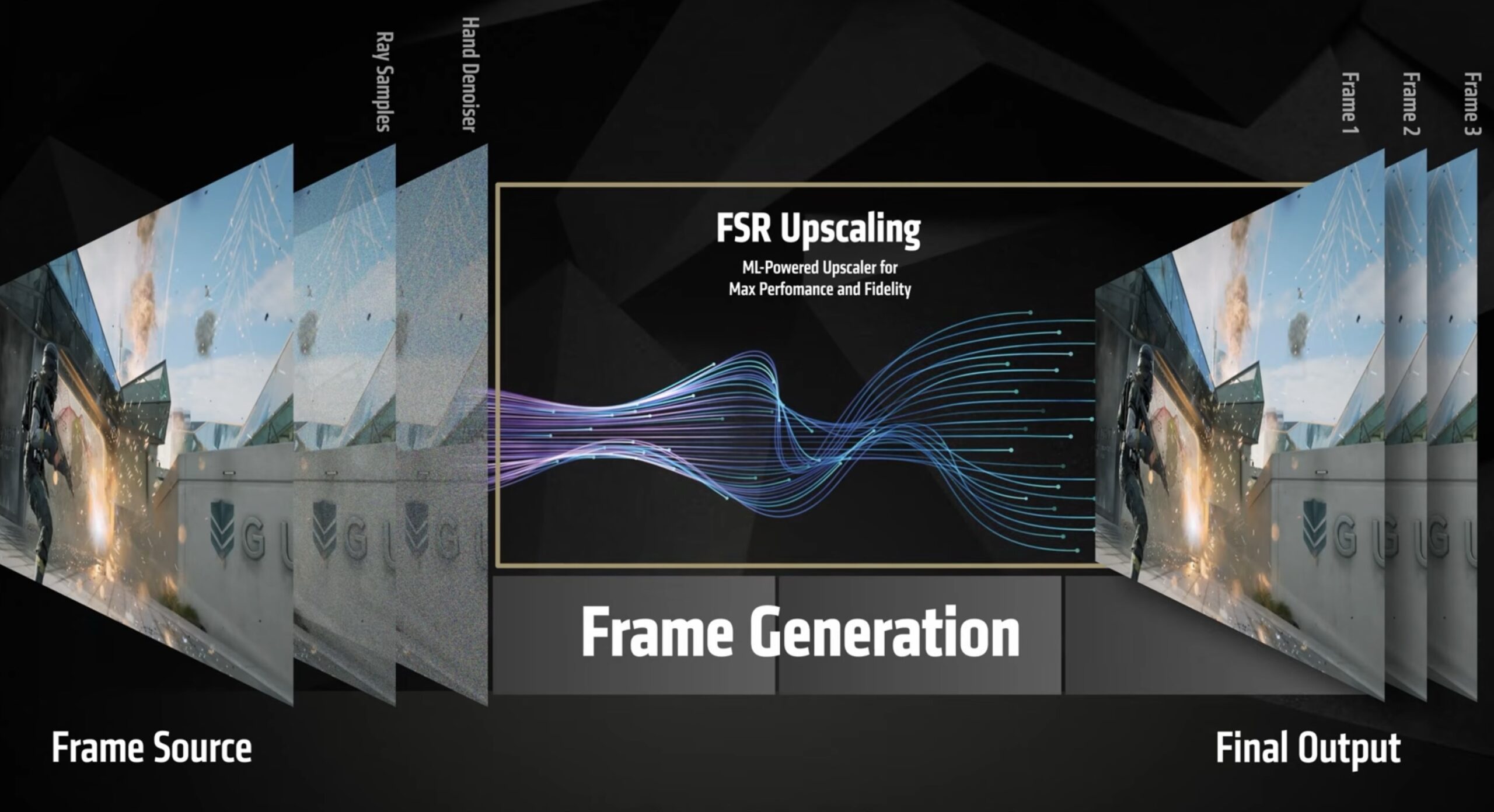
If AMD lets you force Ray Regeneration and Neural Radiance Caching on in games that don’t officially support them, features currently limited to a handful of titles like Call of Duty: Black Ops 7 and Crimson Desert could suddenly work far more widely. That’s the kind of change that makes your existing GPU feel new again.

