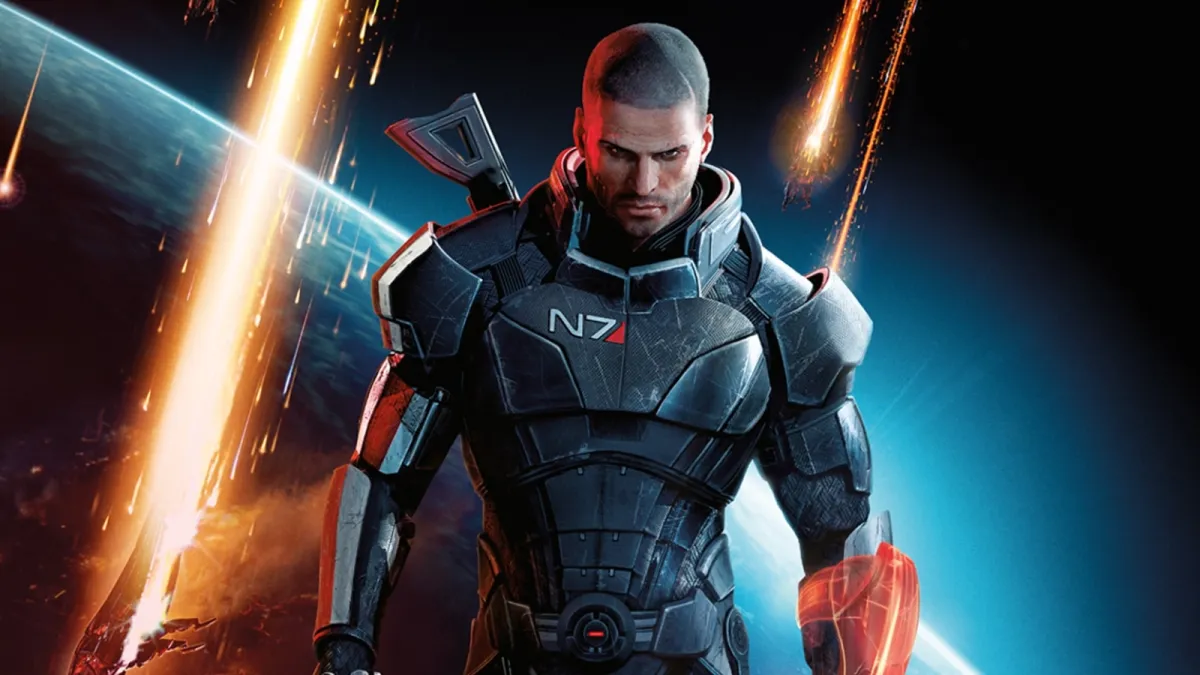

Electronic Arts plans to eliminate roughly 400 positions in an upcoming round of job cuts, per a new report from Bloomberg, and will also be closing the doors on its long-time role-playing game maker BioWare.
Per Bloomberg’s Jason Schreier, these cuts represent about three percent of EA’s total staff, and roughly 50 at BioWare. A letter sent to staff today from EA’s COO David Tinson and Chief Studios Officer Cam Weber said that they’ve taken a “hard look at our business” and will cut projects, including the next Mass Effect.
“As we focus on these larger opportunities, we’ve had a small team at BioWare working on early-development for Mass Effect,” the letter reads. “We’ve made the decision not to move forward with this development, which means we’re closing the studio and our Edmonton workspace. BioWare is a legendary studio that helped define the role-playing genre, and we do not take this decision lightly.”
2020 trailer screenshot for the now-canceled 5th Mass Effect
Sports, shooters (like Apex Legends), and Star Wars (including the next Jedi title) will continue apace at Electronic Arts. The publisher also has a new Iron Man game in the works, and plans are in the works for more Battlefield, as well as a new collaboration between Respawn and DICE. The staff letter also suggests a planned Sims game will be put on ice in favor of another venture, and that while Skate development will continue, EA will downsize the team working on it.
EA was fully acquired earlier this year by a number of investor groups, including Silver Lake, Affinity Partners, and the Public Investment Fund of Saudi Arabia, taking the publicly traded company private. In its announcement at the time, EA chairman and CEO Andrew Wilson said, “We’re entering this next chapter from a position of strength with partners who share our vision and ambition. Together, we’ll invest boldly, accelerate innovation, and build the next generation of games and experiences for the hundreds of millions of players and fans who inspire us every day.”
A statement from BioWare posted to social media shared the closure as well, highlighting the list of games it has brought to life: Baldur’s Gate, Neverwinter Nights, Star Wars: Knights of the Old Republic, Dragon Age, Mass Effect, and Anthem. The team’s focus now, per the statement, is on supporting one another through this transition.
“What generations of BioWare built together is something to celebrate and remember,” the statement reads. “These games became so much more because you played them, debated your choices, fell in love with the characters, and made these worlds your own. From all of us at BioWare, thank you for being the most meaningful part of our story.”
BioWare has been known throughout its history for exactly that: an undoubtedly legendary run of role-playing games where choice, characters, and moments matter. From the early era of D&D-driven adventures to leading the pack in console RPG development with KOTOR, Mass Effect, and Dragon Age, few Western RPG studios boast the legacy BioWare had.
Still, BioWare often sailed on troubled waters. The underwhelming releases of Mass Effect: Andromeda and Anthem tarnished the studio’s pristine image in the eyes of some fans. Dragon Age: The Veilguard, the studio’s most recent—and final—game was generally better received by critics, but spent a decade in development turmoil. Internal strife over the making of these massive RPGs was the subject of frequent reporting. The term “BioWare magic,” referring to how the studio’s games would finally come together in the twilight hours of development, became a sticking point as the years went on.
There is no denying, though, how BioWare has played an active hand in molding the role-playing genre over the years. Even a recitation of past works doesn’t feel accurate to the impact; the influence of Mass Effect and Dragon Age alone is something we still see ripples of today. Even as other studios have taken up the torch and put their own spin on companion-driven, choices-matter stories, there is still an innate sense of “BioWare” that’s hard to remove from those interactions and moments.
Layoffs have become distressingly commonplace, as cuts to legendary teams are announced at a never-ending pace. But to break news writing decorum, I had always hoped, throughout years of working in this industry, that I wouldn’t ever have to eulogize a studio like BioWare. A place that shaped my own dive into video games, and I’m sure did the same for many, many others. A roof under which developers worked long hours to craft stories we’d carry with us for years. I’m thankful for that, and hope those affected find somewhere new that’s rewarding of their talents.