



Technologist Mag
  • Home
  • Tech News
  • AI
  • Apps
  • Gadgets
  • Gaming
  • Guides
  • Laptops
  • Mobiles
  • Wearables
  • More
    • Web Stories
    • Trending
    • Press Release

Subscribe to Updates

Get the latest tech news and updates directly to your inbox.

What's On
A New Experiential Gallery Just Might Change Your Mind About AI Art

A New Experiential Gallery Just Might Change Your Mind About AI Art

10 July 2026
Home robots can already walk. The hard part is stopping them from crushing your glassware

Home robots can already walk. The hard part is stopping them from crushing your glassware

10 July 2026
Sunshine and Saharan Dust Make Miami’s World Cup Quarter-Final a Dangerous Game for England Norway

Sunshine and Saharan Dust Make Miami’s World Cup Quarter-Final a Dangerous Game for England Norway

10 July 2026
This AMD mini PC beats Valve’s Steam Machine, but it costs a lot more

This AMD mini PC beats Valve’s Steam Machine, but it costs a lot more

10 July 2026
Vivid Seats Promo Codes and Deals: Get 10% Off

Vivid Seats Promo Codes and Deals: Get 10% Off

10 July 2026
Facebook X (Twitter) Instagram
Technologist Mag
SUBSCRIBE
  • Home
  • Tech News
  • AI
  • Apps
  • Gadgets
  • Gaming
  • Guides
  • Laptops
  • Mobiles
  • Wearables
  • More
    • Web Stories
    • Trending
    • Press Release
Technologist Mag
Home » Your next phone could get a smaller camera with sharper photos
Tech News

Your next phone could get a smaller camera with sharper photos

By technologistmag.com10 July 20263 Mins Read
Your next phone could get a smaller camera with sharper photos
Share
Facebook Twitter Reddit Telegram Pinterest Email

Researchers at Nagoya University have developed a new type of transparent optical sensor that could significantly reduce the size of camera sensors while improving image quality. Published in the journal ACS Nano, the study demonstrates how gallium-doped zinc oxide (GZO) nanosheets can detect red, green, and blue (RGB) light within a single pixel, potentially replacing the decades-old Bayer filter design used in nearly every digital camera today.

If commercialized, the technology could enable thinner smartphone cameras, higher-resolution medical imaging devices, and more compact sensors for automotive and aerospace applications, all while simplifying manufacturing.

A new sensor design could replace one of digital photography’s oldest limitations

Modern image sensors rely on a Bayer array, where each pixel captures only one color – red, green, or blue. Full-color images are then reconstructed using information from neighboring pixels, a process that inherently sacrifices some image detail and requires millions of color filters.

The Nagoya University team believes it has found a better approach. Their transparent GZO nanosheets allow multiple light-detecting layers to be stacked vertically, with each layer responding to different wavelengths of visible light. This means a single pixel can directly capture RGB information, potentially reducing the total number of pixels required by up to 75% while maintaining image resolution.

Led by Professor Minoru Osada, the researchers initially faced a challenge because zinc oxide nanosheets responded weakly to visible light. By introducing gallium into the material, they created electronic trap states capable of converting visible light into electrical signals without compromising transparency.

The resulting sensor converts just 0.005% of absorbed light into photocurrent while transmitting 99.995% of visible light through each layer. Despite absorbing so little light, the device achieved a sensitivity of 800 amperes per watt (A/W) – around 80 times higher than the roughly 10 A/W typically achieved by commercial image sensors. Laboratory testing also showed that the prototype reproduced full-color images with half the error rate of conventional camera sensors.

Smaller cameras, better images, and a wider range of applications

Beyond improving image quality, the research points toward practical manufacturing advantages. Unlike conventional image sensors, the transparent nanosheet sensors can be produced using a room-temperature solution process, eliminating several complex semiconductor fabrication steps and potentially reducing production costs.

The sensors also demonstrated stable performance at temperatures of up to 400°C and maintained reliable operation in vacuum and humid environments. Those characteristics make them suitable not only for smartphones but also for medical endoscopes, autonomous vehicles, industrial imaging systems, and even space hardware, where durability is critical.

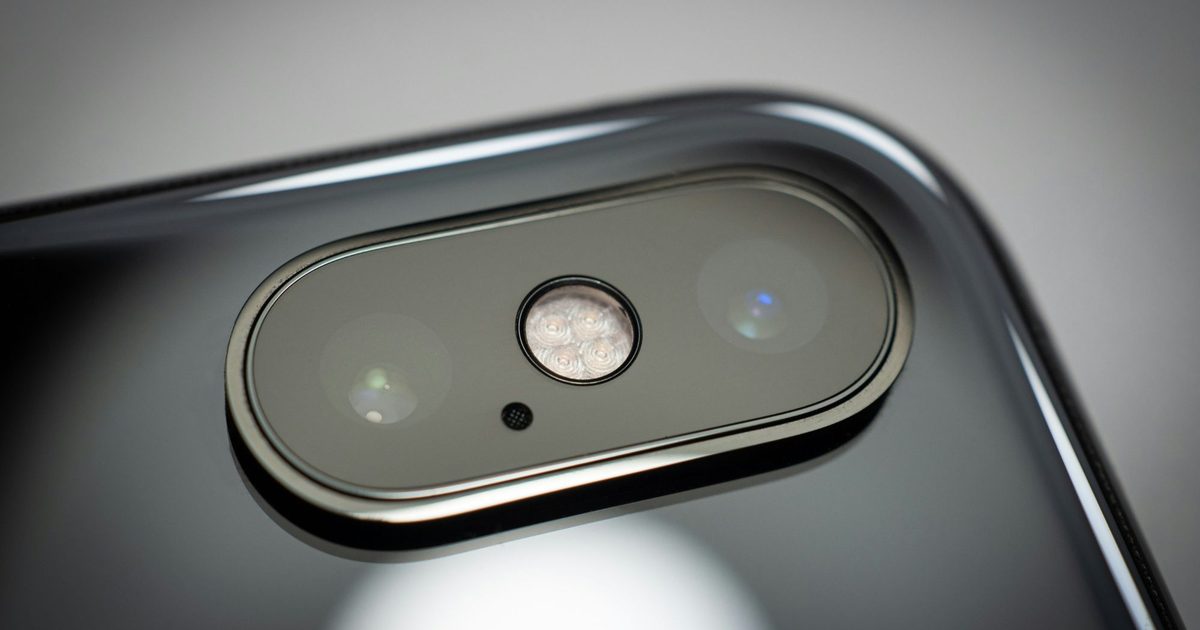
Representative Image

Professor Osada compared the sensor’s operation to the human eye, explaining that it mimics how the retina separates color information before the brain reconstructs a complete image.

While the technology remains in the research stage, the findings outline a promising path toward smaller, lighter, and higher-resolution imaging systems. The next challenge will be translating the laboratory prototype into commercially manufacturable sensors that can compete on cost, reliability, and large-scale production. If successful, the technology could reshape the design of future smartphone cameras and optical devices across multiple industries.

Share. Facebook Twitter Pinterest LinkedIn Telegram Reddit Email
Previous ArticleThe 4 Best Home Air Conditioners to Buy Right Now
Next Article Vivid Seats Promo Codes and Deals: Get 10% Off

Related Articles

A New Experiential Gallery Just Might Change Your Mind About AI Art

A New Experiential Gallery Just Might Change Your Mind About AI Art

10 July 2026
Home robots can already walk. The hard part is stopping them from crushing your glassware

Home robots can already walk. The hard part is stopping them from crushing your glassware

10 July 2026
Sunshine and Saharan Dust Make Miami’s World Cup Quarter-Final a Dangerous Game for England Norway

Sunshine and Saharan Dust Make Miami’s World Cup Quarter-Final a Dangerous Game for England Norway

10 July 2026
This AMD mini PC beats Valve’s Steam Machine, but it costs a lot more

This AMD mini PC beats Valve’s Steam Machine, but it costs a lot more

10 July 2026
Vivid Seats Promo Codes and Deals: Get 10% Off

Vivid Seats Promo Codes and Deals: Get 10% Off

10 July 2026
The 4 Best Home Air Conditioners to Buy Right Now

The 4 Best Home Air Conditioners to Buy Right Now

10 July 2026
Stay In Touch
  • Facebook
  • Twitter
  • Pinterest
  • Instagram
  • YouTube
  • Vimeo

Subscribe to Updates

Get the latest tech news and updates directly to your inbox.

Don't Miss
Home robots can already walk. The hard part is stopping them from crushing your glassware

Home robots can already walk. The hard part is stopping them from crushing your glassware

By technologistmag.com10 July 2026

A robot can look convincing while walking across a stage and still be useless in…

Sunshine and Saharan Dust Make Miami’s World Cup Quarter-Final a Dangerous Game for England Norway

Sunshine and Saharan Dust Make Miami’s World Cup Quarter-Final a Dangerous Game for England Norway

10 July 2026
This AMD mini PC beats Valve’s Steam Machine, but it costs a lot more

This AMD mini PC beats Valve’s Steam Machine, but it costs a lot more

10 July 2026
Vivid Seats Promo Codes and Deals: Get 10% Off

Vivid Seats Promo Codes and Deals: Get 10% Off

10 July 2026
Your next phone could get a smaller camera with sharper photos

Your next phone could get a smaller camera with sharper photos

10 July 2026
Technologist Mag
Facebook X (Twitter) Instagram Pinterest
  • Privacy
  • Terms
  • Advertise
  • Contact
© 2026 Technologist Mag. All Rights Reserved.

Type above and press Enter to search. Press Esc to cancel.