



Saving memories is usually a hassle. URLs go in the bookmarks section or are copied and pasted in a dedicated app. Then there are camera clicks of posters, or the dozens of screenshots we take, which lie around like an uncluttered mess in the Photos app.
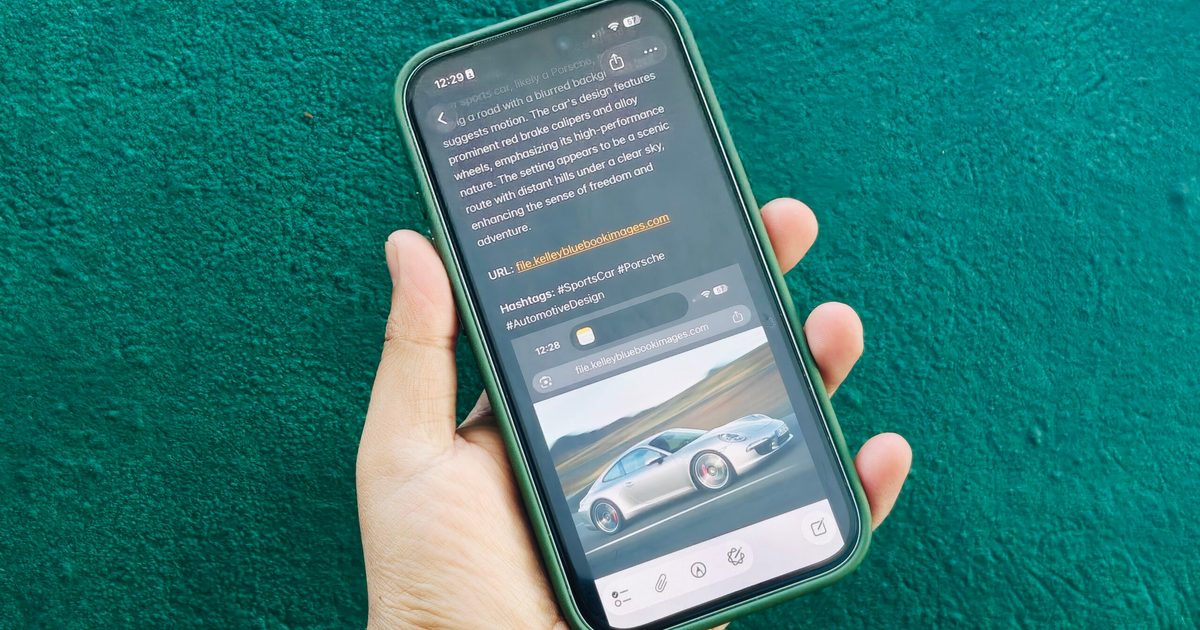
Imagine a system where you press the iPhone’s Action Button. It takes a screenshot, writes a brief summary of the on-screen content, adds hashtags for quick search, and automatically saves all the information in an app of your choice.
Sounds terrific, right? Well, the iPhone won’t do that. Android devices, such as the OnePlus 15, can. And that leaves you with a tedious process where you have to save, move, and manage important memories.
What’s important is not always easy to find
I have over two thousand screenshots saved on my iPhone. Most of it is content that I wanted to revisit later. Random articles, a cool meme, course material, job listings, a music video on YouTube, and more. I want to save all that information and revisit it.
It’s easier said than done. The search system built within the Photos app is simply not smart enough. I recently saved the screenshot of a fantastic photo series documenting the local dance traditions of Shillong, hoping to visit the place in the near future.
Between saving that information and the weeks of work that followed, I took dozens of fresh screenshots for work duties. When I finally got some breathing space to explore the nearby village, I couldn’t find the original screengrab.

I didn’t have the heart to scroll past a long gallery, and the search system didn’t help with contextual text-based queries. I was disappointed and somewhat furious. My iPhone 17 Pro can run AI models locally, but it doesn’t offer a system that can help save important stuff with some analysis data tagging along.
You see, on the OnePlus 15, you get a feature called Mind Space. With the press of a button, a snapshot of your phone’s screen is saved. The onboard AI analyzes it, writes a short summary of it, saves the page URL, and even creates one-step chores.
All of these memories are saved with a headline and the preview of the screenshot, as a dedicated card in an app. It’s like an AI-powered memory vault, one that is now also integrated with Gemini. The iPhone doesn’t offer any such convenience, despite Gemini being baked at the heart of Apple Intelligence.

Thankfully, the Shortcuts app offered a respite. And even though it took a few minutes and some trial-and-error, I was able to replicate the same functionality as the Mind Space on OnePlus phones, and its equivalent system on Nothing smartphones.
How do I get it done?
My target was to create a quick and clear task flow, which looks like this:
Button press > Screenshot saving > Analyze content > Write summary, save URL, create tags > Save to Notes.

To get it working, I herded over to the Shortcuts app on my iPhone and created a framework of the actions. After deciding the exact chain of commands, I searched the “Use” function and selected the AI “Model” for the analysis and text generation work.
When you are picking the model, you can choose between Apple’s Cloud, On-Device AI, and ChatGPT. For maximum speed, on-device works. I, however, went with ChatGPT because it has been updated to the smarter GPT 5.1 model with better reasoning capabilities.
Next, I described the requirements in the “Use Model” field using natural language description. Finally, I selected the built-in Notes app as the destination for saving these memories. You can also push any other app of your choice.
Once the shortcut was ready and I gave it a name, I moved to the physical action part. Since I barely use the action button on my iPhone, I headed over to the Settings app and configured it to trigger the shortcut of my choice.

That’s the end of it. Now, every time I need to save a nugget of information, I simply long-press on the action button and the on-page information (alongside a summary and URL) is saved in the Notes app. All of it happens in the background without jumping back and forth between apps.
But what if you already use the Action Button for something else? Well, there’s a workaround for that, as well. You can park the same shortcut in the Control Center and trigger it from there. But you will have to make a small modification.

To put it specifically, you will need to create a one or two-second delay between tapping on the shortcut button in the control center and returning to the app where you want to take a snapshot. The delay is crucial.

When you trigger the shortcut, and it instantly takes a screenshot, your image saved will be that of the control center. But when there is a delay, you can swipe up the control center and return to the app/page that you want to capture and save. Alternatively, you can use Siri to trigger the shortcut with a voice command on your iPhone.

Overall, thanks to on-device AI chops, you can now save yourself the hassle of saving random screenshots and losing them in a crowded gallery. More importantly, you can customize the whole flow of saving the information, or add more steps to it, to fit your needs.
